Looking for 3D printing services in Oklahoma City, OK? The 3D Prototyping Hub directory lists 17 providers in the city — more than any other market in the state, and about 63% of Oklahoma's total capacity. The fastest route to a quote is the Oklahoma City provider directory: work out what each listing actually is, then send your file to the shops that fit the part.
Seventeen is a real number for a metro this size, and it sits on top of an industrial base that generates unusually good additive work — depot aircraft maintenance, energy equipment, unmanned systems and weather instrumentation. What the directory cannot tell you is which of the seventeen does which. That is what this page is for.
What the 17 Oklahoma City Listings Actually Are
The count is accurate. The composition needs a warning label, and sorting the list before you send files will save you more time than anything else here.
- Nine additive-first operations. Businesses that carry 3D in the name and exist to print parts — a design-and-print studio or two, several small job shops, an on-demand print service and one operation trading through a storefront site. This is where a one-off part or a prototype belongs.
- Eight print, copy, repro and sign businesses. Established Oklahoma City printing, copy, wide-format, design and media firms that either added additive to an existing service menu or simply carry "print" in the older, ink-on-paper sense. They surface on a 3D printing search because of the word, not always because of the machine. Good for models, signage components and presentation pieces; not the first call for a loaded bracket.
- One listing that records what it runs. Covered below, because it is the single most useful fact on this page.
Then the number that shapes everything: all 17 Oklahoma City listings are unclaimed, assembled from public sources rather than maintained by their owners, and 16 of the 17 record no process and no material at all.
That is less limiting than it sounds. Eleven have a website on file, 15 have a phone number, and 16 of the 17 have at least one of the two — so qualifying is an afternoon of calls rather than a research project. You will be doing that work yourself, which is why the questions further down carry the weight.
One quirk worth knowing before you dial: one Oklahoma City listing carries Tulsa branding and a 918 number. It is a real provider, but ask where the machines actually sit and who is doing the driving before you treat it as a local shop.
The One Listing That Records Its Processes
Exactly one of the 17 publishes capability data: FDM and SLA/DLP, with PLA, ABS, PETG and nylon on the material list, describing itself as a rapid-prototyping operation built around automated printing for single parts through to new-product work.
Two things follow. First, it is a sensible first call for a functional prototype, because you know before you dial that both a filament and a resin route exist under one roof. Second, the nylon there is filament, not sintered powder — no Oklahoma City listing records SLS, MJF or metal.
Do not read that absence as proof the metro cannot do it. Sixteen listings record nothing at all, and a shop with a powder-bed machine is under no obligation to tell a directory about it. Statewide, only three of Oklahoma's 27 listings record any process, and the two outside Oklahoma City that claim SLS/MJF are consumer-facing craft operations — an Etsy figure studio and a print-and-epoxy art business. Neither is production powder-bed capacity, whatever the field says.
For anything genuinely powder-bed or metal, read SLS 3D printing services and metal 3D printing services first, then ask each shop plainly whether the capability is in-house or brokered. Subcontracting is legitimate and common — it just changes lead time, cost and who is accountable when a part comes back out of tolerance.
Aerospace Sustainment Is the Local Market
This is the section worth reading even if you skip the rest, because it is what makes Oklahoma City's additive demand different from a similarly sized metro anywhere else.
Tinker Air Force Base, in Midwest City on the metro's east side, runs the Oklahoma City Air Logistics Complex — one of the largest depot maintenance operations in the US Air Force, and the home of the Air Force Sustainment Center. Heavy airframe work on the B-52, KC-135 and E-3 fleets and large-scale engine overhaul happen there. The FAA's Mike Monroney Aeronautical Center, next to Will Rogers World Airport, adds the agency's logistics and training operation on the other side of town, and both Boeing and Northrop Grumman run substantial sustainment-engineering offices in the city.
Sustainment generates a very particular kind of additive demand, and it is not what people picture. It is protective covers and shipping cradles, alignment and handling fixtures, drill guides, tool trays, calibration and inspection aids, and replacement parts for ground equipment whose supplier disappeared two decades ago. Jigs, fixtures and manufacturing aids is the most directly relevant guide on this site for that work, and 3D printing replacement and spare parts is the second.
The catch is documentation, not printing. The moment a part touches regulated aviation work, three things stop being optional: material certificates with lot traceability, a process controlled well enough that part 200 matches part 1, and ITAR registration if the geometry itself is export-controlled. None of the 17 listings publish quality-system or export-control credentials, so that is the first question on the call rather than something to discover at delivery. A shop that answers with a certificate number and a named standard is in that business; a shop that answers "we can print anything" has told you it is not — fine for a bench fixture, wrong for anything flight-adjacent. If the design is proprietary, NDA and IP protection covers the paperwork side.
What Else Drives Demand Here
Energy. Devon Energy and Continental Resources are headquartered downtown, and the metro carries the corporate and engineering side of oil and gas rather than most of its heavy manufacturing. The additive work that comes out of it is functional: sensor and instrument housings, mounts, flow-component prototypes, test fittings and electronics enclosures for field equipment — parts specified by someone who reads the tolerance callout, where chemical exposure, heat and UV are constraints rather than hypotheticals.
Weather and radar instrumentation. This is Oklahoma City's most distinctive niche and the one outsiders never guess. The National Weather Center, NOAA's National Severe Storms Laboratory and the University of Oklahoma's radar programmes sit 25 minutes south in Norman, and the Oklahoma Mesonet runs an environmental monitoring station in every county in the state. That means a steady flow of one-off hardware: sensor housings, radiation shields, mast and boom brackets, antenna and radar fixtures, and enclosures for instruments that do not exist commercially. Every one of them lives outdoors on the southern plains, which makes the material conversation below non-negotiable.
Unmanned systems. Oklahoma has invested heavily in UAS, with test infrastructure and university programmes around Norman and Stillwater. Light structural parts, mounts and gimbal and payload housings are natural additive work, and it is the segment most likely to want the next iteration in hand this week — see 3D printing services for drone and UAV parts.
Health sciences. The Oklahoma Health Center campus east of downtown concentrates the OU Health Sciences Center and a cluster of research institutes, supporting steady medical device and product development work — which raises the documentation bar in the same way aerospace does.
Heat, UV and Hail: Spec the Material for the Plains
Central Oklahoma is harder on plastic than most of the country, in three ways at once.
Thermal swing. The metro runs above 100°F in summer and below 20°F in winter, and any part in a vehicle, on a roof or inside a south-facing enclosure sees far more than ambient. PLA — the default a shop will quote unless you say otherwise — begins to soften around 140°F, and the failure mode is quiet: the part sags out of shape over a few days and stops fitting, which people blame on the printing rather than the material.
UV and hail. High plains sun embrittles unstabilised plastics over a season or two, so anything on a mast, a mesonet tower or a pump skid needs a material chosen for it or a coating over it. And Oklahoma City is consistently among the worst hail markets in the country: impact resistance in the cold is a real specification for outdoor hardware, not a nicety.
The answer is to name the environment when you brief the shop. Ask for ASA where the part lives in the sun — it is engineered for exactly this, and the ASA guide covers the trade-offs. PETG is a sensible baseline for lower-load outdoor parts, nylon or a glass- or carbon-filled grade where there is real mechanical or impact demand, and paint or coating is worth the money on anything permanently exposed. How to choose a 3D printing material works through the full decision. Say "this lives outdoors in Oklahoma" out loud when you send the file; a shop that changes the quote in response is a shop worth using.
What You Can Get Printed Locally
- Shop aids, fixtures and tooling — the highest-volume category in a sustainment town and the fastest payback on this page.
- Replacement and obsolete parts — for ground equipment and machinery whose supplier is long gone.
- Functional prototypes — parts that have to fit, load or seal before you commit to tooling.
- Instrument and sensor enclosures — the recurring job across energy, weather and university work.
- Short production runs — bridge quantities between prototype and moulding; see low-volume 3D printing services and functional and end-use 3D printed parts.
- Appearance, signage and presentation pieces — where the print and sign trade in this list is genuinely useful.
Processes and When to Use Each
| Process | Best for | Trade-off |
|---|---|---|
| FDM | Functional prototypes, jigs and fixtures, large parts, engineering plastics | Visible layer lines; weaker across layers |
| SLA / resin | Fine detail, smooth surfaces, small precise parts, appearance models | More brittle; needs post-processing; costs more per part |
| SLS / MJF nylon | Durable functional parts, complex geometry, no supports needed | Grainy finish; higher minimums; not recorded by any OKC listing |
| Metal | End-use metal components, tooling inserts, high-temperature parts | Most expensive; longest lead time; expect subcontracting |
How much 3D printing costs explains what actually drives the number on a quote, tolerances and accuracy in 3D printing covers what is realistic to specify, and design for 3D printing guidelines will save you more failed parts than any choice of shop.
How to Qualify an Oklahoma City Shop
With 16 of 17 listings publishing no process or material data, the qualifying call carries everything. Four questions get you most of the way.
"What is your business, exactly?" Ask it first. In a list where nearly half the entries come from the print and repro trade, it is the highest-yield question available and it separates the additive shops from the copy shops before either party wastes an afternoon.
"Is that capability in-house?" Especially for nylon, powder bed, metal and anything over a foot in any direction. You are not screening out brokers — you are finding out who owns the schedule.
"What paperwork comes with the part?" The Oklahoma City question. Material certs, traceability, quality standard, export control. Even outside aviation, a shop that can answer it is a shop that documents its process.
"What is your turnaround, committed to a date?" "A few days" means different things in a busy quarter, and it means something very specific when a maintenance window is open. Same-day and rush 3D printing services covers what rush actually buys.
How to choose a 3D printing service has the full vetting checklist, and how to prepare files for a 3D printing quote covers what to send so the numbers come back comparable.
Nearby Markets
Oklahoma City covers about 620 square miles, so "local" here can still be a 45-minute drive — and the metro's suburbs mostly do not carry separate directory listings. Norman, Edmond, Midwest City, Del City, Yukon and Moore buyers should start from this page and the statewide directory rather than filtering to their own city and concluding there is nothing nearby.
| Market | Listed providers | Drive from OKC | Directory page |
|---|---|---|---|
| Oklahoma City, OK | 17 | — | /providers/location/ok/oklahoma-city |
| Tulsa, OK | 7 | ~1h 45m on I-44 | /providers/location/ok/tulsa |
| Wichita, KS | 11 | ~2h 35m north | /providers/location/ks/wichita |
| Fort Worth, TX | 6 | ~3h south on I-35 | /providers/location/tx/fort-worth |
| Dallas, TX | 16 | ~3h 20m south | /providers/location/tx/dallas |
Tulsa is the one that matters most in practice. Under two hours up the turnpike, seven listings, and a base built on commercial aircraft maintenance and oilfield equipment rather than depot sustainment — a different capability mix, and worth a second quote on anything mechanical. The two cities hold 24 of Oklahoma's 27 listings between them; the Oklahoma state guide puts the whole picture together.
Out of state, Wichita is the interesting one for aerospace buyers — a general aviation manufacturing centre whose supply base thinks in certifications by default. Dallas–Fort Worth is the deep regional market at roughly three hours, and where an Oklahoma City shop will most often subcontract specialist powder-bed and metal work anyway; the Dallas guide and the Texas state guide cover it. Further out, Kansas City lists 16 and Little Rock 15, both around five hours.
Every market in that table is inside overnight ground shipping, which is the honest frame: a local shop earns its place on iteration, on inspecting parts in person, on awkward conversations about geometry, and on the maintenance window that opened this morning. Online versus local 3D printing services works through the trade-off.
Get Quotes From Oklahoma City Providers
Browse the Oklahoma City provider directory to see all 17 listed providers, work out which are genuinely additive shops and which are the print trade, then send your part to the ones that fit it. Ask three rather than one, and tell every one of them where the part is going to live and what paperwork has to come with it. Comparing more widely? Start from the Oklahoma directory or the full provider directory.
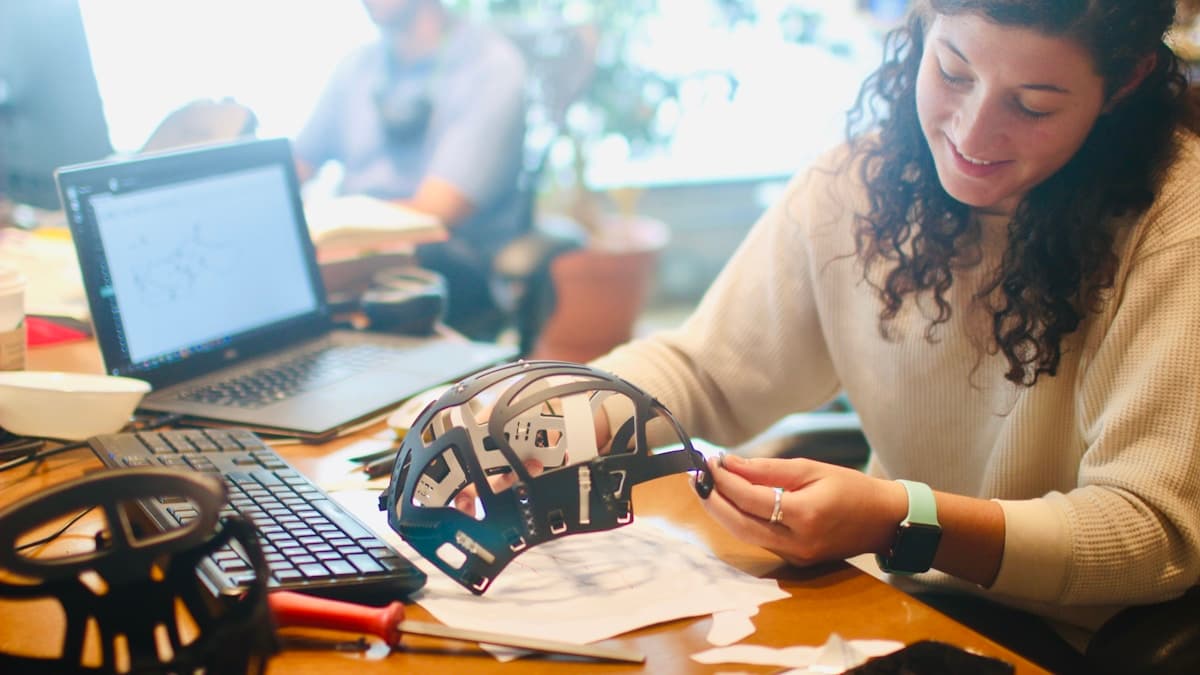
Hero image by Tool., Inc on Unsplash.