The short version: the best ASA filament for most people is Polymaker PolyLite ASA, because it is the most forgiving plain ASA on the market and it costs no more than good PETG. Buy Prusament ASA when the part has to fit something, Bambu Lab ASA if your machine runs an AMS-style feeder, Overture ASA while you are still iterating, and ASA-CF when the part is large and flat. Every one of them needs the same thing from your printer: a warm, still chamber and no part-cooling fan.
ASA is the material you want for anything that lives in sunlight — vehicle trim, sensor and antenna mounts, garden hardware, mailbox parts, exterior enclosures, drone shells. It is the only common desktop filament that survives ultraviolet light without going yellow and brittle. The catch is that it prints like ABS, which is to say it will warp off your plate if you treat it like PLA.
This post contains affiliate links. If you purchase through these links, 3D Prototyping Hub may earn a small commission at no extra cost to you.
This post also contains Amazon affiliate links. As an Amazon Associate I earn from qualifying purchases.
ASA Against ABS and PETG
Three filaments claim outdoor duty and only one of them actually earns it over years rather than months.
|
ASA |
ABS |
PETG |
| UV resistance |
Excellent — the whole point |
Poor: yellows and embrittles |
Moderate; degrades slowly |
| Heat resistance |
~100°C glass transition |
~100°C glass transition |
~80°C — sags in a hot car |
| Warping |
High — needs an enclosure |
High — needs an enclosure |
Low |
| Ease of printing |
Hard |
Hard |
Easy |
| Acetone smoothing |
Yes |
Yes |
No |
| Best for |
Parts that live outdoors |
Indoor parts needing heat resistance |
Almost everything else |
The honest summary: if the part is not going outside and does not need to survive a hot car, PETG is the better material and you should stop reading here. ASA earns its difficulty only when ultraviolet exposure and weather are real requirements. Where it does apply, nothing else on a desktop machine comes close — and it is a straight upgrade over ABS, which shares all of ASA's printing difficulty and none of its UV stability.
What ASA Demands of Your Printer
Before you buy a roll, check your machine against this list, because ASA is unforgiving of a missing item:
- A hotend that holds 250–260°C comfortably. Most modern machines do. Older PTFE-lined hotends are marginal at these temperatures and will degrade.
- A bed that reaches 100°C and stays there. 90°C sometimes works; 100°C works reliably.
- An enclosure, or at minimum a draught-free room and a box over the printer. This is the single biggest factor in whether large ASA parts succeed. Our enclosed printer picks and the standalone enclosure guide both cover the options.
- Ventilation. ASA is styrene-based and emits VOCs and ultrafine particles while printing. Garage or workshop, not bedroom.
- A build surface with real grip — textured PEI plus a thin glue-stick film is the combination that survives the cooling cycle. The plate and glue-stick pairing is a few dollars and prevents most failed prints.
If you are shopping for a machine to do this work, the enclosed models in the Anycubic FDM range, the ELEGOO FDM line and the Flashforge enclosed desktop printers all cover the requirement. Check the hotend temperature rating and whether the enclosure is genuinely sealed rather than decorative.
The Picks
Polymaker PolyLite ASA — Best Overall
PolyLite ASA is the roll to buy first, and for most people it is the only one they will need. Diameter consistency is good, the colours are stable and properly matched between batches, and it is noticeably more tolerant of an imperfect chamber than the cheaper ASAs — the difference shows up as corners that stay stuck when the room is a few degrees cooler than ideal. It prints happily around 250°C with a 100°C bed and the fan off. For sensor housings, garden fittings, exterior brackets and vehicle trim, Polymaker PolyLite ASA is the sensible default.
Prusament ASA — Best Dimensional Consistency
Prusa's own material is the tightest in the category on diameter, and every spool ships with a batch report you can look up. That matters more with ASA than with most filaments: shrinkage already moves your dimensions a little, so starting from a roll that varies is compounding two errors. If the part has to press-fit a bearing, mate with an existing housing or thread into hardware, buy Prusament ASA and scale for shrinkage once, rather than chasing the tolerance every roll. It costs more, and it works on any printer — the spool is not Prusa-specific.
Bambu Lab ASA — Best for Enclosed Multi-Material Machines
If your machine is enclosed and runs an AMS-style feeder, the path of least resistance is the vendor's own ASA with its ready-made profile. It is wound on cardboard, feeds reliably through a multi-material unit, and the shipped settings are close enough that a first print usually succeeds without tuning. There is nothing exotic in the polymer — it is ordinary good ASA — but the removed friction is worth real money when the alternative is dialling in chamber temperature by hand. Bambu Lab ASA is the pick for that workflow.
Overture ASA — Best Budget
An outdoor bracket is rarely right the first time. You print it, you fit it, the mounting hole is 2mm out, you print it again. Doing that on premium ASA is an expensive way to learn CAD. Overture's ASA has looser diameter tolerance and warps a touch more readily, so it is not what you want for the part that goes on the vehicle — but it prototypes the geometry perfectly well at a price that makes the fourth attempt painless. Iterate on Overture ASA, then print the final part in PolyLite or Prusament.
ASA-CF — Best for Large Flat Parts
Plain ASA's failure mode is scale: a 40mm mount is easy and a 250mm panel curls off the plate. Chopped carbon fibre reduces shrinkage substantially, which is what makes fibre-loaded ASA the only realistic desktop route to a large flat outdoor part. You also get a stiffer part and a matte finish that hides layer lines. The costs are a hardened nozzle — mandatory, because fibre widens brass within hours — and a more brittle part. ASA-CF is worth it for panels, enclosure lids and anything wide. The carbon fiber filament guide covers the filled-material family in depth.
Printing ASA Without Warping
- Fan off. Zero for the first several layers, no more than 20–30% after. Part cooling is what splits ASA layers — this is the single setting most people carry over wrongly from PLA.
- 250°C / 100°C to start. Adjust from what the first layer actually does, not from the spool label.
- Brim everything with a footprint. A 5–8mm brim costs a minute and saves the print.
- Keep the enclosure shut until the bed is cold. Opening the door mid-print to check on it is a genuine cause of layer splits.
- Dry the roll if it has been open a while. ASA is mildly hygroscopic — 60–70°C for four to six hours. The dry box guide covers running a heated dryer as a feeder.
- Design out sharp corners. Fillets at the base of a part distribute shrinkage stress instead of concentrating it where the lift starts.
- Scale for shrinkage on fitted parts. ASA shrinks roughly 0.4–0.7%. Print a test coupon, measure it, and apply the correction once.
Print It or Order It
For brackets, mounts, trim clips and enclosures that fit on a desktop plate, a roll of ASA and an enclosed printer is a purchase that pays for itself the first time a discontinued part breaks. The automotive parts guide and the RC and drone picks cover the machines suited to this work, and how to choose 3D printing filament sets ASA against the rest of the lineup.
The calculation flips when the part gets big, tight or repetitive. Large flat ASA needs an actively heated build chamber that holds temperature for the whole print — not an enclosure that happens to get warm — and that is industrial hardware, not a desktop upgrade. Tolerances below about ±0.2mm and batches beyond a few units point the same way. Browse the 3D Prototyping Hub provider directory to find shops running ASA and other engineering thermoplastics, and send them the same STL you were going to print.
Related Resources
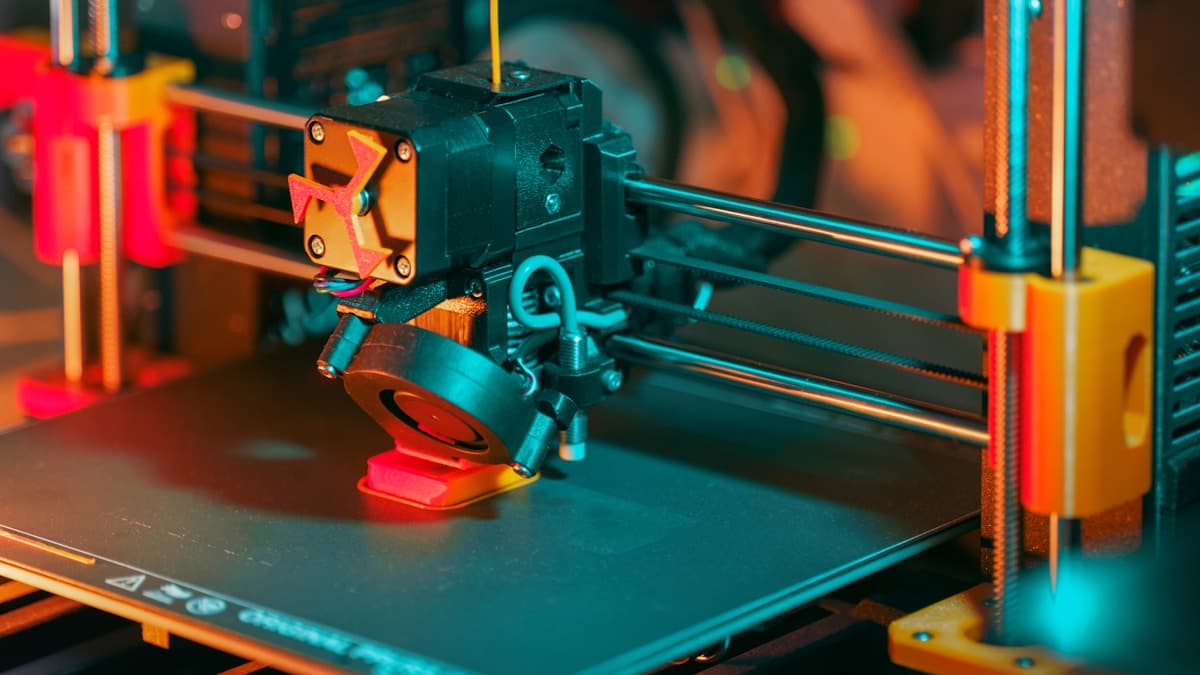
Hero photo by Jakub Żerdzicki via Unsplash. This post contains affiliate links — 3D Prototyping Hub may earn a commission if you purchase through them, at no cost to you. As an Amazon Associate, we earn from qualifying purchases.
Ready to find a 3D printing service provider?
Browse 2,000+ verified providers across the United States and submit your quote request free.
Browse Providers