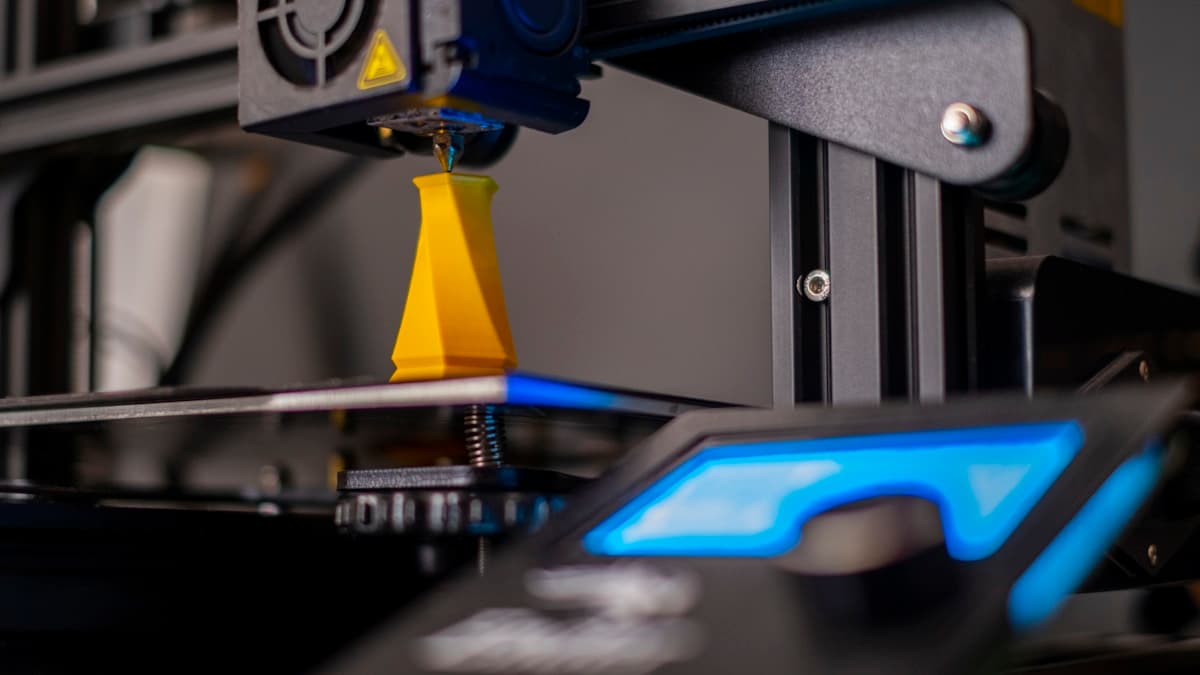
The moment you send a STEP file to a shop you have never visited, your design leaves your control and lands on someone else's server, someone else's slicer, and possibly someone else's subcontractor. A 3D printing service NDA is the standard control for that, and it is worth ten minutes of your time — but it protects less than most buyers assume, and it protects nothing at all if you sign it after the upload. This guide covers what a confidentiality agreement actually covers, who owns the part and the files once a shop has touched them, where your geometry physically goes, and how to run the whole thing at quote stage without slowing the job down. When you are ready to send work out, the 3D printing provider directory is the place to start.
This is a practical procurement checklist written from how bureaus actually work, not legal advice. Anything with real commercial value behind it should go past your own counsel.
What an NDA Covers, and What It Does Not
A confidentiality agreement does one job: it restricts what the recipient may disclose, and to whom. That is genuinely useful, and it is also narrower than the protection buyers imagine they are buying.
It does cover the CAD you send, the physical parts that come back, the quantities and pricing you discuss, and — if you ask for it — the existence of the project itself. That last one matters more than it sounds. For an unannounced product, the fact that you are ordering 200 housings is itself the leak.
It does not cover ownership. An NDA is a secrecy promise, not an assignment of intellectual property. It does not stop a provider using general skill and know-how it already had, and it does not by itself give you rights to anything the shop creates while working on your job.
Five clauses decide whether the document is worth signing:
- Definition of Confidential Information. It should name geometry, drawings, samples and physical parts explicitly, and cover oral disclosure too. A definition limited to documents "marked confidential" is a trap — nobody marks a STEP file.
- Term. Standard bureau templates run two or three years. That is fine for a prototype shipping next quarter and useless for a platform launching in year four. Ask for five, and for trade-secret material to stay protected while it stays secret.
- The residuals clause. This permits the recipient to use information retained in "unaided memory". It appears in a lot of manufacturing templates and it substantially hollows out everything above it. Strike it, or know that you accepted it.
- Flow-down to subcontractors. Brokering is normal and often invisible. If the agreement does not bind anyone the shop passes your file to, the protection stops at their front door.
- Marketing and portfolio rights. Shops photograph good work. This is the most common real-world leak on this list: an unreleased product appearing on a provider's social feed weeks before launch. Require written approval before any image of your part is published.
One more reason to sign before the first upload rather than after: in much of the world, patent novelty depends on the invention not having been publicly disclosed. A disclosure made in confidence generally is not a public one — but that argument rests on the confidence actually existing at the time you sent the file.
Who Owns the Part, the CAD and the Print File
Three different things are in play, and conflating them is where disputes start.
| What | Usual position | What to put in writing |
|---|---|---|
| Your source CAD | Yours; the shop gets a licence to use it to make your parts | Licence limited to fulfilling the order, and no right to reprint after it |
| Shop-created design work | Often the shop's by default, absent a written assignment | Assignment of any deliverable geometry created for you |
| Build files and toolpaths | The shop's process output, and they will keep them | Fine — but pair it with no-reprint and a retention limit |
| Fixtures and printed tooling you paid for | Ambiguous unless stated | Say who owns it and who stores it |
| The physical parts and any rejects | Yours | Scrap and failed builds destroyed, not shelved or displayed |
The one that surprises buyers is the second row. If a provider's engineer thickens a wall, moves a boss for a heat-set insert or designs the fixture that holds your part, that contribution is theirs unless an agreement says otherwise. Nobody is being sly — it is just the default. A single sentence in the purchase order assigning shop-created design work to you closes it. If you are new to the DFM conversation, how to prepare files for a 3D printing quote covers what that exchange normally looks like.
Build files are worth conceding. A shop that has solved orientation, support strategy and nesting for your part has produced its own process IP, and demanding it usually costs you goodwill for something you cannot use anyway. What you want instead is the commitment that they will not run your geometry for anyone else, including you-shaped parts ordered by a competitor.
Where Your Files Actually Go
Confidentiality on paper is only as good as the handling underneath it. Ask about four things:
Retention. "We delete everything" is rarely true — quoting portals, ERP records, backups and cloud slicers all keep copies, and a backup rotation may hold your file for months after the job closes. A specific retention period you can plan around beats a deletion promise that cannot be kept.
Subcontracting. Many shops broker processes they do not run in-house. That is legitimate and often the reason you can get an SLS part from an FDM shop at all — but it means your file moves to a company you did not evaluate. Ask which processes are in-house, and require flow-down for the rest. How to choose a 3D printing service covers the wider qualification checklist this fits into.
Portal terms. Instant-quote portals bind you to click-through terms on upload, and those terms may grant a broad licence and claim to govern the order. A negotiated NDA superseded by an order acknowledgment is decoration. Ask for a line saying the NDA controls.
Physical handling. In powder-bed processes your parts share a build chamber with other customers' work and pass through depowdering and finishing by hand. For anything visually distinctive and unreleased, that is a real exposure, and the answer is usually a dedicated build rather than a stronger clause.
Practical File Hygiene
The cheapest protection is sending less. None of this needs a lawyer:
- Send STEP, not native CAD. A SOLIDWORKS or NX file carries the feature tree — design intent, parameters, sometimes suppressed variants. STEP carries the shape you need made. STL vs STEP files explains why STEP is the right format for quoting anyway.
- Strip the metadata. Programme names, customer names, revision histories and internal part numbers ride along in file names and CAD properties. Rename to a neutral identifier.
- Send the part, not the assembly. A single bracket says far less about your product than the assembly it bolts into.
- Split sensitive work across vendors when the giveaway is how the parts fit together rather than any one part.
- Use your own transfer channel rather than emailing a zip, and keep the download link expiring.
Questions That Sort a Shortlist
Four, and you can ask them all in the first email:
Will you sign a mutual NDA before we upload? The answer tells you how the shop handles other people's confidential work generally.
Which processes do you run in-house, and who else touches the file? In-house is not automatically better, but undisclosed brokering is a genuine problem.
How long do you retain customer files, and what is the deletion process? You are listening for a specific answer rather than a reassuring one.
Do you photograph or publish customer parts? Then get the approval requirement in writing, whatever they say.
A shop that answers all four crisply is telling you it has done regulated or pre-launch work before. Providers serving medical device programmes and defense supply chains generally will; a two-machine shop doing hobby work generally will not, and that is a fit question rather than a failing.
Get the Agreement in Place, Then Send the Job
Run it in this order and it costs you a day, not a week: agreement signed, geometry stripped and exported to STEP, upload through a channel you control, then quote — and confirm the NDA governs over any portal terms you clicked on the way through. If you are pricing a first production run rather than a one-off, fold the ownership and retention lines into the supply agreement while you are negotiating volumes, because that is the last easy moment to do it. Low-volume 3D printing services covers what changes when the quantities go up.
Browse 3D printing providers to build a shortlist, and ask two or three the same four questions. The one that answers them without needing to check is usually the one that has handled work like yours before.
Related Resources
- How to Choose a 3D Printing Service — the full qualification checklist
- How to Prepare Files for a 3D Printing Quote — what to send, and what to hold back
- STL vs STEP Files for 3D Printing — why format choice is also a disclosure choice
- 3D Printing for Medical Devices — regulated work and documentation
- Industrial 3D Printing Services Buyer's Guide — supplier evaluation at programme scale
- Browse 3D Printing Providers — send the job out
Hero photo by Osman Talha Dikyar via Unsplash.