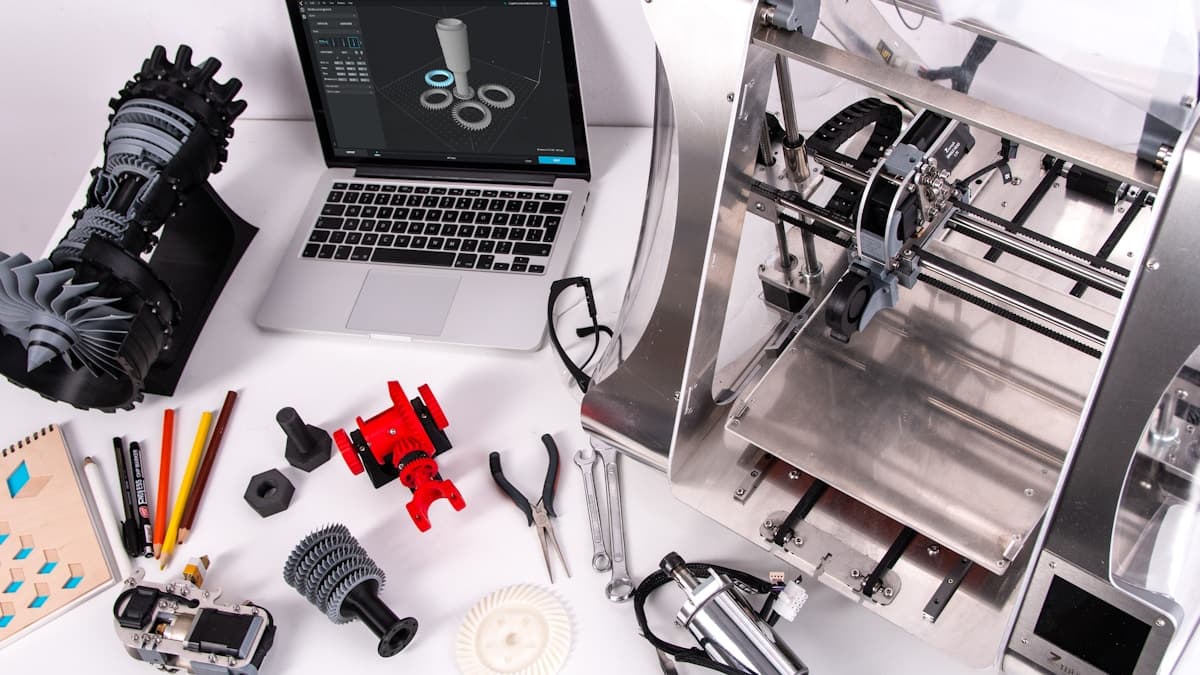
The honest answer on same-day and rush 3D printing: it's very achievable for standard FDM parts, partly achievable for SLA, and not realistic for SLS or metal. The print itself is rarely the bottleneck — a typical functional part takes one to four hours to print. The bottleneck is whether a provider has an open machine today.
So the move is simple: browse providers by location, shortlist the two or three closest that list rush service, and confirm machine availability before you upload your file. Below is how to do that well — and how much it should cost.
What "Same-Day" and "Rush" Actually Mean
These terms get used loosely. Here's the realistic breakdown:
- Same-day — File in by morning, part ready by end of day. Realistic only for standard-geometry FDM parts under about 50 cubic inches, at a provider with open machine time. The print runs 1–4 hours; the rest is queue position.
- 24–48 hour rush — The most common true rush tier. Covers most FDM and small SLA jobs. Widely available in dense metros.
- Expedited (3–4 days vs. a normal week) — Often mislabeled as "rush." Useful, but plan accordingly if you genuinely need a part tomorrow.
The single biggest factor in hitting a deadline isn't the technology — it's provider density. A metro like Atlanta, Chicago, or the Twin Cities gives you enough machines in enough shops that same-day is genuinely findable. In a thin market, you may be shipping from the nearest metro and losing a day to transit.
What's Realistic by Technology
FDM — the rush workhorse. Standard parts print in 1–4 hours with no post-processing beyond support removal. This is what makes same-day possible. ABS and nylon need an enclosed machine, which slightly narrows your provider options for rush.
SLA resin — fast print, slower finish. The print can be quick, but washing and UV post-curing add real time. Small parts can be same-day at a well-equipped shop; plan on next-day for anything substantial.
SLS nylon — not a rush technology. Powder handling, build cooldown, and depowdering make true same-day impossible. Plan 5–7 days even when expedited.
Metal — never same-day. DMLS and binder jetting require heat treatment, support removal, and often machining of datum features. Weeks, not days.
If your deadline is tomorrow and your part is functional rather than cosmetic, the answer is almost always FDM.
What Rush Service Costs
Expect a rush premium of 50–100% over the base part price, sometimes more for after-hours or weekend turnaround. A $75 standard FDM prototype might run $110–150 with a 24-hour fee. That premium is real and fair — you're displacing other jobs on the machine.
The trap is paying it repeatedly. If you're requesting rush parts several times a month, you're spending in fees what a desktop printer costs outright. (More on that below.)
How to Actually Hit Your Deadline
- Search by location first. Use the provider directory filtered to your metro. Density is everything for rush.
- Shortlist 2–3 and call before uploading. A listed rush capability is not a guarantee of an open slot today. Confirm machine availability for your exact timeline.
- Send clean files. A print-ready STL with no manifold errors avoids the back-and-forth that eats your same-day window.
- Confirm the realistic finish time, not just print time. For SLA, ask about post-curing. For anything with supports, ask about removal and any finishing.
- Keep a backup provider. End-of-quarter and trade-show weeks create backlogs at the popular shops.
If you run a shop that offers genuine rush turnaround and aren't listed, claim your listing — buyers searching for same-day service are high-intent and ready to order.
The Long-Term Fix: In-House for the Common Cases
If rush deadlines are a pattern rather than an exception, the most cost-effective fix is bringing the common cases in-house.
In-house doesn't replace a service bureau for SLA, SLS, metal, large parts, or certified work — but for the everyday rush requests that drive most same-day demand, owning the machine is faster and cheaper than paying the premium again and again.
Related Resources
- Quick 3D Printing Service — What to Expect — turnaround expectations in detail
- 3D Printing & Prototyping Service Overview — how service bureaus structure their offerings
- SLA vs. FDM Printing Explained — why FDM wins for rush functional parts
- How to Choose a 3D Printing Service — vetting criteria for any provider
- Browse Providers by Location — find rush-capable shops near you
Hero photo by ZMorph All-in-One 3D Printers on Unsplash.