3D printing services for furniture and interior fixtures get hired for one of two reasons: the part does not exist anymore, or it only needs to exist twenty times. Both are situations where the rest of the manufacturing world has nothing to offer — no mould gets cut for twenty brackets, and nobody restarts a drawer-slide tooling line for a 1998 office system. This guide covers what furniture makers, millwork and cabinet shops, interior designers and hospitality FF&E teams realistically send out to a printing service, which constraints actually decide the material, and what to put in front of a shop to get a quote you can build a schedule on. If you already have the broken part on the bench, start at the 3D printing provider directory.
What Furniture and Interior Work Actually Gets Printed
Four groups cover nearly all of it, and knowing which one your part belongs to settles process, material and price before anyone talks money.
Discontinued and unobtainable hardware. Drawer-slide clips, shelf pins and supports, cam-lock housings, hinge cups and covers, keyboard-tray brackets, chair glides and casters' plastic components, blind-and-shade brackets, cabinet-door catches, decorative escutcheons. This is the highest-volume category by far. Case goods and contract furniture outlive their suppliers by decades, and one missing ten-cent clip strands an otherwise sound piece. It is the same structural problem covered in replacement and spare parts, concentrated in a sector where the original manufacturer has usually been sold twice.
Connectors and joinery for one-off designs. Custom corner brackets, knock-down connectors, rail-to-leg junctions, shelf clips for a non-standard pitch, cable pass-throughs and grommets in a desk, mounting plates that adapt a bought-in mechanism to a bespoke frame. A designer working in small batches can print the connector that makes a design buildable instead of redesigning the whole piece around available hardware. That is a textbook low-volume production job.
Visible trim, profiles and decorative elements. Rosettes, capitals, applied carvings, moulding returns and corner blocks, radiused profile sections that cannot be run on a spindle moulder, matched replacements for damaged carved detail, plus signage and wayfinding elements built into joinery. Some of this is final part and some of it is a master pattern for casting or for a vacuum-formed reproduction. The presentation-model side of the same skill set is in architectural models, and the retail-interior overlap is in displays and signage.
Shop tooling and templates. Drilling and boring templates for hardware patterns, router guides and jigs, clamping cauls with complex profiles, assembly fixtures for repeating a bespoke joint, sanding blocks matched to a moulding profile, spray-booth part holders. None of it ships to the client, so none of it carries appearance or code burden, and it is usually the fastest way for a cabinet shop to prove the technology to itself. The wider case sits in jigs, fixtures and manufacturing aids.
Where Printing Is the Wrong Answer
The boundary is drawn by consequence. Furniture is touched, leaned on, sat in and climbed on by people who assume it will hold.
Structural seating and load paths. Chair legs and leg-to-seat junctions, stool bases, table trestles, bed rail hardware, anything that takes a person's weight in a fall. Layer adhesion is the weak axis of a printed polymer, and furniture loads are sustained, off-axis and occasionally shock.
Wall and ceiling fixings. Anchors, cleats, French-cleat hardware, TV and shelf brackets carrying real weight. A failure here is an injury, and rated hardware costs almost nothing.
Fire-rated interior finish. In a commercial fit-out, surface finishes are specified against a flame-spread and smoke classification. An ordinary printed part has no such rating, and adding one is a materials and testing question, not a printer setting.
Anything that must be an exact aesthetic match to a large existing run. Printed parts can be finished to match paint and stain, but matching a moulded texture, a specific polymer gloss or a wood grain across a room of existing pieces is often more finishing labour than the part is worth. Price the finishing before committing.
The rule that survives contact with a real shop: print the clip, the guide, the cover, the connector, the trim piece and the template — buy the thing that carries a person, holds a wall or carries a certificate.
Contact, Cleaning and Light Decide the Material
Furniture parts are not stressed the way engineering parts are, but they live in contact with people, and that changes which properties matter.
- Abrasion and repeated handling. A drawer catch or a glide sees thousands of cycles against wood or metal. Toughness and wear resistance beat stiffness here — PA12 from SLS and ABS/ASA from FDM hold up where PLA polishes, then powders.
- Sustained load and creep. A shelf pin under a loaded shelf is at constant stress for years. Polymers creep, and a part that measured fine on day one can sag by the next season. Ask about creep behaviour, not just tensile strength.
- Light through glass. Interiors are not outdoors, but a part on a windowsill or in a sunlit atrium still gets UV. Unstabilised PLA and PETG yellow and embrittle; stabilised ASA and pigmented grades hold colour far longer.
- Cleaning chemistry. Commercial and hospitality environments get wiped with cleaners and disinfectants that craze some polymers. In a healthcare or food setting, add the constraints in food-safe parts to the brief.
| Where the part lives | Sensible materials | What disqualifies the wrong choice |
|---|---|---|
| Hardware handled daily — pulls, catches, glides, clips | SLS PA12, ABS, ASA, tough PETG grades | PLA abrades and goes brittle under repeated handling |
| Loaded shelf pins, supports, brackets | Glass- or carbon-filled nylon, or metal | Unfilled polymers creep under constant load |
| Visible trim, rosettes and applied profiles | Resin (SLA) for fine detail, FDM for larger runs, both painted | Layer lines telegraph through gloss paint if the substrate is not filled and sanded |
| Gaskets, bumpers, chair feet, anti-rattle pads | TPU at a specified shore hardness | Rigid substitutes transmit noise and mark surfaces |
| Master patterns for casting or vacuum forming | SLA resin, or FDM with a filled-and-sanded finish | A raw extruded surface transfers straight into the mould |
| Small metal hardware that no longer exists | Stainless or brass via metal AM | Polymer cannot take the clamp load or the wear |
How to choose a 3D printing material covers the mechanical trade-offs in more depth. Grades differ between suppliers, so ask for the datasheet on the exact material the shop runs rather than the family name.
Processes and When Each Fits
| Process | Typical furniture job | Why it wins here |
|---|---|---|
| FDM | Brackets, connectors, templates, jigs, larger trim | Cheapest per part at furniture scale, widest choice of tough grades |
| SLS nylon | Clips, catches, living hinges, snap-fit hardware | Tough and isotropic, with no support scars inside the geometry |
| SLA / resin | Carved detail, rosettes, master patterns, appearance samples | Surface finish and fine relief that survives paint |
| Large-format | Full-scale profile sections, reception-desk features, seating shells | A two-metre element in one piece beats a bonded assembly of six |
| Metal AM | Obsolete cast hardware, load-bearing custom fittings | Produces small metal parts nobody sells at any quantity |
For most shops the honest answer is FDM for anything hidden or structural-ish, SLS for small hardware that has to snap and survive, and resin only where the surface is going to be looked at closely.
Finishing Is Most of the Job on a Visible Part
This is the line item that surprises first-time buyers. A hidden clip comes off the machine finished. A visible rosette that has to disappear into a painted moulding needs filling, sanding, priming, sanding again and a matched topcoat — and that labour routinely costs more than the printing. Budget it explicitly rather than discovering it, and decide early whether the shop is doing it or your finisher is. Vapour smoothing, media blasting, dyeing and spray finishing are all standard offerings; post-processing and finishing services sets out what each one does to a surface. The practical shortcut for restoration work: if the part will be painted, orient the print so the layer lines run across the least-visible face and specify a filled primer from the start.
What to Send for an Accurate Quote
Shops quote fast and accurately when all of this arrives together:
- Geometry — a STEP file, or the broken part plus square-on photographs with a ruler in frame. Send every fragment you have.
- Where the part lives and who touches it — hidden hardware, visible trim, shop tooling, or a client-facing surface in a commercial space. This single answer drives material, finish and most of the price.
- The mating parts — the screw, the slide, the rail, the panel thickness. Furniture hardware is defined by what it clips into, and a quote made without it is a guess.
- The two or three features that must be right — the boss diameter, the hole spacing, the snap-fit dimension. Call those out rather than tolerancing the whole part; tolerances and accuracy in 3D printing explains why a blanket tolerance inflates a quote.
- Finish and colour expectation — "as printed", "painted to match this sample", or "primed and we will finish it".
- Quantity now and likely repeat — thirty this month and three hundred over two years is a different quote from thirty, once.
- Code requirements, if any — flame-spread classification, cleaning-chemical compatibility, or a client specification you have to satisfy. Raise these before the quote, not after.
How to prepare files for a 3D printing quote covers the file-side details.
Choosing a Provider
Can they do the design work? For restoration and discontinued hardware the file never exists. Ask what reverse engineering costs, confirm you own the resulting model, and check whether they scan in-house — reverse-engineering scanning services covers how that work is scoped.
Do they finish, or only print? A shop that prints and hands you a raw part is fine for hidden hardware and wrong for visible trim. Ask to see painted examples, not bare prints.
Do they run tough grades? SLS PA12, ABS, ASA and filled nylons are the working set for furniture hardware. A bureau running PLA and PETG alone is a prototyping supplier, not a spares supplier.
Are they close enough to iterate? Furniture fit is a physical question, and a one-day loop on a clip that does not quite snap is worth more than a lower unit price. North Carolina providers sit inside the traditional furniture and upholstery belt around High Point and Hickory, and Michigan providers cover the contract- and office-furniture cluster in the west of the state — the North Carolina and Michigan guides go into those supply bases in more depth. How to choose a 3D printing service has the general checklist.
Model the Hardware Before You Need It Twice
The shops that get real value from this do not wait for the next failure. When a piece is apart on the bench anyway, they photograph and measure the small plastic parts known to break, get them modelled once, and file the STEP models with the material choice recorded next to them. The second failure — and on a matched set of twenty office desks there is always a second failure — becomes a purchase order against an existing file instead of a fresh engineering exercise. Heritage and conservation teams work the same way, for the reasons set out in museums and cultural heritage.
Get Furniture and Fixture Parts Quoted
Work out which of the four groups your part belongs to, be specific about what it clips into and who will see it, then send the geometry, the mating dimensions, the finish expectation and the quantity. Browse 3D printing providers and ask two or three. A shop that asks what the part screws into before it quotes is telling you more about whether the part will fit than the spread in their prices ever will. If the part is going to carry a real load, say so early — that is where functional and end-use parts stops being a printing decision and becomes an engineering one.
Related Resources
- 3D Printed Replacement and Spare Parts — the obsolete-hardware argument in full
- 3D Printing Services for Retail Displays and Signage — the adjacent commercial-interior brief
- 3D Printing for Architectural Models — the presentation-model side of interiors
- 3D Printing Post-Processing and Finishing Services — what it takes to make a printed part disappear into a finish
- Low-Volume 3D Printing Services — the run sizes custom furniture actually needs
- 3D Printing Services in North Carolina — the traditional furniture supply base
- Browse 3D Printing Providers — send the job out
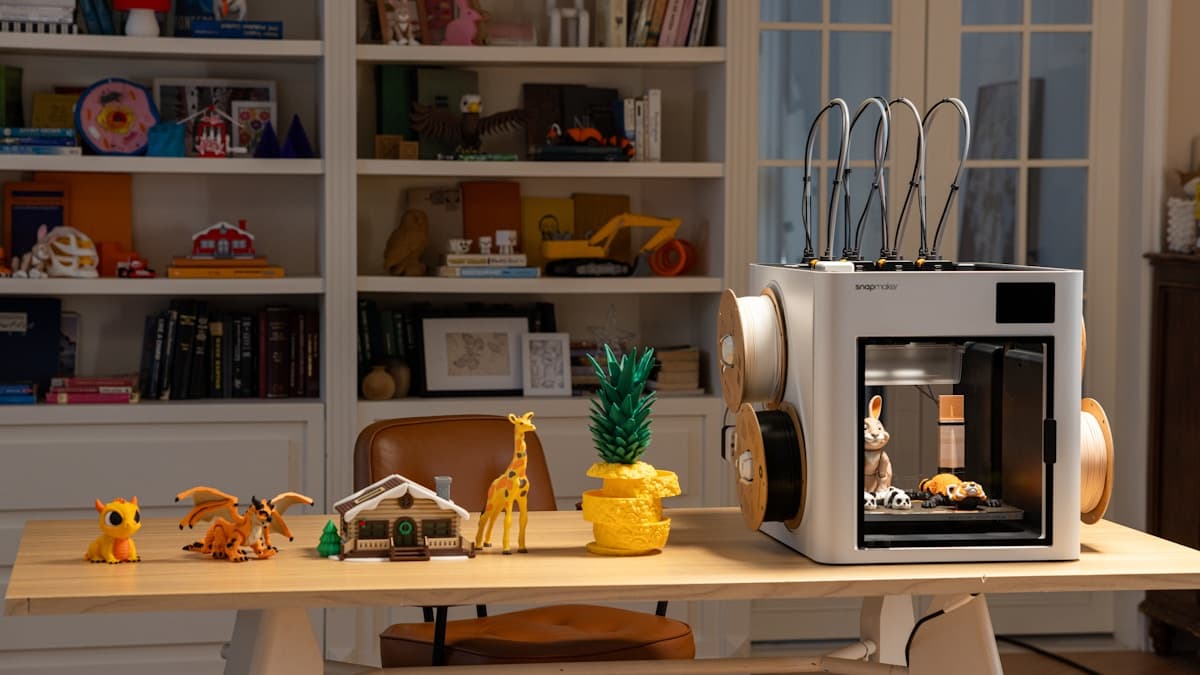
Hero photo by Snapmaker 3D Printer via Unsplash.