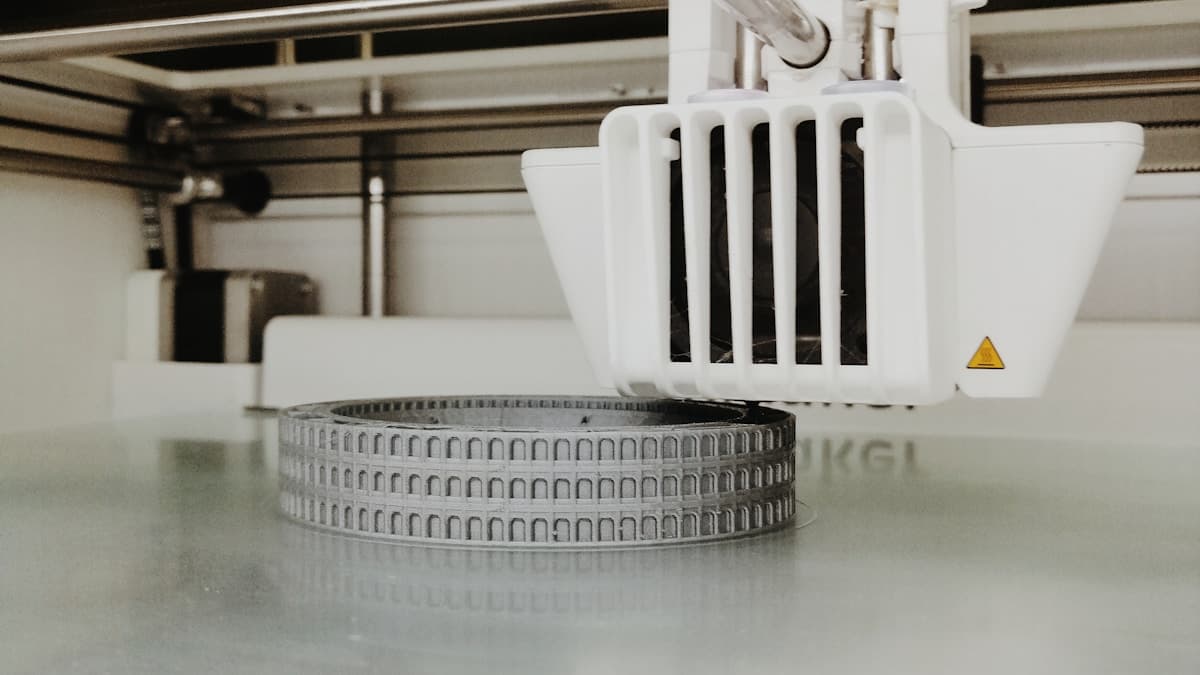
3D printing services for museums and cultural heritage are bought by people with an unusual constraint: the original cannot be risked, cannot be altered, and in many cases cannot be touched. An exhibitions team needs a handling copy of an object too fragile to circulate. A collections manager needs a mount that holds a specific artifact at a specific angle and touches almost nothing. An access officer needs a tactile version of a painting that a visitor can put both hands on. A conservator needs the missing half of a fractured object modelled so a fill can be made off the artifact rather than on it. This guide covers what heritage institutions actually have printed, how the capture stage works and why it costs more than the print, which materials are safe near collections, and how to write a specification a provider can quote. When you are ready to send the work out, browse the 3D printing provider directory.
What Museums Actually Have Printed
Handling and study replicas. Copies that go into schools, outreach boxes and study rooms so the original stays in storage. This is the highest-volume heritage use of printing and the one with the clearest cost case: the replica absorbs the wear that would otherwise fall on an accessioned object.
Tactile models for blind and low-vision visitors. Raised-relief versions of paintings, scaled models of buildings and sites, and enlarged versions of objects too small to read by hand. These are handled hundreds of times a week and must be specified as durable goods, not display pieces.
Custom mounts, cradles and supports. Bespoke shapes that cradle one object and nothing else, printed from a scan of the artifact so the fit is exact without any trial-fitting against the original. Small, invisible, and the single most practical thing printing does for a collections team.
Reconstructions and fills. A missing handle, a broken foot, an absent section of frame — modelled digitally from the surviving geometry and printed, either as a study piece or as a pattern for a fill made in a conservation-approved material.
Exhibition props and set pieces. Objects that stand in for a loan that fell through, gap-fillers in a case, or oversized elements for an interpretive display. This is the same fabrication problem as retail display and signage work, with a curator signing off instead of a brand manager.
Site and architecture models. Excavations, historic buildings, landscape reconstructions — printed at scale in sections. The technical brief matches 3D printing for architectural models closely; only the subject differs.
Retail reproductions. Museum shop editions of collection objects, printed in small runs directly or printed once as a master and then cast. This is the one heritage application with revenue attached, and it carries the heaviest rights questions.
Capture Comes First, and It Is the Expensive Half
Almost every heritage print starts as a scan, because there is no CAD file for a 400-year-old object. That capture stage is where the skill, the risk and usually the money sit.
Photogrammetry needs only a camera and controlled lighting, which makes it the least intrusive option and the one most easily done in a gallery. It captures colour well and geometry adequately, and it struggles on shiny, dark, transparent and featureless surfaces — which describes a lot of glass, metal and glazed ceramic.
Structured-light and handheld blue-light scanning project a pattern onto the object from a stand-off distance and resolve fine surface detail — tool marks, inscriptions, weave. This is the workhorse for object-scale heritage capture. Choosing a 3D scanning service covers how to judge one on stated accuracy rather than marketing resolution.
CT and radiography give you the inside: internal structure, hidden joins, voids and previous repairs. It requires moving the object to a scanner, which is a loan-level decision. The workflow from volumetric data to a printable model is the same one described in 3D printed anatomical models from CT scans.
Three things to fix in writing before anyone arrives with equipment. No contact, no markers, no sprays — adhesive targets and matting sprays are routine in industrial scanning and unacceptable on collection material. Handling by your staff only, with the conservator present for anything fragile. And an agreed accuracy figure, stated as a tolerance on the object rather than a specification sheet number, because a scan good enough for a tactile model is not good enough for a fill that must mate with a fracture surface. The general rules in tolerances and accuracy in 3D printing apply to the printing half of that chain.
Choosing the Process
| Job | Sensible route | Why |
|---|---|---|
| Tactile and handling models | Sintered nylon (SLS/MJF), or FDM in PETG or ASA | Tough, solid in the hand, no brittle failure when dropped |
| Fine-detail small replicas | Resin / SLA | Resolves tool marks, inscriptions and surface texture nothing else catches |
| Full-colour surrogates | Binder jetting or material jetting | Prints captured colour and texture directly; seal the surface afterwards |
| Site, building and landscape models | FDM, large format, printed in sections | Cheapest route to size; see large-format services |
| Mounts and cradles | Nylon or PETG, unpainted | Dimensionally stable, no coating to off-gas in a case |
| Reconstruction patterns for casting | Resin master, then cast in a conservation-approved material | Keeps the printed polymer out of the finished intervention entirely |
Material trade-offs beyond the heritage specifics are in how to choose a 3D printing material. One warning particular to this sector: PLA is the default in most print shops and the wrong default here. It is brittle in handling use and it creeps under sustained load, which is exactly what a mount does for years in a warm case.
The Constraints That Reject a Finished Job
This section is the one that saves projects, because these tests happen after the part is made.
Off-gassing in enclosed cases. Anything sealed in a case with an artifact shares its atmosphere for years. The relevant check is the Oddy test — metal coupons sealed with a sample of the material to see whether it emits anything corrosive — and it takes weeks, so it belongs at the start of a project rather than the week before an install. Freshly printed photopolymer is the material to treat most cautiously, because incomplete curing leaves reactive monomer behind; resin safety and post-processing basics explains why cure state matters so much.
Direct contact. Many institutions simply do not allow an untested printed polymer to touch an accessioned object. Design mounts so the contact points are inert barrier material and the printed part carries the load behind it — this is easier to do at CAD stage than to retrofit.
Reversibility and honesty of intervention. A printed fill that is stronger than the original is a conservation problem, not a solution. Anything joined to an artifact should be removable without damage, and distinguishable on close inspection.
Labelling. Mark reproductions as reproductions, permanently and where a future colleague will find them — an incised date and accession reference on an underside, not a sticker. An unlabelled high-quality replica becomes a provenance problem in twenty years, and this is a documented failure mode, not a hypothetical one.
Rights and consent. The scan of an object is a new dataset with its own rights position, and for ancestral, sacred or community-originating material the question of whether it should be replicated or published at all sits with the source community, not with the institution's digital team. Settle that before capture, not before publication.
Specifying a Heritage Job
Send providers a brief that separates the three phases they will price: capture, model preparation, and print with finish. For each object give the dimensions, the material and condition, whether it can be moved, and the accuracy the end use actually needs. State the deliverables you expect to own — raw scan data, cleaned mesh and print-ready file, in open formats — and the reuse rights that come with them. Name the conservation constraints as requirements, not preferences: no contact, no markers, Oddy-tested material for anything in a case. Give the install or exhibition-opening date, and ask for one finished first-off for sign-off before a batch runs.
Two commercial points worth writing down. Ask for a spare of every handling model from the same print run, because the cheapest replacement is the one printed while the file, the material and the settings are still proven. And ask what happens to the data after the job — retention, deletion, portfolio use — since a heritage scan quietly published on a model-sharing site is a conversation nobody wants to have with a curator. The general submission rules are in how to prepare files for a 3D printing quote.
Finding a Provider Who Can Do This Work
Heritage jobs are usually won by scanning-led shops rather than print-led ones, because the capture is the hard part and the printing is comparatively routine. Look for stated scanning accuracy and the equipment behind it, experience working on site in a controlled environment, and a willingness to accept your handling rules in writing. Ask to see a replica in person under gallery lighting, not a render. Ask what they would do about a glossy black glazed surface, and listen for whether the answer involves spraying it — a provider who reaches for matting spray on collection material has told you what you needed to know.
Browse 3D printing providers and filter by the technologies your job needs — scanning plus resin for object replicas, sintered nylon for handling models, large-format FDM for site models. Send the constraints with the first enquiry rather than after the quote, because in this sector the constraints are the specification.
Related Resources
- Best 3D Scanning Services for Reverse Engineering — how to judge a capture provider
- 3D Printing for Architectural Models — the same brief for buildings and sites
- 3D Printed Anatomical Models from CT Scans — volumetric data to printable model
- Large-Format 3D Printing Services — printing at site-model scale
- 3D Printing Post-Processing and Finishing Services — sealing, smoothing and painting a replica
- Resin Safety and Post-Processing Basics — why cure state matters near collections
- Browse 3D Printing Providers — send the job out
Hero photo by Andrea G via Unsplash.