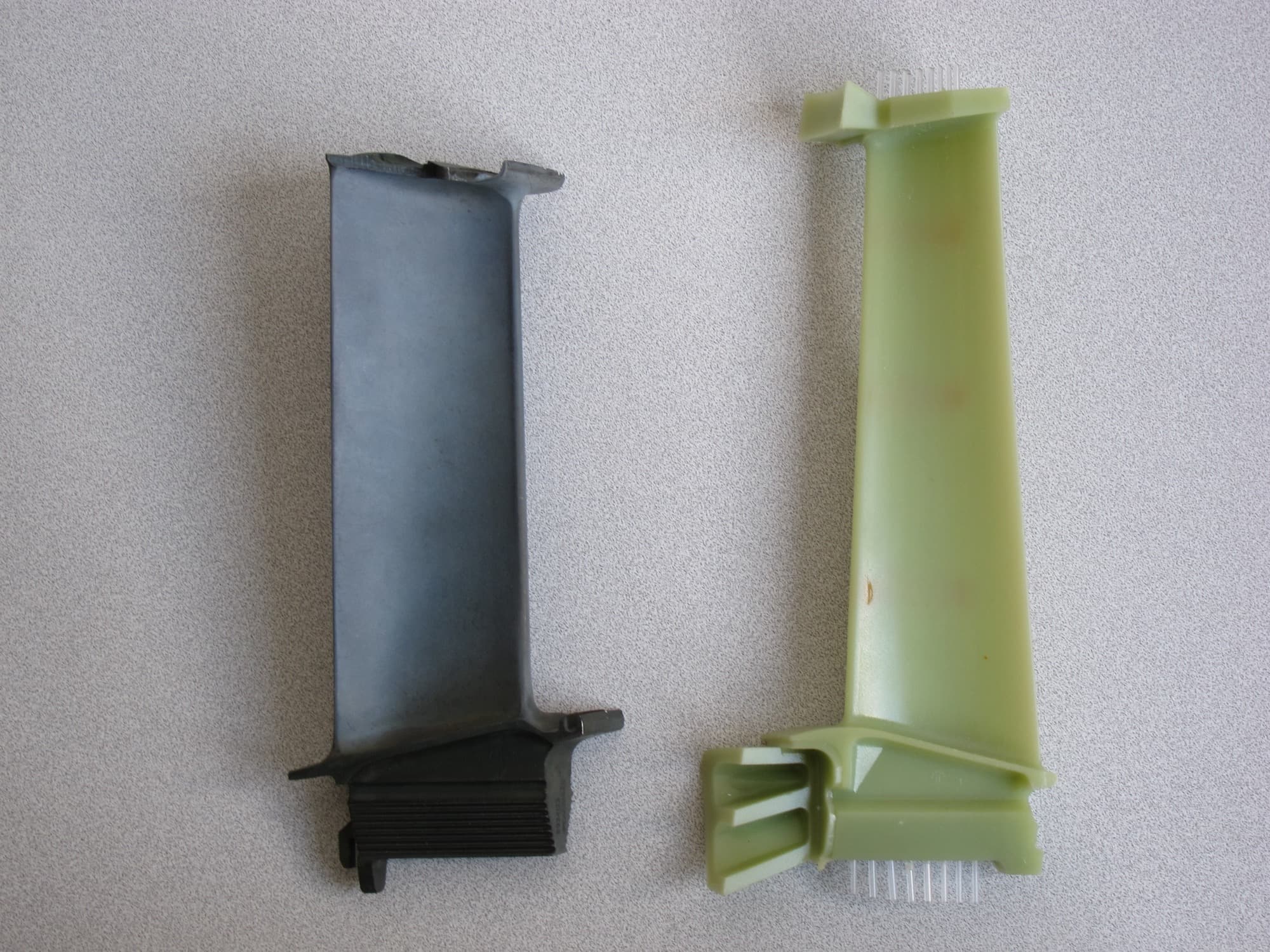
3D printing services for investment casting patterns exist to remove the one step that makes lost-wax casting slow: the wax injection die. Cutting that tool is four to twelve weeks and several thousand dollars before anyone sees a casting, and it is the wrong thing to buy while the geometry is still moving. Print the pattern instead and the same foundry, the same shell room and the same alloy produce a real casting in a couple of weeks, with no tooling to scrap when the design changes. This guide covers which pattern route suits your run, the allowances that have to be in the file before anything is printed, why shells crack during burnout and how to stop it, and what to put in front of a provider to get a real number back. When you are ready to shortlist shops, start with the 3D printing provider directory.
Four Routes to a Pattern
Buyers tend to ask for "a printed pattern" as though it were one thing. It is four, with different economics.
| Route | What you receive | Where it wins |
|---|---|---|
| Printed wax pattern | Patterns in a true foundry wax, ready to gate and tree | The safe default — drops into the foundry's existing burnout with no process change |
| Castable photopolymer pattern | Hollowed resin patterns, burned out rather than melted | Fine detail, thin walls, patterns that must survive shipping without sagging |
| Printed master → silicone tool → injected wax | A soft tool that injects conventional wax | Tens to low hundreds of castings, where a printed pattern each time gets expensive |
| Hard wax injection die | Machined aluminium tooling, the conventional answer | Sustained production, once the design is frozen |
The first two are consumables: you buy a complete pattern for every casting, so the per-part cost never falls. The second two are tooling: they cost money once and amortise. Most projects start on a consumable and move left to right as the design settles, which is worth planning for, because it changes what you ask for in CAD on day one.
What the Foundry Actually Needs From the Pattern
A pattern is not a part. It has one job — to be an accurate void inside a ceramic shell, and then to leave without damaging it.
It must leave cleanly. Wax melts out. Photopolymer does not; it is burned out, and whatever ash it leaves ends up as inclusions in the casting. Ash-free formulation is the whole point of a castable resin, and it is not a property of ordinary SLA resin.
It must not expand on the way out. Covered in detail below. This is the failure that catches first-time buyers.
Surface finish transfers. Everything on the pattern appears on the casting. Layer lines, support scars and a scuffed parting face all print through into the metal, so a printed pattern is normally finished by hand before it goes anywhere near the shell room. That labour belongs on the quote.
It has to be gated and treed. Patterns are assembled onto a sprue with runners, and that assembly decides how the metal fills and feeds. Printing the gating with the pattern is cheap and makes trialling a feed scheme almost free — one of the genuine advantages over a hard die, where changing the gate means changing the tool.
It must hold its shape in a warm room. Wax patterns sag. Resin patterns do not, which is why a pattern that will be shipped across the country is often better in resin even when the foundry would prefer wax.
For the bench-scale version of this same logic — rings, settings, small silver and gold work — see 3D printing services for jewelry and casting patterns. The physics is identical; the scale, the alloys and the inspection requirements are not.
The Shrink Stack-Up, and Who Applies It
Investment casting shrinks twice. The pattern material contracts after it is formed, and the metal contracts again as it solidifies in the shell, so the pattern is deliberately oversize by the sum of both. Combined allowances commonly land between about 1.5% and 3%, varying with alloy and section thickness — and the only number worth using is the one your foundry uses for that alloy, because it reflects their own measured history rather than a table.
Then agree, in writing, on the purchase order, who applies it. The pattern is scaled once and only once. Scale the CAD yourself, let the print shop scale it again to be helpful, and you receive castings that look perfect, measure consistently, and fit nothing. That single line on the order is the cheapest insurance in the process, and it is the same trap described in 3D printing services for sand casting patterns.
Three other allowances have to be in the pattern model, not assumed:
- Machining stock on every surface that has to be accurate — typically 1–3 mm, more on large or thin sections that will move during heat treatment.
- Generous fillets at internal corners. Sharp corners make hot spots and shrinkage porosity, and cost nothing to radius in a printed pattern.
- Core prints and locating features for any internal geometry, which are not part of the finished casting and so will not be in the part model.
Design for 3D printing guidelines covers the printing side of the geometry, and tolerances and accuracy in 3D printing sets expectations for the pattern itself.
Burnout Is Where Printed Patterns Fail
If a job goes wrong, this is usually where. A solid photopolymer pattern heats faster than the ceramic shell around it and expands before it decomposes, and the shell splits from the inside. The shell room sees a cracked mould, the buyer sees a schedule slip, and nobody has yet printed anything wrong.
Three things prevent it, and a provider who has done this work will specify all three without being asked:
- Hollow the pattern. A thin wall with a quasi-lattice or open internal structure collapses inward under thermal load instead of pushing out. This is a print-preparation decision, not a CAD one, and it is the main reason to use a shop with investment-casting experience rather than the cheapest resin printer you can find.
- Add drain holes. At the lowest points in the build orientation, so uncured resin drains and decomposition products escape rather than building pressure.
- Use a validated burnout cycle. Slower ramp, a soak where the pattern softens, and a final burn to clear residue. The foundry needs to have run that specific resin, or be willing to prove the cycle on a scrap pattern first.
The practical takeaway for a buyer: ask the foundry and the print shop the same question — have you burned out this material together before? — and if the answer is no, send printed wax for the first article. Wax removes the entire failure mode at the cost of a little detail.
What Drives the Quote
- Pattern volume and bounding box. Machine time scales with the space the pattern occupies, which is why hollowing saves money as well as shells.
- Hollowing, drains and orientation work. Real CAM labour, and the thing you are actually paying an experienced shop for.
- Hand finishing. Support removal, sanding and sealing the parting surfaces. On a detailed pattern this can be a third of the price.
- Gating and tree assembly. Printed or hand-built, and priced per pattern on the tree.
- How many patterns per tree. Foundry economics, not print economics — a part that trees efficiently costs less per casting at the same quantity.
- Alloy and shell builds. Stainless, nickel alloys and titanium escalate quickly; aluminium and bronze sit at the bottom.
- Inspection and documentation. Dimensional reports, dye penetrant, radiography and material certs are line items, and on regulated work they can exceed the casting cost.
How much 3D printing costs covers the general pricing model. It is always worth pricing the casting route against CNC machining from billet and against metal 3D printing services for the same part — for one to five pieces in a machinable alloy, casting is often the slowest and dearest of the three.
How to Spec the Job
Send this, and the first quote will be the real one:
- STEP geometry, plus the finished-part model separately if they differ, and say which is which.
- The alloy and the specification it is cast to. The shrink factor and half the price follow from it.
- Whether shrink is already applied. In writing, on the order.
- Quantity, and expected annual quantity. These choose between a consumable pattern and soft tooling.
- Pattern material preference — printed wax or castable resin — or a note asking the provider to recommend one and say why.
- Who does the casting. If you already have a foundry, name them and let the two shops talk. If you do not, ask whether the provider casts in house or partners.
- Machining stock and datums, marked up on a drawing rather than described in an email.
- Inspection and certification requirements, up front. Retrofitting traceability onto a finished casting is not possible.
- Delivery point. Patterns shipped straight to the foundry remove a week.
If you are working from a legacy casting with no model at all, the way in is capture rather than modelling: 3D scanning services for reverse engineering covers it, and it is the same route used for the obsolete-component problem in 3D printed replacement and spare parts.
Qualifying a Provider
Four questions separate a shop that has fed a shell room from one that will print your file exactly as sent.
Have you supplied investment casting patterns before, and to whom? The tell is whether they ask about the alloy and the foundry unprompted. A shop that quotes a pattern without asking either has not supplied one.
Do you print wax, castable resin, or both? A shop with only one will recommend only that one. You want the recommendation to come from your part, not their equipment list.
How do you hollow and drain, and will you show me the plan? Ask where the drains go on your specific geometry. The answer tells you whether they are thinking about burnout or about printing.
Is hand finishing included in this price? A pattern is a finished tool, not a print. A quote without finishing is not comparable to one with it.
How to choose a 3D printing service covers the wider checklist, and 3D printing service certifications covers what the paperwork means when the casting is going somewhere regulated.
When Casting Is the Wrong Answer
Three honest cases where printed patterns are not the route:
- Chunky, large, low-detail parts. Shell cost scales badly. A pump housing or a heavy bracket is usually a sand job — see 3D printing services for sand casting patterns.
- One or two parts in a machinable alloy. Billet and a mill will beat a shell room on both time and cost.
- Geometry that only additive can make. Internal channels, conformal cooling and lattices do not survive translation into a pattern. Print the metal directly instead.
Get Patterns and Castings Quoted
Settle three things before you ask anyone for a price: the alloy, the quantity, and who applies the shrink. Everything else on the quote follows from those answers.
Browse 3D printing providers to find shops that take pattern work, or start with Ohio providers if you are near the Midwest casting belt, where much of this capacity sits alongside the foundries it feeds. Ask two or three, and watch for the one that asks you about the burnout cycle — that question is the whole qualification.
Related Resources
- 3D Printing Services for Sand Casting Patterns — the other half of the foundry tooling picture
- 3D Printing Services for Jewelry and Casting Patterns — the same lost-wax logic at bench scale
- Metal 3D Printing Services — when to print the metal part instead of casting it
- SLA 3D Printing Services — the process behind most castable resin patterns
- Rapid Tooling Services — printed and bridge tooling for molding processes
- 3D Printing Services for Aerospace Parts — a sector built on precision castings
- Browse 3D Printing Providers — send the job out
Hero photo by Olivier Cleynen via Wikimedia Commons, licensed CC BY-SA 3.0.