All articles
Buyer GuideCNC Machining3D PrintingManufacturingRFQ

CNC Machining vs 3D Printing (2026): How to Choose

3D Prototyping Hub·
CNC Machining vs 3D Printing (2026): How to Choose

Choosing between CNC machining and 3D printing comes down to five questions: what material, how tight the tolerances, how complex the geometry, how many parts, and how fast you need them. Neither process is "better" — they solve different problems. This guide gives you a clear decision framework so you can specify the right process, or describe your part and get quotes from vetted providers who will recommend one.

The short answer most buyers need: complex geometry, low quantities, and fast iteration favor 3D printing; tight tolerances, standard materials, better surface finish, and higher volumes favor CNC machining. The rest is knowing where your part falls.

The Core Difference: Additive vs Subtractive

  • 3D printing is additive — it builds a part layer by layer, adding material only where the design needs it. That means almost no setup cost, near-total geometric freedom, and cheap one-offs, at the cost of looser tolerances and layer-based anisotropy.
  • CNC machining is subtractive — it cuts a finished part out of a solid block with rotating tools. That yields tight tolerances, excellent surface finish, and full-strength isotropic material, at the cost of setup, fixturing, and the limits of what a tool can physically reach.

Everything below flows from that one distinction.

The Five-Question Decision Framework

1. Material

  • Standard metals and engineering plastics with certified properties (aluminum, steel, titanium, brass, Delrin, PEEK) → CNC machining. You get the real material, full strength, and a certificate.
  • Nylon, resin, or reinforced polymers where complexity matters more than a mill certificate3D printing (SLS/MJF nylon, SLA resin, carbon-fiber filament). For complex metal parts, metal 3D printing is also an option.

2. Tolerance and Surface Finish

  • Critical fits, ±0.05 mm or tighter, smooth as-machined surfacesCNC machining.
  • Functional parts where ±0.2–0.3 mm and some post-finishing are acceptable3D printing.

3. Geometry

  • Internal channels, lattices, organic curves, consolidated assemblies3D printing. These are cheap or free to print and expensive or impossible to machine.
  • Prismatic parts, flat faces, holes, pockets, threadsCNC machining cuts them cleanly and accurately.

4. Quantity

  • 1–20 complex parts3D printing usually wins on cost and speed.
  • Dozens to thousands of simpler partsCNC machining gets cheaper per part as setup is amortized. At very high volumes of simple parts, also weigh injection molding.

5. Speed

  • Fastest first functional part3D printing (no fixturing, prints overnight).
  • Throughput on a production runCNC machining once the setup is done.

Cost: Where the Crossover Happens

3D printing has near-zero setup cost and a per-part cost driven by material volume and print time. CNC machining has real setup cost — programming, fixturing, tool changes — that is spread across the run, plus per-part cutting time.

The practical result:

  • Prototype or one-off, complex → printing is cheaper.
  • Small batch, simple, standard material → it's a genuine toss-up; quote both.
  • Larger batch, simple → machining pulls ahead per part.
  • Very high volume, simple → molding usually beats both.

For a fuller breakdown of print pricing, see How Much Does 3D Printing Cost?.

A Quick Comparison Table

Factor CNC Machining 3D Printing
Process Subtractive (cut from block) Additive (build up layers)
Tolerance ±0.025–0.125 mm typical ±0.1–0.3 mm typical
Surface finish Excellent as-machined Layer lines; often post-finished
Geometry Limited by tool access Near-total freedom
Materials Certified metals & plastics Nylon, resin, reinforced polymers, some metals
Best quantity Dozens to thousands 1 to low hundreds
Setup cost Higher (programming, fixturing) Minimal
Best for Precision, strength, finish, volume Complexity, iteration, low volume

When You Don't Have to Choose

Plenty of projects use both: print the early iterations to validate form and fit fast, then machine the final in the production material once the design is locked. Or split an assembly — machine the precision-critical parts and print the complex brackets and housings around them. A good provider will tell you when a hybrid approach is cheaper than forcing one process to do everything.

Get a Quote

The fastest way to know which process fits your part — and what it costs — is to put it in front of providers who run both. Describe the part's function, material, tolerances, quantity, and deadline, and you'll get back a recommendation and a price, often for both options when it's a close call.

Get a quote from vetted 3D printing and machining providers →

For a smooth quote, send a STEP file for machining or an STL for printing, and follow How to Prepare Your Files for a 3D Printing Quote. Comparing platforms? See Xometry Alternatives.

Related Resources


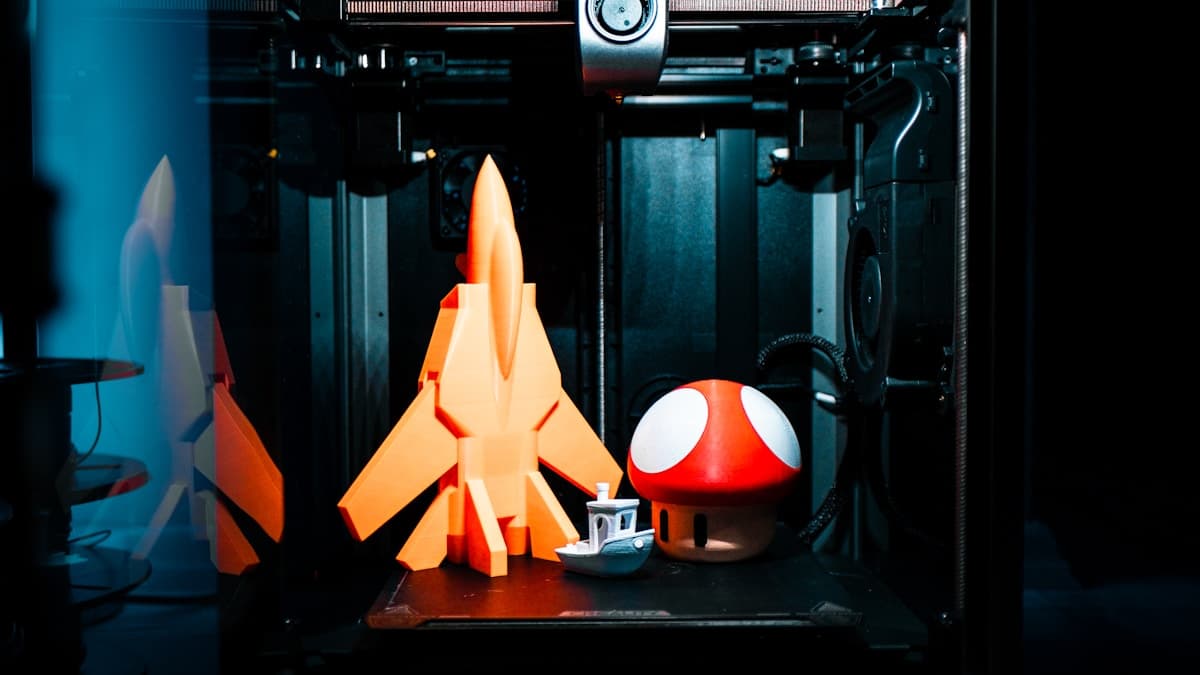
Hero photo by Geri Sakti on Unsplash. 3D Prototyping Hub connects buyers with vetted 3D printing and manufacturing providers — submit a quote request and we route it to shops that fit your part.

Frequently Asked Questions

Ready to find a 3D printing service provider?

Browse 2,000+ verified providers across the United States and submit your quote request free.

Browse Providers