Looking for 3D printing services in Alaska? The 3D Prototyping Hub directory lists 14 providers across the state, and the fastest route to a quote is the Alaska provider directory — filter by city and material, then send your file to the shops that actually fit the part. Nearly all of them are small independent operations, and in a state where the alternative is a week of barge freight, a local shop is often worth a premium.
If you want to understand the market first — where the capacity sits, what Alaska's industry base means for the work local shops take, and how to specify a part that survives here — this guide covers it.
Where Alaska's 3D Printing Capacity Actually Is
The state's listings sit in three cities, and everything else is served from one of them.
| City | Listed providers | Directory page |
|---|---|---|
| Anchorage | 9 | /providers/location/ak/anchorage |
| Fairbanks | 4 | /providers/location/ak/fairbanks |
| Juneau | 1 | /providers/location/ak/juneau |
Anchorage holds nearly two thirds of the state's listed capacity, which follows from everything else about the city: it is Alaska's largest population centre, its freight gateway, the home of Joint Base Elmendorf-Richardson, and the base for most of the engineering, marine and energy services that operate statewide. The listings there are a mix — dedicated makerspace and manufacturing-services operations alongside commercial print, sign and office-supply businesses that added 3D printing to an existing menu. Both kinds are useful, for different jobs. If you are anywhere on the road system or on the Kenai Peninsula, this is your market.
Fairbanks carries four listings and is the more interesting market relative to its size. The University of Alaska Fairbanks anchors serious Arctic and geophysical research and runs one of the country's established unmanned-aircraft programmes; Fort Wainwright and Eielson Air Force Base sit alongside it; and the Interior mining sector works out of the same corridor. At least one Fairbanks listing is an additive-manufacturing business rather than a print shop that branched out. Fairbanks is about 360 road miles north of Anchorage on the Parks Highway — six hours in good conditions, and a different proposition in January.
Juneau has a single listing, and it is the one that best explains Alaska. The capital is not connected to the road system at all: everything arrives by air or by barge, and Southeast Alaska is logistically closer to Seattle than to Anchorage. A local printer in that situation is not a convenience, it is a way to skip a supply chain.
The absences are as informative as the counts. The Mat-Su Valley — Wasilla and Palmer — is among the fastest-growing parts of the state and has no listing of its own, though it is under an hour from Anchorage. Kenai and Soldotna serve the peninsula's oil, gas and fishing economy; Kodiak, Ketchikan, Sitka and Unalaska anchor the marine sector; Bethel, Nome and Utqiagvik are regional hubs for large off-road-system areas. None carries a listing. If you are in one of those places, start from the statewide page and expect to work with a shop in Anchorage or Fairbanks — they routinely ship across the state, because there is no other way to operate here.
What Drives Demand Here
Alaska's industrial mix decides what local shops are genuinely good at, and matching the shop to the work is worth more than shaving ten percent off a quote.
Remoteness itself. This is the state's defining additive use case and it has no equivalent in the Lower 48. Alaska has no road link to the contiguous United States except through Canada, most communities are not on the road system at all, and a routine spare part can mean a week of barge freight out of Tacoma or an expensive air charter. That maths makes printed interim and replacement parts pay for themselves faster here than almost anywhere — a bracket, a bushing, a housing or a guard that keeps equipment running until the real part lands. 3D printing replacement and spare parts covers how that job normally runs.
Marine and commercial fishing. From Dutch Harbor and Kodiak through Bristol Bay and Southeast, the fishing fleet and the processors behind it generate constant demand for gear components, sensor and electronics housings, deck fittings and pattern work for replacements whose original supplier is long gone. Season windows are short and unforgiving, which is exactly the condition that justifies a printed part. 3D printing services for marine and boat parts covers what saltwater service asks of a material.
Oil, gas and mining. The North Slope and the trans-Alaska pipeline corridor drive demand for handling fixtures, instrument enclosures, wear-part prototypes and training aids across sites where downtime economics are brutal and the nearest supplier is a flight away. The Interior and Southeast mining operations add the same pattern. 3D printing services for oil and gas equipment covers what that work demands of a provider.
Aviation. Alaska runs on aircraft to a degree no other state does, from bush operators serving villages to one of the world's busiest air-cargo hubs at Anchorage. Most of the printed work around it is ground-side rather than flight-critical — maintenance jigs, tooling, cabin and interior fixtures, mock-ups and training hardware — and that is the right expectation to bring to a small shop. Anything flight-critical carries certification requirements a general job shop will not hold, which is a qualifying question, not an assumption. See 3D printing services for aerospace parts for what that distinction involves.
Research, unmanned aircraft and cold-climate testing. UAF's Arctic research programmes and its unmanned-aircraft work underwrite hardware that would not otherwise exist in a state of 730,000 people — sensor and antenna mounts, airframe brackets, instrument enclosures and test articles, much of it designed to work at temperatures that break ordinary parts. 3D printing services for drone and UAV parts goes deeper on that category.
Tourism, retail and signage. Southeast's cruise season and the statewide visitor economy support display work, signage components, retail fixtures and short-run product — which is precisely the work several of the print-and-sign listings are set up to do well.
What You Can Get Printed Locally
- Replacement and obsolete parts — the standing Alaska job, and the one with the clearest payback.
- Functional prototypes — parts that have to fit, load or seal before you commit to tooling.
- Jigs, fixtures and shop aids — the fastest-payback category in most working shops. 3D printing services for jigs, fixtures and manufacturing aids goes deeper.
- Enclosures and mounts — housings for field electronics, sensors and instrumentation.
- Patterns and tooling — printed patterns for casting and layup, where additive meets the state's fabrication and marine trades.
- Concept and display models — form studies, visitor-centre and retail pieces, usually resin for surface finish.
- Short production runs — bridge quantities between prototype and moulding; low-volume 3D printing services covers where that crossover sits.
Processes and When to Use Each
| Process | Best for | Trade-off |
|---|---|---|
| FDM | Functional prototypes, jigs and fixtures, larger parts, engineering plastics | Visible layer lines; weaker across layers |
| SLA / resin | Fine detail, smooth surfaces, small precise parts, display models | More brittle; needs post-processing; costs more per part |
| SLS / MJF nylon | Durable functional parts, complex geometry, no supports needed | Grainy finish; no listed local providers; higher minimums |
| Metal | End-use metal components, tooling inserts, high-temperature parts | Most expensive; longest lead time; certain to be subcontracted |
No process coverage is recorded for any Alaska listing, so treat the directory filters as a starting point and confirm capability with the shop directly. SLS 3D printing services and metal 3D printing services go deeper on the two processes you should expect to be sent out of state, and how much 3D printing costs explains what actually drives the number on a quote.
How to Choose an Alaska Provider
Treat the state as one market, then price the freight. With 14 providers spread across three cities, ruling shops out on drive time leaves you with almost nothing. Ask what it costs to get the finished part to your town and add it to the quote before you compare — and if you are off the road system, ask which carrier and which schedule, not just how much.
Check what kind of shop you are talking to. Several Alaska listings are commercial print, sign or office-supply businesses that added 3D printing alongside an existing service. That is perfectly good for a display model, a sign component or a straightforward housing, and it is the wrong place to send a loaded structural part. Ask what machines they run and what they print in a normal week.
Ask whether the capability is in-house. Especially for SLS, metal and anything genuinely large. You should know before you commit, because subcontracting to the Lower 48 puts two freight legs in your lead time rather than none.
Specify the material for the climate, not just the process. "FDM" spans PLA and glass-filled nylon, and the gap between them is the difference between a part that survives a winter and one that shatters. Say what the part has to endure — cold impact, UV, salt spray, fuel, vibration — and let the shop propose the polymer. How to choose a 3D printing material covers the trade-offs.
Ask about tolerances up front. Additive tolerances are process-dependent and not what a machinist would assume. Tolerances and accuracy in 3D printing covers what is realistic to ask for.
Get turnaround in writing, and separate print time from transit time. A two-day print is not a two-day delivery in Alaska. If the part is urgent, ask whether you can collect it, and if you cannot, agree a carrier and a committed date before the job starts.
Nearby Markets
If Alaska's capacity does not cover your part, the nearest deep market is Washington — the Seattle and Tacoma corridor is where most Alaska freight originates, so a Puget Sound bureau is often already in your supply chain for SLS, metal, certified work and anything large. Oregon and Idaho are reachable on the same rails. Hawaii is worth reading if you want the parallel case — the other state where freight, not machine time, sets the schedule. And if you are weighing a local shop against a bureau, online vs local 3D printing services lays out the trade. For the work most likely to stay local — fixtures, replacement parts, marine and field one-offs — an Alaska shop will almost always be faster, because it is the only option that does not cross the Gulf.
Get Quotes From Alaska Providers
Browse the Alaska provider directory to see all 14 listed providers, filter by city and material, and send your part to the shops that fit it. If you would rather compare across the region, start from the full provider directory.
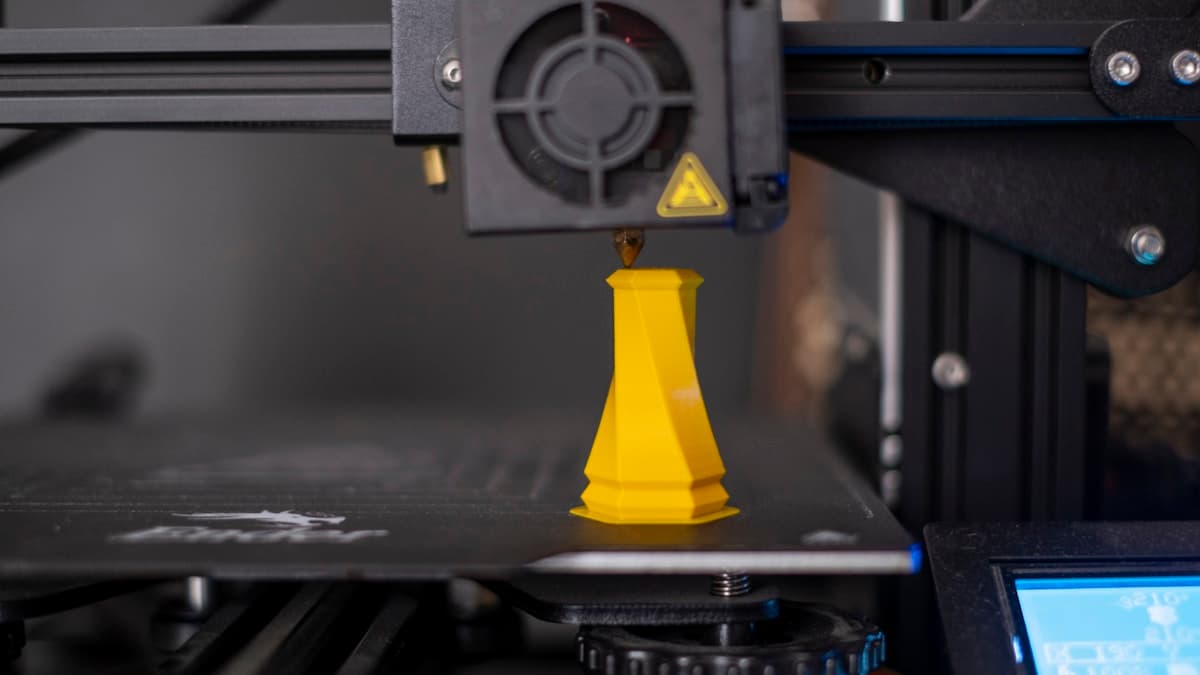
Hero photograph by Osman Talha Dikyar via Unsplash.