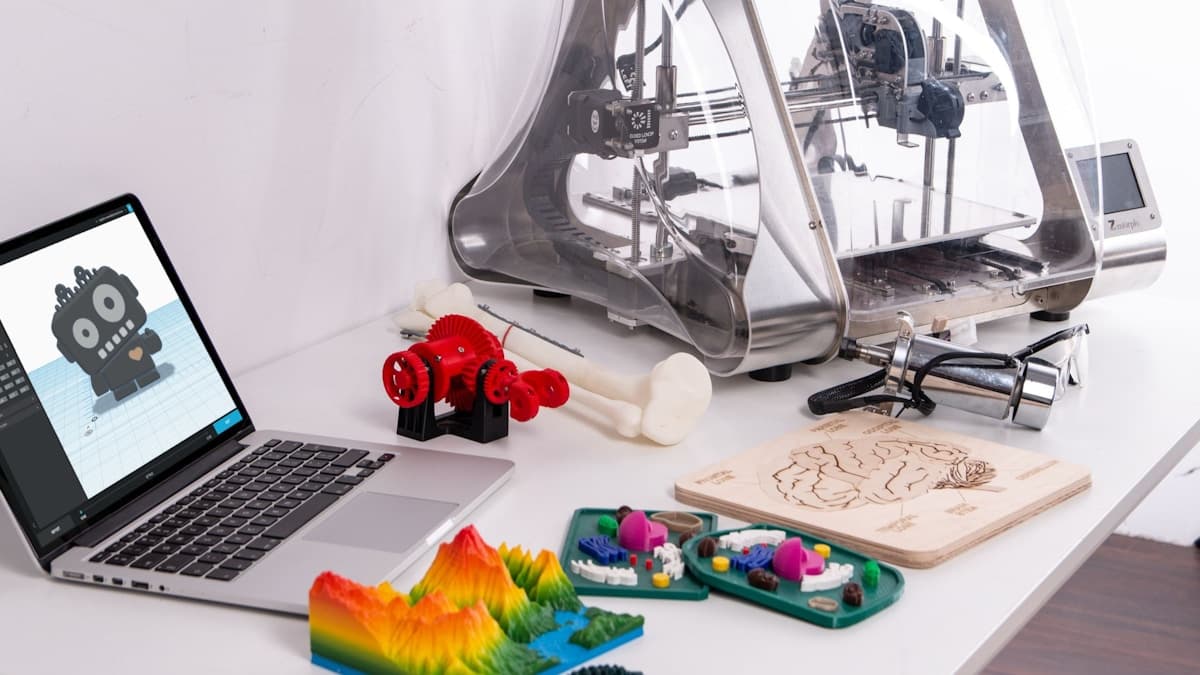
Looking for 3D printing services in Hawaii? The 3D Prototyping Hub directory lists 21 providers across the islands, and the fastest route to a quote is the Hawaii provider directory — filter by city and material, then send your file to the shops that actually fit the part.
Hawaii is the one state where "should I just order this from the mainland?" has an easy answer. Every mainland option puts 2,400 miles of ocean between you and your part. A shop in Honolulu does not. That single fact should shape how you buy printing here, and this guide covers the rest: where the capacity sits, what the islands' industry base means for the work local shops take, and how to choose between them.
Where Hawaii's 3D Printing Capacity Actually Is
The listings are heavily concentrated on Oahu, and there is no point pretending otherwise.
| City | Listed providers | Directory page |
|---|---|---|
| Honolulu | 19 | /providers/location/hi/honolulu |
| Aiea | 1 | /providers/location/hi/aiea |
| Hilo | 1 | /providers/location/hi/hilo |
Honolulu is the market. Nineteen of the state's 21 listings sit there, and they split into two recognisable groups. One is a set of dedicated additive and fabrication businesses — small operations running desktop and benchtop machines for prototype, replacement and custom work. The other is the island's established commercial print, sign and reprographics trade, which added 3D printing to an existing service menu. Both are useful; they are useful for different jobs, and telling them apart before you send a file saves everyone a round trip.
Aiea carries one listing, ten minutes up the H-1 from downtown and effectively part of the same Oahu market. Treat it as a Honolulu-area option rather than a separate one.
Hilo is the only listing outside Oahu, and it matters more than a count of one suggests. Hilo is the gateway to the Mauna Kea observatories and to the University of Hawaii at Hilo, and it is the practical east-side option on Hawaii Island for work you would rather not put on a plane.
Four absences are worth naming. Maui, Kauai, Molokai and Lanai carry no listings at all, and neither does Kailua-Kona on Hawaii Island's west side. That is a gap in the directory, not proof of an empty market — school and university labs, makerspaces and sole traders operate on every island without showing up as commercial listings. If you are on a neighbor island, start from the statewide page, expect to work with an Oahu shop, and settle how the part gets to you as part of the quote rather than after it.
What Drives Demand Here
Hawaii's economy decides what local shops are genuinely good at, and matching the shop to the work is worth more than shaving ten percent off a quote.
Defense and the shipyard. Pearl Harbor Naval Shipyard, Joint Base Pearl Harbor-Hickam, Schofield Barracks and the Pacific Missile Range Facility on Kauai anchor the largest technical employer base in the state. That work generates handling and layup fixtures, tooling aids, enclosures for field instrumentation and interim replacement parts for equipment whose supply chain runs through a port 2,400 miles away. Downtime is expensive and the freight clock is long, which is exactly the condition under which a printed part earns its place. 3D printing services for jigs, fixtures and manufacturing aids covers how that job normally runs.
Marine, ocean science and offshore energy. Boatyards, dive and charter operations, the Hawaii Institute of Marine Biology and the ocean-science and aquaculture tenants at Keahole on Hawaii Island all generate sensor housings, custom mounts, sampling fixtures and replacement hardware for equipment that lives in salt water. Material choice carries more weight here than it does almost anywhere else — see the section below.
Astronomy and instrumentation. The Mauna Kea summit facilities, their Hilo support base and the University of Hawaii's Institute for Astronomy produce a steady stream of optical and sensor mounts, cable management, lab fixtures and enclosures for instruments that do not exist commercially and never will. Small, precise, one-off, and usually needed this week.
Tourism and hospitality. The state's largest industry runs on display and signage components, retail fixtures, replacement fittings for equipment that a mainland supplier will not ship a $9 part for, and props for events and attractions. Prosaic work, and consistently the fastest thing on this list to have made.
Research, healthcare and education. The University of Hawaii at Manoa's engineering and research programmes, The Queen's Medical Center and the state's clinical base generate lab fixtures, device prototypes and surgical planning models. 3D printing for medical devices goes deeper on what that work requires of a provider.
Film, television and events. Hawaii's long-running production industry needs props, set dressing, camera and rigging accessories and replacement parts made overnight — the classic case for a local shop, because a production day cannot wait on a barge.
Agriculture and food production. Coffee, macadamia, tropical fruit and the seed-corn operations on Kauai, Molokai and Oahu run older equipment far from its manufacturer. Replacement fittings, guards, sensor mounts and one-off parts for machinery whose original supplier disappeared years ago are the standing job. 3D printing replacement and spare parts covers that pattern.
Cultural and museum work. Bishop Museum, the state's interpretive sites and a substantial cultural-arts community sustain real demand for replicas, display mounts, exhibit components and small-batch fabrication — work that sits naturally with the island's print and sign shops.
What You Can Get Printed Locally
- Functional prototypes — parts that have to fit, load or seal before you commit to tooling.
- Replacement and obsolete parts — the highest-value category in an island economy, because the alternative is a two-week freight wait for a part that may not exist any more.
- Jigs, fixtures and shop aids — the highest-volume category in most working shops and the one with the fastest payback.
- Concept and appearance models — form studies and design reviews, usually resin for surface finish.
- Architectural and site models — a real market given the pace of construction on Oahu; 3D printing for architectural models covers what those need.
- Short production runs — bridge quantities between prototype and injection moulding; low-volume 3D printing services covers where that crossover sits.
- High-detail small parts — fine mechanical components, dental and medical models, cultural replicas.
Processes and When to Use Each
| Process | Best for | Trade-off |
|---|---|---|
| FDM | Functional prototypes, jigs and fixtures, larger parts, engineering plastics | Visible layer lines; weaker across layers |
| SLA / resin | Fine detail, smooth surfaces, small precise parts, appearance models | More brittle; needs post-processing; costs more per part |
| SLS / MJF nylon | Durable functional parts, complex geometry, no supports needed | Grainy finish; few or no on-island providers; higher minimums |
| Metal | End-use metal components, tooling inserts, high-temperature parts | Most expensive; longest lead time; almost certainly subcontracted off-island |
FDM and resin are what Hawaii's listings actually run. SLS 3D printing services and metal 3D printing services are the two most likely to be sent to the mainland from a market this size — worth asking about directly, because a subcontracted part adds a Pacific round trip to your schedule. How much 3D printing costs explains what actually drives the number on a quote, and large-format 3D printing services covers the size ceiling you are likely to hit before you hit a capability one.
Specify for Salt, Sun and Humidity
This is the section that is genuinely different in Hawaii, and it is worth more than any pricing advice on this page.
Name the polymer, not just the process. "FDM" spans PLA and glass-filled nylon. PLA is fine indoors and a poor choice for anything that will sit in a parked car, on a lanai or on a boat — it softens at temperatures Hawaii reaches routinely and yellows under year-round UV. For outdoor and marine parts, ask about ASA, PETG or a filled nylon, and say plainly what the part has to survive: direct sun, salt spray, wash-down, or all three.
Ask how the shop stores its material. Ambient humidity here is high year-round, and nylon, PETG and TPU all absorb moisture from the air. Wet filament prints with poor layer adhesion and a rough surface, and the part fails in the way that is hardest to diagnose from a photograph. A shop that keeps material in sealed storage or dry cabinets is telling you something real about its process control.
Resin parts need finishing and shade. Standard photopolymers keep curing in sunlight and get brittle with UV exposure. For a display or outdoor resin part, ask what the finishing and coating plan is rather than assuming one exists.
Design for metal fasteners. Salt air is unkind to printed threads and press fits over time. Heat-set inserts and stainless hardware in a printed body will outlast a printed thread by a wide margin.
How to Choose a Hawaii Provider
Treat Oahu as your market wherever you live. In a 21-provider state, ruling out shops by island leaves you with almost nothing. Ask what a shop charges to get a finished part to your island and add it to the quote. It is usually small next to the difference between two shops' machine time — and far smaller than mainland freight.
Check what kind of shop you are talking to. Several Hawaii listings are print, sign and repro businesses that added 3D printing alongside an existing service. That is perfectly good for a display model, a sign component or a straightforward part, and it is the wrong place to send a loaded structural component. Ask what machines they run and what they print in a normal week. How to choose a 3D printing service covers the qualifying questions in more detail.
Ask whether the capability is in-house. Especially for SLS, metal and anything genuinely large. Subcontracting is common and legitimate, but here it means your part crosses the Pacific twice, so you need to know before you commit.
Ask about tolerances up front. Additive tolerances are process-dependent and not what a machinist would assume. Tolerances and accuracy in 3D printing covers what is realistic to ask for.
Settle the shipping method, not just the date. "It ships Thursday" means one thing on interisland air cargo and another on a weekly barge. If the part is urgent, agree the carrier and the service level in writing, or collect it in person. Same-day and rush 3D printing services covers what a genuine rush arrangement looks like.
Nearby Markets
There is no neighbouring state, which is the point. When the work genuinely cannot be done on-island — SLS nylon, metal, certified production — California is the deepest market on the nearest coast and the sensible first check, and Seattle adds an aerospace-heavy base with regular freight to Honolulu. Build the ocean or air freight into the schedule from the start rather than discovering it at the end. For everything else — fixtures, replacement parts, prototypes, display work — an island shop will be faster every time.
Get Quotes From Hawaii Providers
Browse the Hawaii provider directory to see all 21 listed providers, filter by city and material, and send your part to the shops that fit it. If you would rather compare across the wider market, start from the full provider directory.
Hero photograph by Xiaole Tao via Unsplash.