Looking for 3D printing services in Idaho? There is one thing worth knowing before you start calling shops, and it contradicts what you would guess: the state's additive capacity is not centred on Boise. The 3D Prototyping Hub directory lists 35 providers across Idaho, and the largest single cluster is in Coeur d'Alene. The fastest route to a quote is the Idaho provider directory — filter by city, technology and material, then send your file to the shops that actually match your part.
If you would rather understand the market first, this guide covers where the capacity is, why it sits where it does, and what to ask before you hand over a file.
Where Idaho's Capacity Actually Sits
| City | Listed providers | Directory page |
|---|---|---|
| Coeur d'Alene | 14 | /providers/location/id/coeur-d-alene |
| Boise | 13 | /providers/location/id/boise |
| Idaho Falls | 8 | /providers/location/id/idaho-falls |
Three cities, and that is the whole listed market. Most states spread their capacity across eight or ten towns with a long tail of ones and twos. Idaho does not — it concentrates into three tight pools with a lot of empty map between them.
Coeur d'Alene carries the most listings in the state, which reads as an anomaly until you look at a map. It sits roughly 30 miles east of downtown Spokane, and functionally it is part of that metro's industrial base rather than a standalone northern Idaho market. One of the businesses listed with a Coeur d'Alene address has Spokane in its own trading name. The cluster is a genuine mix: engineering and prototyping firms, machining shops that added additive, reprographics businesses, and a community makerspace. It also holds the closest thing Idaho has to an industrial additive anchor, in the form of a composites-focused manufacturer working with continuous fibre.
Boise is the second pool at 13, and it is the most varied in kind. The Treasure Valley's listings run from dedicated additive service businesses through to filament suppliers, print-and-mail shops, a STEM education supplier and small custom-print operations. That breadth is useful and it means you have to qualify harder: "3D printing" on a Boise listing covers everything from a one-person hobby-scale service to a shop that will read your drawing and tell you the geometry will not print.
Idaho Falls is the smallest pool at 8 but punches above its listing count. Eastern Idaho's economy has a strong technical and research component, and the local listings reflect that — alongside the small custom-print and sign businesses you would expect, there is bureau capability here that does not exist in every market this size. If you are in the eastern Snake River Plain, do not assume you have to look west.
What Drives Demand Here
Idaho's industrial mix determines what local shops are actually practised at, and matching a provider to the kind of work you do is worth more than shaving ten percent off a quote.
Aerospace and composites in the north. The Coeur d'Alene–Post Falls–Spokane corridor has a real advanced-materials and aerospace-supply presence. Shops that grew up serving it tend to be comfortable with drawings, revision control and tolerance callouts, which is not universal in the desktop-printing world.
Semiconductor and hardware in the Treasure Valley. Boise's technology base is built on chip manufacturing and the supplier ecosystem around it. That produces steady demand for fixtures, jigs, enclosures and short-run functional parts — the unglamorous work that keeps a line running — rather than showpiece prototypes.
Research and energy in the east. Idaho Falls sits next to a major national research footprint, and technical demand there skews toward one-off components, test fixtures and parts that have to be specified precisely rather than eyeballed.
Outdoor products, agriculture and machinery statewide. Idaho's manufacturing base is heavy on equipment, and equipment generates replacement parts, mounting hardware and short-run brackets. This is the single most common real job printed in the state, and it has direct consequences for material choice — covered below.
What You Can Get Printed Locally
- Prototypes and design iterations — the most common job, and the one local shops are best set up for. Same-day or next-day turnaround is realistic on a straightforward FDM part.
- Functional end-use parts — brackets, housings, guards, fixtures. Available across all three clusters, but material selection matters far more than it does for a visual prototype.
- Jigs, fixtures and tooling aids — the highest-value use for most manufacturers, because a printed fixture that takes a day to make replaces a machined one that takes three weeks.
- Short production runs — realistic in the tens to low hundreds. Past that, run the numbers against tooling. Our guide to low-volume 3D printing services covers where the crossover sits.
- High-detail models and miniatures — resin work is well represented, particularly among the smaller custom-print businesses in Boise and Idaho Falls.
- Replacement and legacy parts — reproducing something no longer manufactured. Common on agricultural and industrial equipment across the state.
Processes and When to Use Each
| Process | Best for | Trade-off | Availability in Idaho |
|---|---|---|---|
| FDM | Functional parts, fixtures, fast prototypes, larger geometry | Visible layer lines, weaker across layers | Widely available in all three clusters |
| Resin (SLA/DLP/LCD) | Fine detail, smooth surfaces, miniatures, dental and jewellery patterns | More brittle, needs post-cure, smaller build volumes | Available, mostly at the smaller shops |
| SLS / MJF nylon | Durable functional parts, complex geometry, no support scarring | Higher cost, grainy surface finish | Limited — confirm in-house capability before you commit |
| Metal | Load-bearing and high-temperature parts | Expensive, long lead times | Effectively broker or subcontract territory here |
If you are still deciding between the first two, SLA vs FDM printing explained walks through the choice on a real part rather than in the abstract. For the powder-bed options, see SLS 3D printing services.
Cities and Regions Covered
Idaho's three pools are separate markets, not a single one. Search within your region first:
- Coeur d'Alene — 14 providers; the panhandle, and effectively part of the Spokane market. Serves Post Falls, Hayden, Sandpoint and Rathdrum. If you are in northern Idaho, this is your default. It is also worth searching alongside eastern Washington — see our guide to 3D printing services in Washington.
- Boise — 13 providers; the Treasure Valley, covering Meridian, Nampa, Caldwell, Eagle and Kuna. Also the natural search for eastern Oregon; our Oregon guide covers the other side of that border.
- Idaho Falls — 8 providers; eastern Idaho, reachable from Rexburg, Blackfoot, Pocatello and the Teton valley.
Nothing listed in Twin Falls, Lewiston, Moscow or Sun Valley yet. If that is where you are, the honest answer is that you are choosing between a drive, a shipping relationship with one of the three clusters, or an online bureau — and for a settled file, shipping is usually the right call.
How to Choose Among Them
Separate the print shops from the engineering shops. Several Idaho listings are reprographics, copy or sign businesses that added additive as a service line. That is genuinely useful for a straightforward part from a finished file, and a poor fit if you need someone to catch a problem in your geometry. Read what the business does first, not just what technologies it lists.
Ask what runs in-house. A shop that subcontracts nylon or metal is not disqualified — subcontracting is normal — but it changes lead time, cost and accountability. You want to know before the quote, not after the part is late.
Match the material to the environment, not just the drawing. This matters unusually much in Idaho, where a large share of printed parts end up on farm equipment, outdoor products or a shop floor. PLA is the most commonly available material and the least suited to heat, UV or sustained load — a bracket that is fine on a bench will creep in a cab in August. If the part lives in a real environment, say so up front and let the shop steer you to PETG, ABS, nylon or TPU.
Be explicit about tolerances. "Tight" means different things to a service bureau and a machinist. If a dimension is critical, call it out with a number and a direction. Tolerances and accuracy in 3D printing covers what is actually achievable per process.
Get two quotes on the same file. Not to squeeze the price, but because the difference in how two shops read the same geometry tells you which one is paying attention. If you want the full checklist, read how to choose a 3D printing service.
Send a file the shop can actually use. Most quoting delays are file problems, not shop problems. How to prepare files for a 3D printing quote is a five-minute read that routinely saves a day.
Get Quotes From Idaho Providers
Browse the full Idaho directory, filter to your city, process and material, and send your file to two or three shops that fit. If your region looks thin — and in Idaho it might — widen to the whole provider directory rather than settling for a shop that is close but wrong. Plenty of providers quote out of state, and for a settled file that is often the better outcome.
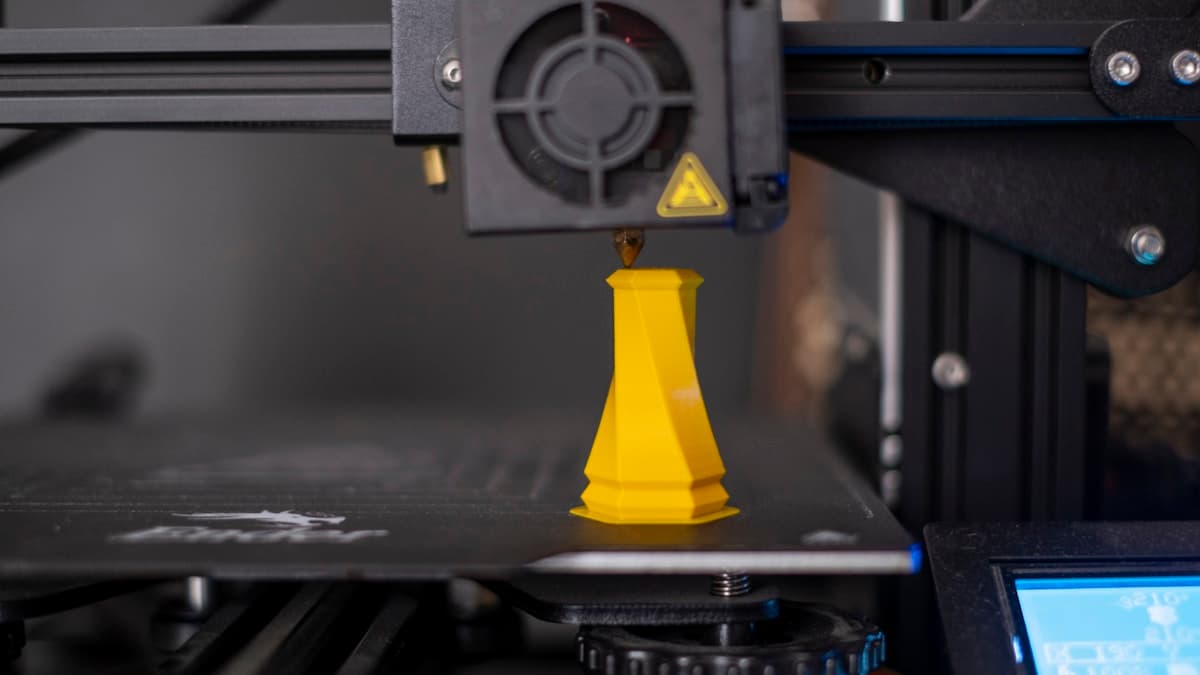
Hero photograph by Osman Talha Dikyar.