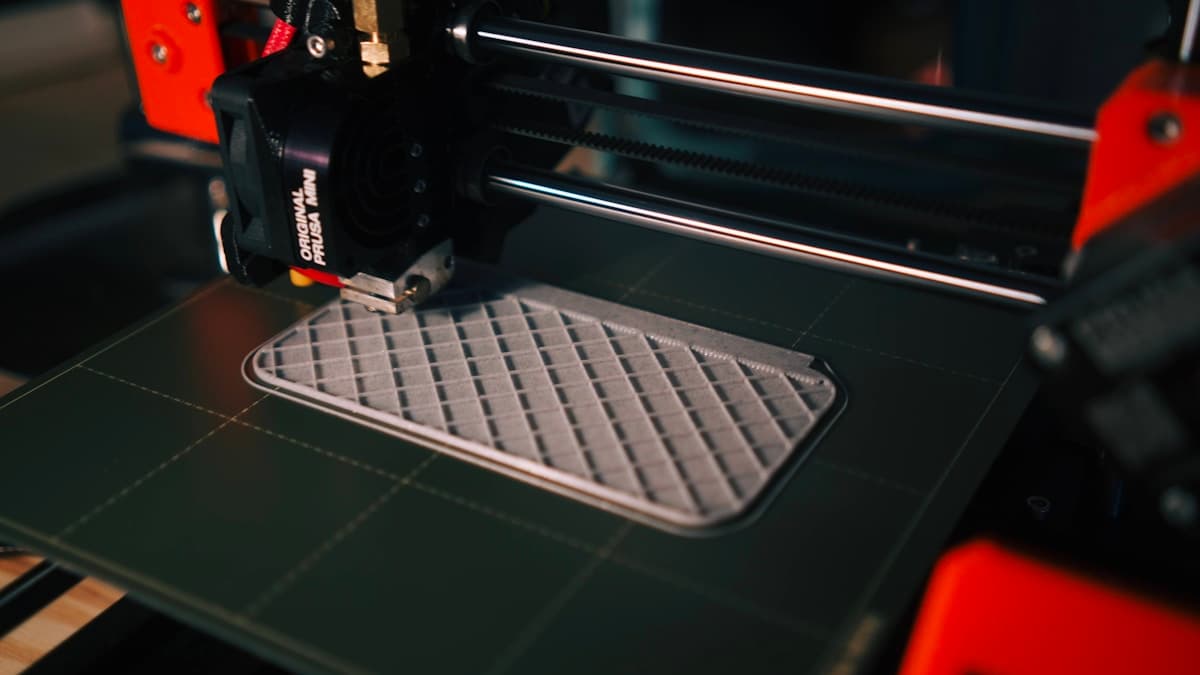
Looking for 3D printing services in Oregon? You are searching in a state with an unusually varied additive demand base: semiconductor fabs, athletic footwear design studios, heavy truck plants and a specialty metals corridor all sit within a two-hour drive of each other, and each pulls local shops toward different capabilities. The 3D Prototyping Hub directory lists 35 providers across Oregon. The fastest route to a quote is the Oregon provider directory — filter by city, technology and material, then send a request to the shops that actually fit your part.
If you want to understand the local market first — who is where, what they are set up to do, and how to pick — this guide covers it.
Where Oregon's 3D Printing Capacity Actually Is
Oregon's capacity follows the Willamette Valley. Portland leads, but the I-5 corridor down through Salem, Albany and Eugene carries more than a third of the listings, which is a healthier spread than most states this size.
| City | Listed providers | Directory page |
|---|---|---|
| Portland | 15 | /providers/location/or/portland |
| Eugene | 6 | /providers/location/or/eugene |
| Salem | 6 | /providers/location/or/salem |
| Beaverton | 2 | /providers/location/or/beaverton |
| Jackson County | 2 | /providers/location/or |
| Albany, Lake Oswego, Wilsonville, Tualatin | 4 combined | /providers/location/or |
Portland is the deepest market and the default starting point. It carries the widest process coverage in the state and enough shops chasing similar work to keep quoted turnaround honest. It is also where the state's heavy vehicle manufacturing and aerospace metals sit, which pulls capability upward.
Eugene is a genuine second market rather than a smaller Portland. The university research base drives lab fixtures, test rigs and one-off scientific hardware, and the surrounding outdoor products industry adds functional prototype work.
Salem serves state government, agriculture and food processing. Work here leans practical: replacement parts for equipment that is out of production, guarding, fixtures and short-run components.
Beaverton, Lake Oswego, Wilsonville and Tualatin form the western suburban ring. Individually thin, but they sit inside the same metro as Portland's 15 listings, so treat them as part of one market rather than separate ones.
Albany is worth knowing about specifically. The town is a long-standing centre for reactive and refractory metals — titanium and zirconium in particular — and that history means metals expertise in the mid-valley runs deeper than a single listing suggests.
Jackson County covers the Medford area in southern Oregon. Two listings is thin, but if you are south of Eugene it is worth checking before assuming you need to ship north.
What Drives Demand Here
Oregon's industrial mix determines what local shops are genuinely good at. Matching a provider to the kind of work you do is worth more than shaving ten percent off a quote.
Semiconductor equipment. The Hillsboro–Beaverton corridor is one of the largest semiconductor clusters in the country. That demand is mostly jigs, fixtures, handling trays, wafer carriers and tooling — parts where dimensional stability, material cleanliness and ESD behaviour matter more than looking good. If your part goes anywhere near a fab, ask about material outgassing and cleanroom compatibility explicitly. Most shops will not raise it unprompted.
Athletic footwear and apparel design. Portland and Beaverton host an unusual concentration of footwear and outdoor apparel design. That work is dominated by fast appearance models, sole and midsole geometry studies, and last modifications — high iteration count, tight turnaround, and finish quality that matters because the part gets put in front of a design review. Shops that serve this market are typically strong on resin and on post-processing.
Heavy vehicles and industrial equipment. Portland's truck manufacturing base generates functional prototype and low-volume work: brackets, ducting, enclosures, assembly fixtures. These are parts specified by someone who will read the tolerance callout.
Aerospace and specialty metals. Between Portland-area aerospace suppliers and the Albany metals corridor, Oregon punches above its weight on metal work. It is also the capability most likely to be subcontracted, so confirm where the part is actually being made.
Research and instrumentation. Oregon State in Corvallis, the University of Oregon in Eugene and OHSU in Portland all generate steady one-off hardware demand — custom fixtures, optical mounts, fluidics, enclosures for instruments that do not exist commercially.
What You Can Get Printed Locally
- Concept and appearance models — form studies and design reviews, typically resin for surface finish.
- Functional prototypes — parts that have to fit, load or seal before you commit to tooling.
- Jigs, fixtures and tooling aids — the highest-volume category in most working shops, and the one with the fastest payback.
- Short production runs — bridge quantities between prototype and injection moulding. See low-volume 3D printing services for where that crossover sits.
- Large parts — printed oversized or sectioned and bonded; large-format 3D printing services covers the trade-offs.
- High-detail small parts — miniatures, dental and medical models, fine mechanical components.
- Replacement parts — obsolete components for equipment nobody supports any more, common in Salem's agriculture and food-processing work.
Processes and When to Use Each
| Process | Best for | Trade-off |
|---|---|---|
| FDM | Functional prototypes, jigs and fixtures, larger parts, engineering plastics | Visible layer lines; weaker across layers |
| SLA / resin | Fine detail, smooth surfaces, small precise parts, appearance models | More brittle; needs post-processing; costs more per part |
| SLS / MJF nylon | Durable functional parts, complex geometry, no supports needed | Grainy finish; fewer providers; higher minimums |
| Metal | End-use metal components, tooling inserts, high-temperature parts | Most expensive; longest lead time; often subcontracted |
Process coverage is not recorded for every listing in the directory, so treat the filters as a starting point and confirm capability directly with the shop. SLS 3D printing services and metal 3D printing services go deeper on the two processes most likely to be subcontracted. If you are weighing additive against a subtractive or moulded route, CNC machining vs 3D printing and injection molding vs 3D printing work through the decision on cost and volume, and how much 3D printing costs explains what actually drives the number on a quote.
How to Choose an Oregon Provider
Ask whether the capability is in-house. Especially for SLS and metal. Subcontracting is common and legitimate, but you should know before you commit, because it changes lead time and accountability.
Match the shop to the part. A provider tuned for footwear design reviews and a provider tuned for semiconductor tooling are both good shops — at different jobs. Portland has both, and they are not interchangeable.
Be explicit about material requirements if the part enters a controlled environment. Cleanroom compatibility, outgassing and ESD behaviour are not defaults. In a state with this much fab-adjacent work, some shops handle it routinely and some have never been asked.
Get turnaround in writing. "A few days" means different things during a busy quarter. Ask for a committed date.
Confirm the material, not just the process. "FDM" spans PLA and glass-filled nylon. If the part has a job to do, specify the polymer.
Ask about tolerances up front. Additive tolerances are process-dependent and not always what a machinist would assume — tolerances and accuracy in 3D printing covers what is realistic to ask for.
Ask about repeatability if this might become a production part. A shop that can print one is not automatically a shop that can print two hundred to the same tolerance.
Nearby Markets
If Oregon capacity does not cover your part, the region is well served. The Washington provider directory covers the Seattle and Vancouver markets — and for anyone in Portland, Southwest Washington is effectively the same labour market, so it is worth searching both. California carries the deepest additive capacity on the West Coast and is a realistic option for specialised metal or SLS work that Oregon shops would subcontract anyway.
Get Quotes From Oregon Providers
Browse the Oregon provider directory to see all 35 listed providers, filter by city, technology and material, and send your part to the shops that fit it. If you would rather compare across the region, start from the full provider directory.
Hero photograph by Kadir Celep via Unsplash.