Looking for 3D printing services in Washington, DC? The District is the smallest market on this site by geography and one of the most unusual by demand. The 3D Prototyping Hub directory lists 11 providers with a District of Columbia address, every one of them inside Washington itself, which makes the Washington, DC provider directory the whole local picture on one page. Filter by technology and material, then send your file to the two or three that fit the part.
The second thing to know is that the District's boundary is not the market's boundary. Arlington is across a bridge, Bethesda and Silver Spring are up the road, and a Virginia or Maryland shop can be closer to your desk than a shop on the other side of the city. This guide covers what is actually here, what the region's employers order, and what to ask before you accept a quote.
Where the Capacity Sits
| Area | Listed providers | Directory page |
|---|---|---|
| Washington, DC | 11 | /providers/location/dc/washington |
| Maryland | 31 | /providers/location/md |
| Virginia | 43 | /providers/location/va |
Inside the District there is no city-versus-city choice to make. Washington is roughly 68 square miles, so every listing is within a few miles of every other one and the deciding factors are capability, turnaround and price rather than distance.
The composition of those 11 is the more useful signal, and it is distinctive. A large share of the District's listings come out of the print, copy and reprographics trade — established commercial printers and document businesses that added additive manufacturing as a service line. That is exactly what you would expect in a city whose core industries are government, law, advocacy and association work, where large-format printing, signage and presentation materials have always been the steady business. A smaller group are dedicated additive shops and prototyping services, including at least one advertising FDM, resin and SLS/MJF nylon together.
This matters more here than in most markets, so it is worth being blunt about it: a reprographics business with a printer is a good fit for a finished, print-ready file and a straightforward part. It is a poor fit if you need someone to look at your geometry and tell you it will fail. Read what each business actually does before you send anything.
What Drives Demand Here
Federal agencies and the institutions around them. The District is a headquarters city rather than a manufacturing one. The work that follows is demonstration hardware, briefing models, test fixtures and one-off apparatus — parts made once, to be shown or used, rarely repeated. The Naval Research Laboratory sits in southwest DC; most of the region's research and clinical campuses, including NIH and Walter Reed, are over the Maryland line in Bethesda.
Museums, exhibits and cultural heritage. This is the demand stream that genuinely differentiates Washington. The Smithsonian has run a large-scale 3D digitisation programme for years and publishes scanned objects for open download, and the city's museums, galleries and exhibit fabricators generate a constant flow of replicas, mounts, display fittings and handling copies of objects too fragile to touch. Our guide to 3D printing for museums and cultural heritage covers how that work is specified and where scanning fits into it.
Architecture, planning and development. Washington's architecture practices, developers and planning bodies work in a city with unusually tight height and design review — which means massing models, context blocks and study models get made, looked at and argued over. 3D printing for architectural models covers scale, material and finishing choices for that kind of work.
Universities and hospitals. Georgetown, George Washington, Howard, American, Catholic University and UDC together produce a steady stream of lab fixtures, research rigs and student project work, and several run their own makerspaces. On the clinical side, the District's hospitals and children's specialty care drive surgical planning models and custom fittings — see 3D printed anatomical models from CT scans.
Associations, advocacy and events. Thousands of national associations, non-profits and trade bodies are headquartered here, and they run conferences, exhibits and awards. That is real, unglamorous demand for display pieces, signage components, awards and booth hardware — which is also why so many of the District's listings come from the graphics trade.
What You Can Get Printed Locally
- Presentation and study models — architectural, planning and product models, the District's most characteristic job.
- Exhibit, replica and mount hardware — display fittings, object mounts and handling copies for museums and galleries.
- Prototypes and design iterations — same-day or next-day is realistic on a straightforward FDM part; quick 3D printing service covers what to expect when speed is the constraint.
- Research fixtures and custom labware — brackets, sample holders and apparatus for equipment never sold with one; see 3D printing for labs and custom labware.
- Durable nylon parts — reachable in the District through the listings that advertise SLS/MJF.
- Signage, awards and event pieces — well served, because several listings come from the print-and-graphics trade.
Genuine short production runs are the weak spot. They are perfectly possible here, but the region's volume capacity is more likely to sit in suburban Maryland or Northern Virginia than inside the city; low-volume 3D printing services covers where the crossover to tooling falls.
Processes and When to Use Each
| Process | Best for | Trade-off | Availability in DC |
|---|---|---|---|
| FDM | Functional parts, fixtures, fast prototypes, larger geometry | Visible layer lines, weaker across layers | Widely available |
| Resin (SLA/DLP/LCD) | Fine detail, smooth surfaces, models and display pieces | More brittle, needs post-curing, smaller build volumes | Available |
| SLS / MJF nylon | Durable functional parts, complex geometry, no support scarring | Higher cost, grainy finish, minimum order sizes | Limited — advertised by at least one listing |
| Metal | Load-bearing and high-temperature parts | Expensive, long lead times | Subcontract or out-of-region |
The first fork is the usual one: SLA vs FDM printing explained walks it through on a real part, and if a quote comes back mentioning a process you did not ask for, metal 3D printing services explains why metal is quoted so differently from everything above it.
Crossing the Line — and the Catch
The honest advice in Washington includes leaving it. Northern Virginia and suburban Maryland are minutes away, and the directory's regional depth is worth knowing before you assume the District pool is all there is:
- 3D printing services in Maryland — 31 listings, with the depth concentrated in Baltimore and Frederick rather than in the close-in suburbs.
- 3D printing services in Virginia — 43 listings, though the largest pools are in Richmond and Virginia Beach, not the Washington suburbs.
- 3D printing services in Baltimore, MD — about 40 miles up the parkway and the largest single pool in the region.
The catch is that the directory's close-in suburban coverage is thinner than the actual market: Rockville, Gaithersburg, Fairfax, Herndon and Sterling each hold a single listing today. If your part needs a process the District does not run, the realistic options are a well-covered pool a little further out or an online service bureau — online vs local 3D printing services sets out the trade.
How to Choose Among Them
Ask about the file before you ask about the part. More than in any other market on this site, DC work arrives attached to a client, a grant, a contract or a controlled data requirement. Ask who touches the file, whether any stage is subcontracted, and what happens to it after delivery. 3D printing services, NDAs and IP protection covers the questions worth asking in writing.
Separate the print shops from the engineering shops. Both are legitimate. Only one of them will catch a wall thickness that cannot print, and in a pool with this much reprographics in it, the distinction is the single most useful filter you can apply.
Ask what runs in-house. In a pool of 11, subcontracting is normal and not disqualifying — but it changes lead time, cost and accountability, so ask before the quote rather than after the part is late.
Say where the part will live. Models that sit under exhibit lighting, parts that go outdoors on the Mall in August, and fixtures that live in a lab all want different materials, and PLA — the most widely available option — is the worst answer for the first two. How to choose a 3D printing material covers the trade-offs.
Get two quotes on the same file. Not to squeeze the price, but because the way two shops read the same geometry tells you which one is paying attention. The full checklist is in how to choose a 3D printing service.
Get Quotes From Washington, DC Providers
Browse the full Washington, DC directory, filter to the process and material you need, and send the same file to two or three shops. If the process you need is not represented in those 11 listings, widen deliberately rather than settling: check Maryland and Virginia next, and the full provider directory after that.
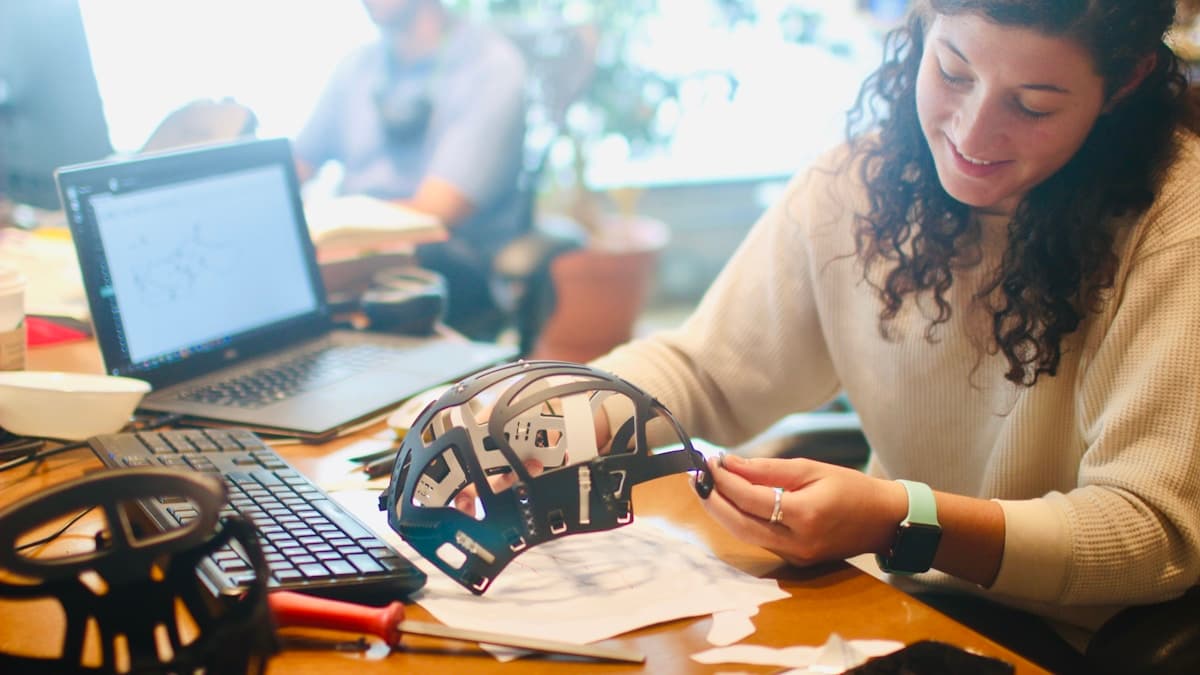
Hero photograph by Tool., Inc.