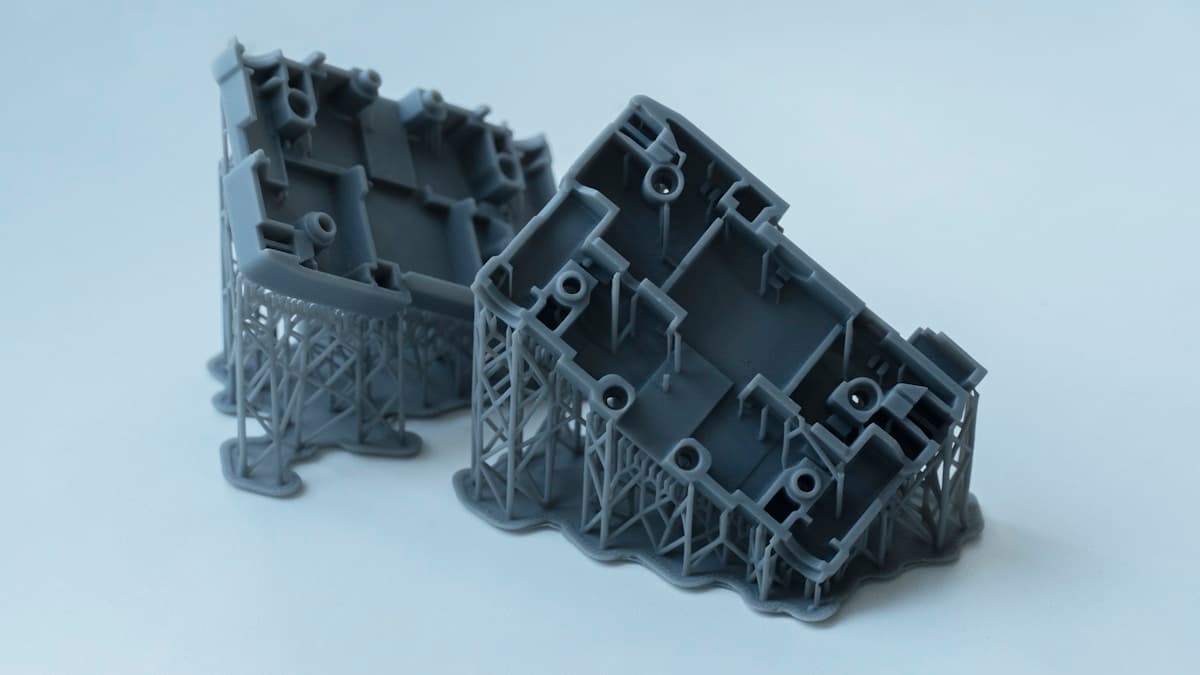
A CT or MRI scan tells you what is inside the body — but only as a stack of flat grayscale images on a screen. A 3D printed anatomical model turns that data into something you can hold, rotate, measure, cut, and put in front of another person. For surgeons planning a complex case, for a patient trying to understand their own diagnosis, for an engineer testing a device against real anatomy, and for an attorney explaining an injury to a jury, the physical model does something the screen cannot.
This guide covers how a scan becomes a printed model, what you need to supply to get an accurate quote, which technology and material fits each use case, what it costs, and how to find a provider who actually does this work — not just general 3D printing.
Who Uses Patient-Specific Anatomical Models
The same workflow serves very different buyers:
- Surgeons and surgical teams — rehearsing a complex resection, sizing implants and hardware, and shortening time in the operating room by planning against the patient's exact anatomy.
- Patients and clinicians — a held model explains a tumor, fracture, or vascular condition faster and more clearly than a screen, improving informed consent.
- Medical device companies — testing fit, deployment, and ergonomics against realistic anatomy during R&D, often in small repeat batches.
- Attorneys and litigation support — scaled, accurate models built from the actual party's scan, used as trial exhibits to make an injury concrete for a jury.
- Medical and STEM educators — durable teaching models of real pathology that don't depend on cadaver access.
Each of these needs the same first step, then diverges on material and finish.
How a Scan Becomes a Printable Model
This is the part most buyers underestimate. You cannot send a printer a CT scan. The pipeline is:
- Acquire the scan (DICOM). CT and MRI scanners export DICOM — a series of 2D slices. Thinner slices capture more detail. For bone, aim for 1mm slice thickness or less; coarse or motion-blurred scans permanently cap the model's detail.
- Segment the anatomy. A technician uses software — the free, widely used 3D Slicer, or commercial tools like Materialise Mimics or Synopsys Simpleware — to isolate the structures you care about (bone vs. soft tissue vs. vessels) slice by slice. This is the skilled, time-consuming step and usually the largest cost driver.
- Convert to STL and repair the mesh. The segmented region is exported as an STL mesh, then cleaned and made watertight so it can print. (If you're new to file formats, see our explainer on STL vs. STEP files for 3D printing.)
- Print, support, and finish. The model is printed, supports removed, and surfaces cleaned — clear models are polished, multi-color models inspected for registration.
What this means for your quote: ask whether the provider performs segmentation in-house. If they expect a finished STL and you only have DICOM, you need a provider who does the full pipeline — or a separate segmentation service. Supplying clean, thin-slice DICOM with a clear description of the target anatomy is the single biggest thing you can do to lower cost and turnaround.
Choosing the Right Technology and Material
Match the process to how the model will be used. (For a broader primer on the underlying processes, see SLA vs. FDM printing explained and our guide to SLS 3D printing services.)
| Use case |
Best technology |
Why |
| Bone models, fracture, orthopedic planning |
SLA resin or FDM |
Crisp detail (SLA) or low-cost, durable bone-only models (FDM) |
| Vascular / hollow structures |
Clear SLA resin |
Transparency shows internal lumens and flow paths |
| Multi-tissue (bone + tumor + vessels) |
Full-color PolyJet or binder jetting |
Different tissues print in distinct colors in one model |
| Soft-tissue feel / surgical rehearsal |
Flexible/silicone-like resin |
Tactile realism for cutting and suturing practice |
| Device-fit testing, small repeat batches |
SLS nylon |
Durable, consistent functional parts at low volume |
| Trial exhibits / education |
SLA or full-color, scaled |
Accuracy plus visual clarity for a non-technical audience |
Color matters more than buyers expect. A single-color bone model is inexpensive; a full-color model that distinguishes a tumor from healthy tissue and from surrounding vasculature requires a PolyJet or binder-jet system and costs more — but for patient education and courtroom use, that color is the entire point.
Accuracy: The Scan Is the Limit, Not the Printer
A common misunderstanding is that a higher-resolution printer means a more accurate model. In reality, the scan caps the accuracy. A 3mm-slice CT cannot be rescued by a precise printer — the detail was never captured. Modern SLA and PolyJet printers hold ±0.1–0.3mm, well below what most clinical and demonstrative uses require. So:
- For fine bone or small-vessel work, request thin-slice acquisition before the scan if you can.
- For any model informing a clinical decision, ask the provider how they validate the printed model against the source DICOM.
- For trial exhibits, ask for documentation of the segmentation and scaling — it's what makes the model defensible.
Use Case Deep-Dives
Surgical planning. A 1:1 model of the patient's anatomy lets the team rehearse approach, pre-bend hardware, and size implants before the first incision — which can reduce operating time. Material choice depends on whether the team needs to physically cut and drill the model.
Patient education and consent. A held, color-coded model communicates a diagnosis in seconds. Durability matters more than fine tolerance here; a robust resin or FDM model survives repeated handling.
Medical device R&D. Engineers test deployment and fit against realistic anatomy, often needing several iterations or a small batch. This is where low-volume production printing overlaps with anatomical work — same provider capability, repeated parts.
Legal trial exhibits. This is a fast-growing, high-value use. A model scaled from the actual party's CT scan makes an injury undeniable to a jury. Attorneys are generally not price-sensitive for a key demonstrative, but they are sensitive to admissibility — so accuracy documentation and a clear production record are non-negotiable. Models can be 1:1 or magnified (for example a 5x spine model) as long as the scale is clearly labeled.
Education. Real-pathology teaching models give students repeatable access to anatomy without cadaver constraints, and they hold up to classroom handling.
What It Costs
Expect roughly $150–$1,500 for a single-region model, driven by:
- Segmentation hours — usually the biggest variable; clean DICOM lowers it.
- Size and material volume — larger and full-color models cost more.
- Color and tissue count — single-color is cheapest; multi-tissue full-color is the premium tier.
- Post-processing — polishing clear vascular models or finishing for courtroom presentation adds labor.
For a general framework on quoting, see how much 3D printing costs. Always request itemized quotes and separate the segmentation line from the print line so you can compare providers fairly.
A Note on Regulation
Intended use determines whether regulation applies. Models for education, patient communication, courtroom demonstration, and general surgical rehearsal are non-diagnostic. Software and models used to inform a specific diagnostic or treatment decision fall under FDA oversight (diagnostic 3D printing software is cleared via the 510(k) pathway, and hospitals increasingly run point-of-care programs under defined controls). State your intended use up front so the provider routes you correctly.
How to Find a Provider
Most general 3D printing shops do not do medical segmentation. You want a provider that explicitly handles CT/MRI-to-model work and can describe their segmentation workflow.
- Browse the 3D Prototyping Hub directory and shortlist providers offering medical, anatomical, or SLA/full-color capability.
- Send the same DICOM dataset and the same brief to two or three providers to compare quotes and turnaround.
- Confirm in-house segmentation, accuracy validation, material/color options, and — for legal work — production documentation.
- If you're not sure how to evaluate the responses, our guide to choosing a 3D printing service walks through the criteria that matter.
Ready to start? Submit your project through the directory and get matched with providers who do CT- and MRI-based anatomical models.
Hero photo by EnCata PD via Unsplash.
Ready to find a 3D printing service provider?
Browse 2,000+ verified providers across the United States and submit your quote request free.
Browse Providers