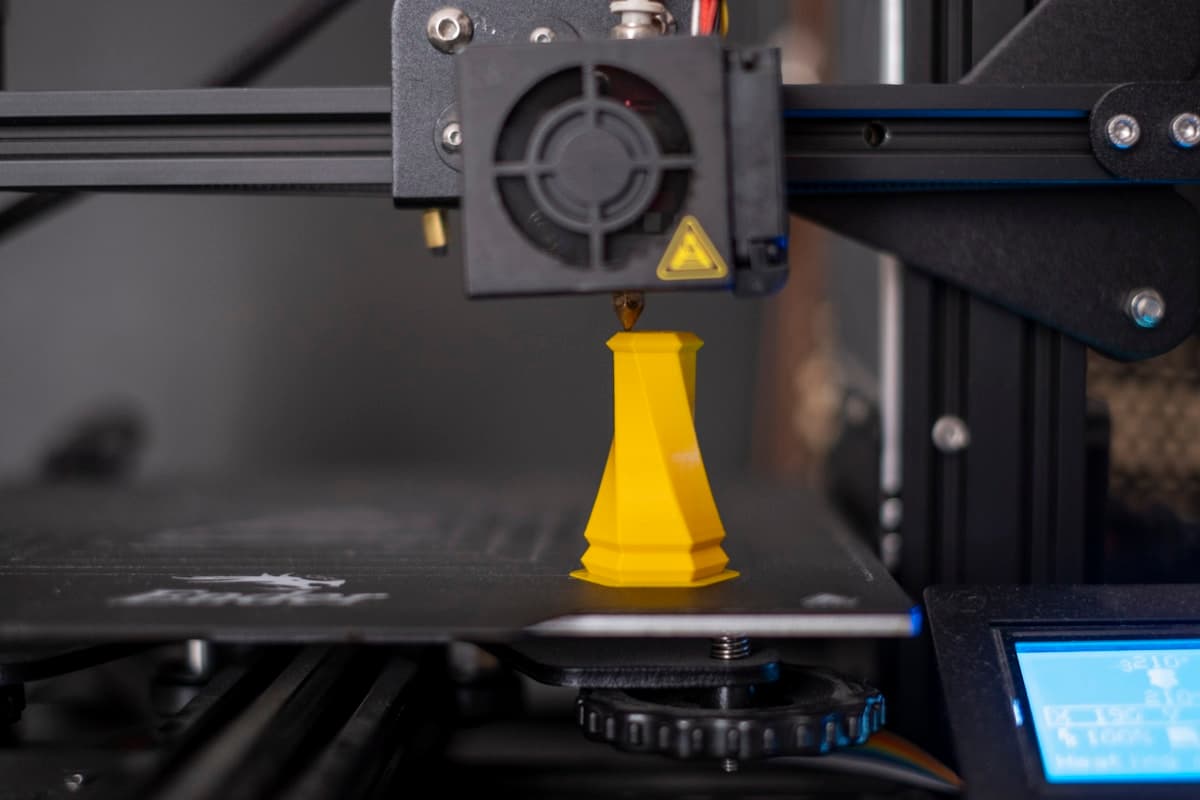
The fastest way to find 3D printing services in California is the 3D Prototyping Hub directory. Filter by state, select the technology you need — FDM, SLA, SLS, or metal — and submit a direct quote request to verified providers. Most California shops respond within one business day.
If you want to understand the full California market — which metros have the most options, what each region specializes in, and what to ask before committing — this guide covers it.
California's 3D Printing Market by Region
California's market operates across five distinct regional ecosystems. Each has a different industry driver and provider specialization profile.
Los Angeles — Aerospace, Entertainment, and Medical Devices
Los Angeles has the largest provider count of any California city and one of the most diverse client bases in the country. The aerospace sector — anchored by SpaceX in Hawthorne, Northrop Grumman in El Segundo, and the broader South Bay aerospace corridor — drives demand for AS9100-certified metal and SLS work. The entertainment industry generates consistent demand for FDM and SLA parts across prop fabrication, set construction, creature effects, and costume engineering. The medical device sector in the LA metro and the Irvine corridor needs SLA biocompatible resins and precision FDM tooling for device development workflows. LA's provider density means same-week or 24-hour availability without searching far.
San Francisco Bay Area / Silicon Valley — Tech Hardware and Biotech
The Bay Area's provider ecosystem is aligned to hardware development, consumer electronics, and biotech. Rapid-turn FDM and SLA shops serve the hardware startup pipeline that feeds from Stanford, UCSF, and the broader Silicon Valley accelerator ecosystem. Biotech and pharma companies in South San Francisco and the broader Bay Area cluster need biocompatible SLA resins, precision FDM fixtures, and SLS components for device development and lab equipment. Consumer electronics development — camera systems, wearables, IoT hardware — generates sustained demand for tight-tolerance SLA and multi-material printing for form/fit/function validation. Bay Area shops are competitive on turnaround and typically staff with engineering-background operators who can provide design for additive feedback.
San Diego — Defense, Biotech, and Aerospace
San Diego's 3D printing market is shaped by the Navy's presence, defense contractors (Northrop Grumman, General Atomics, Viasat, SAIC), and one of the most concentrated biotech clusters in the country. Defense-oriented bureaus carry AS9100 or ITAR registration and experience with titanium, Inconel, and high-strength aluminum for UAV components, sonar housings, and electronic chassis. Biotech clients across the Torrey Pines Mesa and Sorrento Valley clusters require ISO 13485-aware workflows and biocompatible materials for analytical instrument components and device prototypes. San Diego providers tend to specialize more deeply than general-purpose shops and are the right target when the application has a regulated-industry dimension.
Orange County — Medical Devices and Consumer Products
Orange County's medical device concentration — companies in Irvine, Lake Forest, and Foothill Ranch serving surgical, orthopedic, and cardiovascular markets — creates specialized demand for SLA biocompatible resins and FDM engineering thermoplastics. Consumer products development for the region's lifestyle and sporting goods brands drives FDM and SLA prototype volume. Full-service bureaus in OC handle regulated-industry quality requirements common to the medical device cluster. For standard FDM and SLA prototype work, OC buyers have solid local options without routing to LA.
Sacramento — Defense, Agriculture, and Government
Sacramento's primary driver is Aerojet Rocketdyne in Rancho Cordova, which creates aerospace and defense additive demand in the region. Government and public sector projects generate occasional prototype and tooling needs. Agriculture-adjacent manufacturing — irrigation equipment, processing machinery, field sensors — creates a demand base for functional FDM parts and SLS nylon components from equipment suppliers. Sacramento providers cover FDM and SLA reliably; metal printing and SLS typically route to Bay Area bureaus with greater capacity.
Technologies Available in California
FDM — Fused Deposition Modeling
Available statewide — every major metro and most secondary cities have FDM capacity. Materials include PLA, ABS, ASA, PETG, nylon, polycarbonate, ULTEM 9085, and carbon fiber composites. FDM is right for functional prototypes, tooling fixtures, enclosures, and iterative design work where surface finish is secondary to material properties and lead time. LA and Bay Area providers offer the broadest engineering thermoplastic libraries. Lead time: 2–5 days standard, 24–48 hours rush widely available.
SLA — Stereolithography
Available at full-service bureaus across LA, the Bay Area, San Diego, and OC. High surface detail and dimensional accuracy (±0.002–0.005 inches) make SLA the right call for visual models, dental and medical applications, investment casting patterns, and precision enclosures. California SLA bureaus typically run Formlabs or 3D Systems platforms with standard, high-temp, castable, and biocompatible resin options. Bay Area and San Diego shops serving biotech clients tend to maintain the broadest certified resin inventories. Lead time: 3–5 days.
SLS — Selective Laser Sintering
Available at full-service bureaus in LA, the Bay Area, and San Diego. Produces durable nylon parts without support structures — the correct choice for complex assemblies, snap-fit mechanisms, living hinges, and internal channels. Mechanical properties are uniform throughout the part, unlike FDM which shows anisotropy on Z-axis loads. California SLS providers serve aerospace, defense, and consumer product clients. HP Multi Jet Fusion is available at select LA and Bay Area bureaus for tighter tolerances and faster production nylon runs. Lead time: 5–7 days.
Metal 3D Printing
DMLS and binder jetting for stainless steel, titanium, aluminum, and Inconel. Concentrated in LA (aerospace, SpaceX supply chain), the Bay Area, and San Diego (defense and biotech). Parts require post-processing — heat treatment, HIP for aerospace and defense, and CNC machining of critical features — and should be quoted with full inspection and certification requirements included. AS9100D for aerospace and defense; ISO 13485 for medical device applications. Lead time: 2–4 weeks.
How to Evaluate a California 3D Printing Provider
Match Region and Industry Specialization
California's regional specialization is pronounced. Aerospace with an LA address, defense work with a San Diego footprint, biotech with a Bay Area or OC anchor. The 3D Prototyping Hub directory lets you filter by technology and geography — use it to pre-qualify before the first call.
Verify Technology and Current Stock
Most California shops are FDM and SLA only. For SLS or metal, confirm the technology is in-house and operational before sending files. Also confirm specific materials: Bay Area biotech clients should verify ISO 10993-compliant resin is in stock. LA aerospace clients should confirm ULTEM or high-temp material availability. Catalog availability is not the same as active stock.
California Pricing Context
Operating costs in LA and the Bay Area are above national averages, and pricing reflects that. For cost-sensitive work, San Diego and Sacramento providers are sometimes meaningfully cheaper than LA or Bay Area shops for equivalent quality. Get three quotes — California's provider density makes parallel quoting easy and usually worth the 30 minutes.
Certifications for Regulated Industries
California's aerospace, defense, and medical device sectors have specific certification requirements. AS9100D for defense and aerospace. ISO 13485 for medical device work. ITAR registration for controlled programs. Ask specifically before submitting files — not all shops carry these certifications, and some that don't will still accept the order without flagging the mismatch until it becomes a problem.
Questions to Ask Before Placing an Order
- What technologies do you operate — FDM, SLA, SLS, metal?
- What is your standard lead time for this geometry?
- Do you offer rush service, and what does it add to the quote?
- What materials are you currently stocked on?
- What file formats do you accept — STL, STEP, OBJ?
- What documentation comes with the order — inspection report, material cert?
- How do you handle a dimensional failure or quality reject?
- Are you certified for AS9100, ISO 13485, or ITAR?
For California's regulated-industry sectors, questions 6, 7, and 8 are non-negotiable. A production-capable bureau answers them immediately. A prototyping-only shop will often hedge or redirect.
In-House FDM: When It Makes Sense for California Teams
If your team is ordering standard FDM parts more than a few times per week, in-house capacity pays off quickly — particularly in California where service bureau pricing runs above national averages. At Bay Area and LA service bureau rates, break-even on an in-house machine typically lands inside 60–90 days for teams with regular volume.
Find a Provider Now
Search the California directory by technology and location. Every listing includes a direct quote request form. No account required — submit your specs and geometry, and the provider contacts you.