Looking for 3D printing services in Albuquerque, NM? The 3D Prototyping Hub directory lists 20 providers in the city — two thirds of every listed provider in New Mexico, and the only pool in the state with real breadth. The fastest route to a quote is the Albuquerque provider directory: work out what each listing actually is, then send your file to the shops that fit the part.
If you would rather understand the market first — what those 20 businesses are, why half of them are not what a search for "3D printing" implies, and what a national-lab and film-studio city demands of a print shop — that is the rest of this guide.
What the 20 Albuquerque Listings Actually Are
The count is real. The composition needs a warning label, and sorting each business into the right bucket before you send files will save you more time than anything else on this page.
- Dedicated 3D printing operations. Ten of the twenty — small print bureaus and one-person additive businesses, a resin-focused specialist, a design-and-fabrication shop and a maker selling printed goods direct. Two of them are named for the city itself, which is a fair signal they serve it rather than drop-ship into it. This is the group to start with for a part that has to fit, load or seal.
- Commercial print, reprographics and copy businesses. Eight established printing, imaging and signage firms that list 3D printing alongside an existing service menu. Their names contain "printing" in its older, ink-on-paper sense, which is exactly why a search for 3D printing surfaces them. Good for models, display work and signage-adjacent jobs; not the first call for a functional bracket. Albuquerque's share here is high — this is a strong reprographics town, historically driven by architecture, engineering and government document work.
- Two community makerspaces. Quelab and FUSE Makerspace, the latter run by CNM Ingenuity at Central New Mexico Community College. Both offer machine access rather than a bureau service, and both are worth knowing about even as a business buyer: a makerspace is often the fastest route to a one-off part in this city, and the people at the counter are usually the best-informed generalists in it.
Then the number that matters most: not one of the 20 Albuquerque listings is claimed, and not one has a process or material recorded. Every entry was assembled from public sources rather than maintained by its owner, so the directory can tell you who exists and how to reach them, but not what they run.
That is less bleak than it sounds. Eighteen of the twenty have a phone number on file and twelve have a website, so qualifying takes minutes rather than days — you will just be doing it yourself, which is why the questions further down carry the weight.
What Drives Demand Here
Albuquerque's employer mix is unusual for a metro of about 920,000, and it decides what local shops are practised at.
National labs, the Air Force base and space work. Sandia National Laboratories is the metro's largest employer and sits on Kirtland Air Force Base, alongside the Air Force Research Laboratory's Space Vehicles Directorate and a cluster of small space and directed-energy companies. That produces test fixtures, enclosures, optical and sensor mounts, handling hardware and a steady flow of one-off engineering parts. It also means a meaningful share of the city's work is controlled: if your part is covered by a contract, an export-control regime or an NDA, settle that before you email an STL — NDA and IP protection for 3D printing services covers what to ask for and what a small shop can realistically sign.
Semiconductors at Rio Rancho. Intel's Fab 11X sits about twenty minutes northwest of downtown and has been expanded for advanced packaging. Semiconductor fabs generate wafer-handling fixtures, tool-side jigs, ESD-conscious trays and maintenance aids in quantity — the kind of work covered in 3D printing for jigs, fixtures and manufacturing aids. Rio Rancho has no separate directory listings, so this demand lands on Albuquerque shops.
Film and television production. Albuquerque Studios and the surrounding production base make this a genuine props, scenic and set-fabrication market, which is rarer than the lab work and shapes the local shops more than outsiders expect. Production art departments want large, fast, cosmetic parts on a schedule that does not move — a very different brief from a lab fixture, and one that rewards the shops with big-format machines. Large-format 3D printing services covers what that actually requires.
The university and health sciences. The University of New Mexico and its Health Sciences Center sit inside the city, generating lab fixtures, teaching aids, device form models and small precise research parts — usually needed sooner than the requester admits.
Rail, transit and legacy industry. The BNSF Transcon mainline runs through the city and the Rail Runner commuter line works the corridor to Santa Fe — classic replacement and spare parts territory: guards, fixtures and one-off replacements for equipment whose supplier disappeared decades ago.
Altitude, Sun and Material Choice
This is the one section worth reading even if you skip the rest, because it is where parts made here most often fail.
Albuquerque sits at 5,312 feet with roughly 280 to 310 sunny days a year, single-digit summer humidity, and diurnal temperature swings that routinely exceed 30°F. UV exposure at this elevation is materially harsher than at sea level, and a car parked on asphalt in July reaches interior temperatures well above the point where PLA — the cheapest and most widely stocked filament there is — starts to soften. A PLA part that lives outdoors, on a roof, on a vehicle dashboard or on a trailer will sag, then go chalky and brittle. That failure is the single most common one we hear about from this state.
Say where the part will live when you request the quote, and let the shop steer you to ASA (the standout for sustained UV), PETG, a filled nylon or TPU instead. How to choose a 3D printing material covers the trade-offs in full.
The same climate hands you an advantage worth naming. Filament is hygroscopic, and in Houston or Miami that is a daily operational problem — wet nylon and PETG print badly and lose strength. In Albuquerque's dry air it is a much smaller one. If your part genuinely needs nylon, this is an easier city to get a good one printed in than the humidity map would suggest, and a local shop is less likely to be fighting its own material stock.
What You Can Get Printed Locally
- Functional prototypes — parts that have to fit, load or seal before you commit to tooling.
- Lab and test fixtures — the standing job in this metro, and the one local shops see most.
- Jigs, fixtures and line-side tooling — fastest payback of anything on this list for a fab or a fabrication shop.
- Props, scenic and display work — large, cosmetic, deadline-driven; a real local specialism.
- Replacement and legacy parts — for rail, industrial and municipal equipment with no supplier left.
- Short production runs — realistic in the tens to low hundreds; low-volume 3D printing services covers where the crossover against tooling sits.
Processes and When to Use Each
| Process | Best for | Trade-off |
|---|---|---|
| FDM | Functional prototypes, jigs and fixtures, large parts, engineering plastics | Visible layer lines; weaker across layers |
| SLA / resin | Fine detail, smooth surfaces, small precise parts, appearance models | More brittle; needs post-processing; costs more per part |
| SLS / MJF nylon | Durable functional parts, complex geometry, no supports needed | Grainy finish; higher minimums; almost certainly brokered out of this market |
| Metal | End-use metal components, tooling inserts, high-temperature parts | Most expensive; longest lead time; expect subcontracting |
SLS 3D printing services and metal 3D printing services cover the two processes most likely to leave New Mexico, and how much 3D printing costs explains what actually drives the number on a quote.
How to Qualify an Albuquerque Shop
With no listing publishing process or material data, the qualifying conversation carries everything. Four questions get you most of the way.
"What is your business, exactly?" Ask it first. It separates the additive shops from the reprographics and sign firms in one sentence, and neither party wastes an afternoon.
"Is that capability in-house?" Especially for nylon, metal and anything over a foot in any direction. Subcontracting is legitimate and common, but it changes lead time, cost and accountability.
"What did you print last week?" A dedicated bureau, a makerspace and a commercial print house answer this very differently, and every answer is useful.
"What tolerance can you hold on this geometry?" Additive tolerances are process-dependent and not what a machinist would assume — tolerances and accuracy in 3D printing covers what is realistic to ask for.
Name the polymer as well as the process, for the altitude reasons above. How to choose a 3D printing service has the full vetting checklist, how to prepare files for a 3D printing quote covers what to send, and if the deadline really is tomorrow, read same-day and rush 3D printing services before you brief anyone.
Nearby Markets
The Albuquerque page is effectively the metro page: Rio Rancho, Corrales, Bernalillo and Los Lunas have no separate listings, so shops serving them appear here. Beyond the metro, New Mexico's capacity thins fast and the useful comparison set crosses state lines.
| Market | Listed providers | Drive from Albuquerque | Directory page |
|---|---|---|---|
| Albuquerque, NM | 20 | — | /providers/location/nm/albuquerque |
| Santa Fe, NM | 7 | ~1 hour north on I-25 | /providers/location/nm/santa-fe |
| El Paso, TX | 15 | ~4 hours south on I-25 | /providers/location/tx/el-paso |
| Colorado Springs, CO | 17 | ~5.5 hours north | /providers/location/co/colorado-springs |
| Denver, CO | 23 | ~6.5 hours north on I-25 | /providers/location/co/denver |
| Phoenix, AZ | 22 | ~6.5 hours west on I-40 and I-17 | /providers/location/az/phoenix |
| Las Cruces, NM | 3 | ~3.5 hours south | /providers/location/nm/las-cruces |
Santa Fe is the one to remember. Seven listings an hour up I-25 is not a large pool, but in practice Albuquerque and Santa Fe are one sourcing market, and Santa Fe's technical depth is greater than a town of 90,000 suggests. The New Mexico state guide puts the whole state together, including why Las Cruces buyers should be looking at El Paso rather than driving 225 miles north. If you are comparing further afield, the Denver and Phoenix guides cover the two large Southwest metros with more powder-bed and metal capacity than New Mexico has.
For anything you want to inspect in person — fixtures, props, replacement parts, fast iteration, a first article you need to hold — an Albuquerque shop will almost always be faster and usually cheaper than sending the file out of state.
Get Quotes From Albuquerque Providers
Browse the Albuquerque provider directory to see all 20 listed providers, work out which are genuinely additive shops, and send your part to the ones that fit it. Ask three rather than one — it is the cheapest way to find out what your part should really cost. Comparing more widely? Start from the New Mexico directory or the full provider directory.
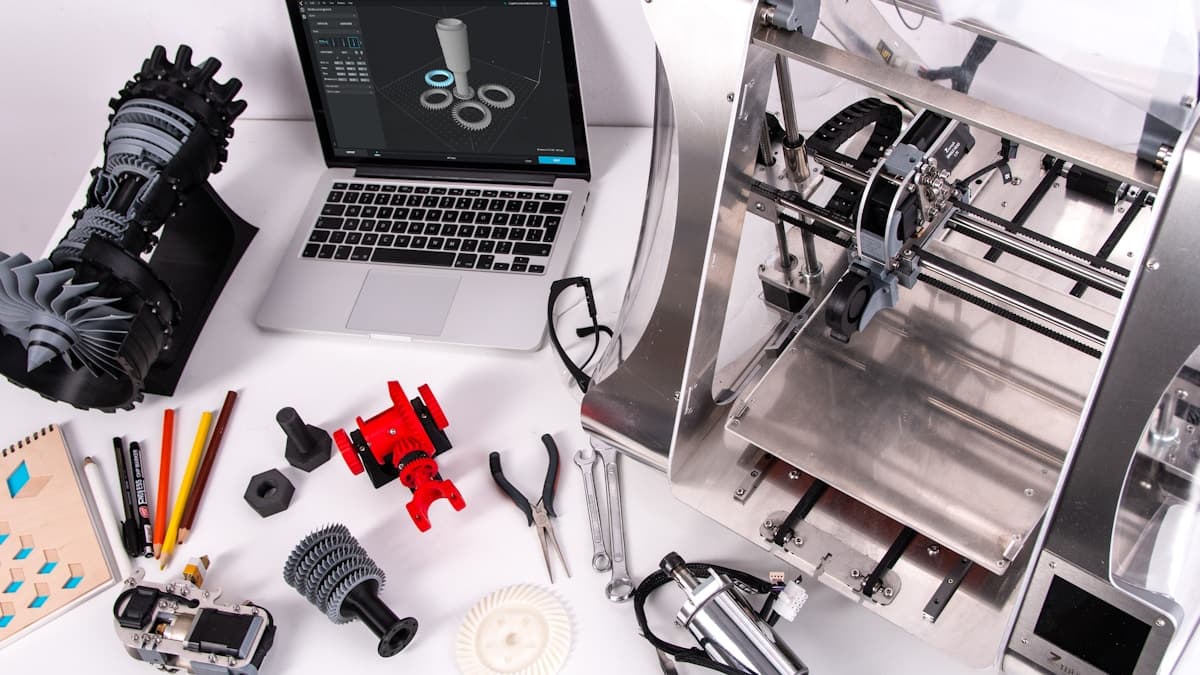
Hero image by ZMorph All-in-One 3D Printers on Unsplash.