Looking for 3D printing services in West Virginia? The 3D Prototyping Hub directory lists 10 providers across the state, and the fastest route to a quote is the West Virginia provider directory — filter by city and material, then send your file to the shops that actually fit the part.
Ten is a small pool, and pretending otherwise would not help you. What follows is where that capacity actually sits, what the state's industry base means for the work local shops are good at, and when crossing a state line is the right call rather than an admission of defeat.
Where West Virginia's 3D Printing Capacity Actually Is
The listings sit in three places, and those three places face in three different directions.
| City | Listed providers | Directory page |
|---|---|---|
| Charleston | 5 | /providers/location/wv/charleston |
| Huntington | 4 | /providers/location/wv/huntington |
| Martinsburg | 1 | /providers/location/wv/martinsburg |
Charleston is the capital and the commercial centre of the Kanawha Valley, and it carries the deepest count. Its character is worth knowing before you call: the pool leans toward established print, sign and reprographics businesses that added additive to an existing service menu, plus a community makerspace. That is a good fit for a display model, a signage component, a fixture or a straightforward functional part, and the wrong first call for a loaded structural component in a filled engineering polymer.
Huntington is the more technical cluster despite the smaller count. Two of its four listings are advanced-manufacturing operations tied to Marshall University rather than independent job shops — the Robert C. Byrd Institute and the Marshall Advanced Manufacturing Center. Centres like these run better-equipped machines than a four-listing town would otherwise have, and they are used to working with engineers. They also operate on programme rules rather than pure commercial terms, so ask early about eligibility, scheduling and whether your job is something they take at all.
Martinsburg is a single listing, and it is the only one in the state that records its processes — FDM, SLA/DLP and SLS/MJF together. Geographically it belongs to a different economy entirely: Berkeley County sits inside the Washington–Baltimore commuter shed, roughly 350 road miles from Charleston, and a buyer there is realistically choosing between this listing and the much deeper Maryland and Washington, DC pools an hour east.
The gaps say as much as the counts. Morgantown is the home of West Virginia University and its engineering college, and it carries no listing of its own. Neither does the I-79 Technology Corridor through Bridgeport, Clarksburg and Fairmont — aerospace maintenance and composites work at North Central West Virginia Airport, the NASA IV&V facility, the FBI's CJIS campus — which is arguably the densest concentration of technical demand in the state. Wheeling, Parkersburg and Beckley are the same story. If you are in one of those places, start from the statewide page, and read the next section before you assume you are stuck.
Terrain is the practical constraint. West Virginia's road miles are slower than the map implies, and there is no corridor tying the three clusters together — Charleston to Morgantown is about 160 miles, Charleston to Martinsburg roughly 350. Nobody here is choosing a shop by drive time across the state, so choose on capability and shipping terms, and treat your own corner of it as the local market.
What Drives Demand Here
Chemical processing. The Kanawha Valley around Charleston, South Charleston, Institute and Nitro remains one of the country's older concentrated chemical-manufacturing corridors. Plants of that age generate a steady stream of handling fixtures, gauges, guarding, sensor and instrument enclosures, and replacements for components whose original supplier is long gone. 3D printing replacement and spare parts covers how that job normally runs.
Energy. Coal in the southern counties and Marcellus and Utica gas in the north sustain a field-services supply chain that wants ruggedised enclosures, inspection and alignment aids, wear-part prototypes and pattern work for cast replacements. Downtime is the expensive thing in this sector, which is exactly why a printed interim part earns its place.
Automotive and heavy truck. Engine and transmission manufacturing at Buffalo, truck-component work at Williamstown and stamping at South Charleston anchor a tier-two supplier base. That work runs on jigs, fixtures, assembly aids and line-side tooling — the highest-volume additive category in most working plants and the one with the fastest payback. 3D printing services for jigs, fixtures and manufacturing aids goes deeper.
Aerospace maintenance and composites. The Bridgeport cluster does engine overhaul and composite structures, which generates layup tooling, handling fixtures and inspection gauges rather than flight parts. It is also the demand most likely to be served from Pennsylvania or Ohio today, because nothing in the directory sits near it.
Universities and research. WVU in Morgantown and Marshall in Huntington both run engineering and advanced-manufacturing programmes, and academic demand looks different from industrial demand — research fixtures, lab hardware that does not exist commercially, and teaching models, usually wanted this week.
Healthcare. Huntington and Charleston are the regional medical centres, and hospital demand shows up as surgical planning models, custom clinical fixtures and device prototypes.
Tourism and interpretive work. New River Gorge, the Greenbrier and the state's park and museum system underwrite a real market for display models, replicas and signage components — small-batch work that sits naturally with the print-and-sign businesses in the Charleston pool.
What You Can Get Printed Locally
- Functional prototypes — parts that have to fit, load or seal before you commit to tooling.
- Jigs, fixtures and shop aids — the standing job in the state's plants and the fastest payback on this list.
- Replacement and obsolete parts — the defining West Virginia use case, given the age of the chemical and extraction asset base.
- Patterns and tooling — printed patterns for casting and layup, where additive meets the state's older fabrication trades.
- Concept and appearance models — form studies and design reviews, usually resin for surface finish.
- Short production runs — bridge quantities between prototype and injection moulding; low-volume 3D printing services covers where that crossover sits.
- Display, exhibit and signage components — the work the Charleston print-and-sign pool is genuinely well suited to.
Processes and When to Use Each
| Process | Best for | Trade-off |
|---|---|---|
| FDM | Functional prototypes, jigs and fixtures, larger parts, engineering plastics | Visible layer lines; weaker across layers |
| SLA / resin | Fine detail, smooth surfaces, small precise parts, appearance models | More brittle; needs post-processing; costs more per part |
| SLS / MJF nylon | Durable functional parts, complex geometry, no supports needed | Grainy finish; fewer providers; higher minimums |
| Metal | End-use metal components, tooling inserts, high-temperature parts | Most expensive; longest lead time; almost always subcontracted here |
Only one West Virginia listing records its processes at all, so treat the directory filters as a starting point and confirm capability with the shop directly. SLS 3D printing services and metal 3D printing services cover the two processes most likely to be brokered out of a market this size, and how much 3D printing costs explains what actually drives the number on a quote.
How to Choose a West Virginia Provider
Establish what kind of shop you are talking to. In a pool this small the spread is wide — a makerspace, several print and repro businesses, two university-affiliated manufacturing centres and one recorded multi-process shop are all in the same ten listings. Ask what machines they run and what they print in a normal week before you ask for a price.
Ask whether the capability is in-house. Especially for SLS, metal and anything genuinely large. Subcontracting is common and legitimate, but you should know before you commit, because it changes lead time and accountability.
Ask the university centres about eligibility first. The Huntington advanced-manufacturing operations are the best-equipped route in the state for engineering work, and they are not ordinary job shops. Programme scope, scheduling and who they can take work from are the first questions, not the last.
Specify the material, not just the process. "FDM" spans PLA and glass-filled nylon. If the part is going into a plant environment — solvents, heat, sustained load — name the polymer and say what it has to survive. How to choose a 3D printing material covers that decision properly.
Ask about tolerances up front. Additive tolerances are process-dependent and are not what a machinist would assume. Tolerances and accuracy in 3D printing covers what is realistic to ask for.
Send a file a shop can actually quote. A clean STL or STEP with the critical dimensions called out gets a real number back the same day; a screenshot gets a phone call. How to prepare files for a 3D printing quote is the short version.
Nearby Markets
More of West Virginia is near another state's capacity than near its own, and that is a practical advantage rather than a consolation. Pennsylvania holds 64 listings and is the obvious pool for the Northern Panhandle and the I-79 corridor — Morgantown to Pittsburgh is about 75 miles. Ohio holds 60 and is directly across the river from Huntington, Parkersburg and Wheeling; the Ohio directory is the right first stop for anything needing SLS, metal or certification. Kentucky is minutes from Huntington. Virginia holds 43 and serves the southern and eastern counties, and for the Eastern Panhandle the Maryland and Washington, DC pools are closer than Charleston by several hours.
For the work most likely to stay in state — fixtures, replacement parts, plant one-offs, display pieces — a local shop will almost always be faster, and a part you can collect the same afternoon is worth a lot on a line that is down. How to choose a 3D printing service sets out the qualifying questions wherever you end up sending the file.
Get Quotes From West Virginia Providers
Browse the West Virginia provider directory to see all 10 listed providers, filter by city and material, and send your part to the shops that fit it. If you would rather compare across the region, start from the full provider directory.
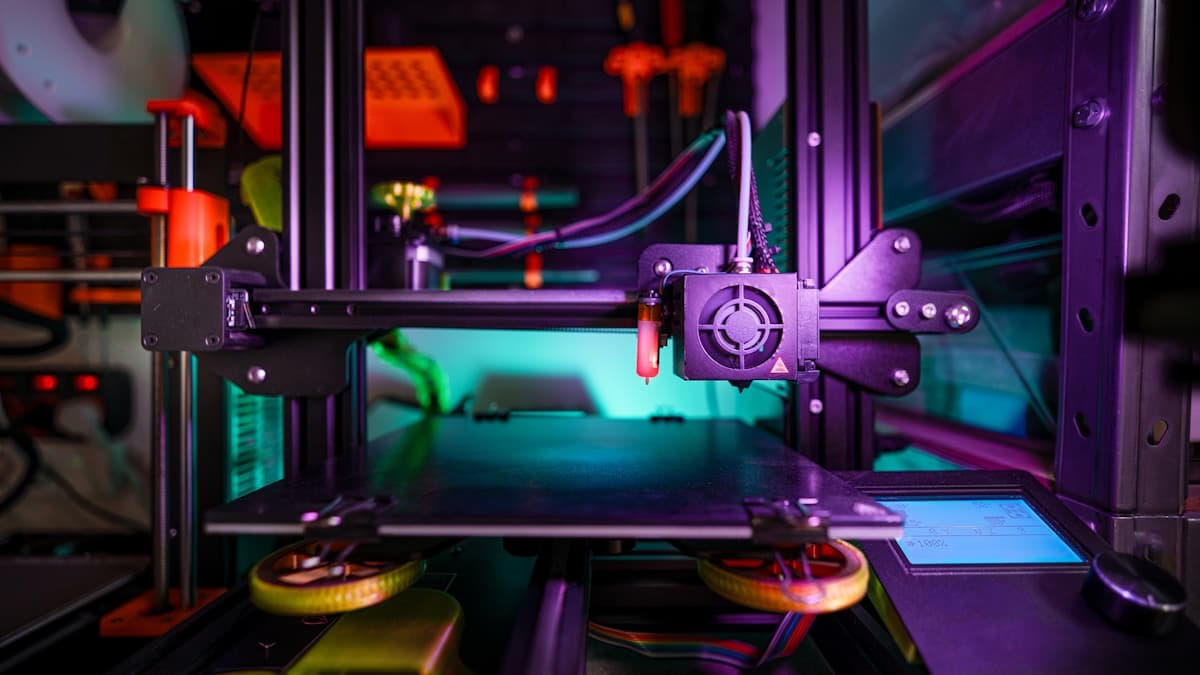
Hero photograph by Jakub Żerdzicki via Unsplash.