Looking for 3D printing services in Kentucky? The state's additive demand is driven by heavy manufacturing — vehicle assembly, appliances and the logistics network that moves parts overnight — and that shapes what local shops are set up to do. The 3D Prototyping Hub directory lists 36 providers across Kentucky. The fastest route to a quote is the Kentucky provider directory: filter by city, technology and material, then send a request to the shops that fit your part.
If you want the local picture first — where capacity actually sits, and how to tell an industrial provider from a consumer one — this guide covers it.
Where Kentucky's 3D Printing Capacity Actually Is
Kentucky's listings are concentrated in Louisville, with a surprising secondary cluster in Frankfort and thin coverage elsewhere.
| City | Listed providers | Directory page |
|---|---|---|
| Louisville | 22 | /providers/location/ky/louisville |
| Frankfort | 9 | /providers/location/ky/frankfort |
| Lexington | 3 | /providers/location/ky/lexington |
| Dry Ridge and Campbellsville | 2 combined | /providers/location/ky |
Louisville holds nearly two-thirds of the state's listings and is the default starting point. It has the widest range of business types and the deepest industrial base, and it is where you are most likely to find a shop that has handled a part like yours before.
Frankfort is the anomaly. Nine listings in a city of under 30,000 is far more than population would predict, and the cluster includes both dedicated additive businesses and established reprographics firms. It is worth a look if you are in central Kentucky and do not want to drive to Louisville.
Lexington shows only three listings, which does not reflect the reality of Kentucky's second-largest city and its university and equine-industry engineering base. Treat this as a coverage gap in the directory rather than a verdict on local capability. If you are in Lexington, search statewide and check the Cincinnati and Nashville markets across the state lines.
Dry Ridge and Campbellsville each carry a single listing. Useful if you are nearby, but not a market.
What Drives Demand Here
Kentucky's industrial mix determines what local shops are genuinely good at, and it is unusually concentrated.
Vehicle assembly. This is the anchor of the state's economy. Kentucky hosts major automotive assembly operations — Ford's two Louisville plants, Toyota's very large Georgetown complex near Lexington, and the Corvette plant at Bowling Green — plus the deep tier-two supplier network that surrounds them. The additive work this generates is overwhelmingly functional: assembly fixtures, checking gauges, jigs, trim tools, ergonomic aids and line-side organisers. It rewards shops that think about a part surviving a production shift, not photographing well.
Appliance and consumer durables. Louisville has a long-established large-appliance manufacturing base, which drives enclosure prototyping, snap-fit iteration and internal component testing — work that lives on fast FDM and resin turnarounds.
Logistics and aftermarket. Louisville is a major overnight air-freight hub, and that has pulled in distribution, repair and reverse-logistics operations. Those generate steady demand for replacement parts, custom handling fixtures and packaging aids, usually needed faster than a conventional supply chain can respond.
Bourbon and food production. Distilling and food processing are significant Kentucky industries, and both are heavy users of custom line parts, changeover tooling and wash-down-compatible fixtures.
Equine and veterinary. The Lexington region's horse industry supports a genuine niche in custom veterinary and equine applications — supports, splints, models and one-off fittings that are a natural fit for additive.
What You Can Get Printed Locally
- Prototypes and design iterations — FDM or resin, typically turned around in days.
- Jigs, fixtures and tooling — the highest-value additive application in a vehicle-assembly state, and usually the fastest to pay for itself. See rapid tooling services for how this is scoped.
- Functional end-use parts — brackets, housings, guards and components in engineering plastics.
- Short production runs — bridge volumes before tooling, or quantities that never justify tooling. See low-volume 3D printing services.
- Automotive prototype parts — a large enough category here to have its own guide: 3D printing for automotive parts and prototypes.
- High-detail models — resin work for medical, dental, display and presentation pieces.
Processes and When to Use Each
| Process | Best for | Trade-off |
|---|---|---|
| FDM | Functional plastic parts, fixtures, larger geometry, low cost | Visible layer lines, weaker across layers |
| SLA / DLP resin | Fine detail, smooth surfaces, small precise parts | More brittle, smaller build volume, extra finishing |
| SLS nylon | Durable functional parts, no supports, complex geometry | Fewer Kentucky providers, higher cost, grainy finish |
| Metal | Load-bearing and high-temperature parts | Most specialised, most expensive, often subcontracted |
Sort the Industrial Listings From the Consumer Ones
This is the most useful thing on this page for a Kentucky buyer, because the state's listings are more mixed than most.
The directory here contains four different kinds of business: dedicated additive shops, engineering and CAD reseller operations that run printing alongside design services, commercial printing and reprographics companies that added a 3D printer to an existing business, and consumer or hobby printing services aimed at gifts, toys and personal projects.
Every one of those is a legitimate business. But a consumer print service and a shop that supplies assembly fixtures to a vehicle plant are not substitutes, and the provider count does not tell them apart. If you are sourcing a production part, three questions sort it quickly:
- What machines do you run, in-house? A specific answer — make, model, build volume — tells you something that "we can print that" does not.
- What material, exactly, and have you run it before? If your part sees heat, load, solvent or UV, say so up front and watch whether the answer changes.
- Can you show comparable work? A fixture for a production line, a housing prototype and a display model demand different skills. Ask for an example of the one you need.
How to Choose a Local Provider
Beyond those three questions, weigh what genuinely varies: realistic turnaround including finishing rather than print time alone, whether post-processing and inspection are quoted or extra, and whether the shop will tell you when your part would be cheaper machined or moulded. That last one is the strongest signal available — a provider willing to talk you out of a printed part is one worth keeping.
Kentucky borders seven states, and cross-border quoting is routine here, particularly around Louisville and the northern Kentucky corridor. If your nearest options look thin, widen the search: Ohio, Indiana, Tennessee and Virginia all have their own provider markets within reach.
Get Quotes From Kentucky Providers
Browse the Kentucky provider directory to see all 36 listed providers, filter by city and capability, and send your requirements to the shops that fit the job. Ask three rather than one — it is the cheapest way to find out what your part should actually cost.
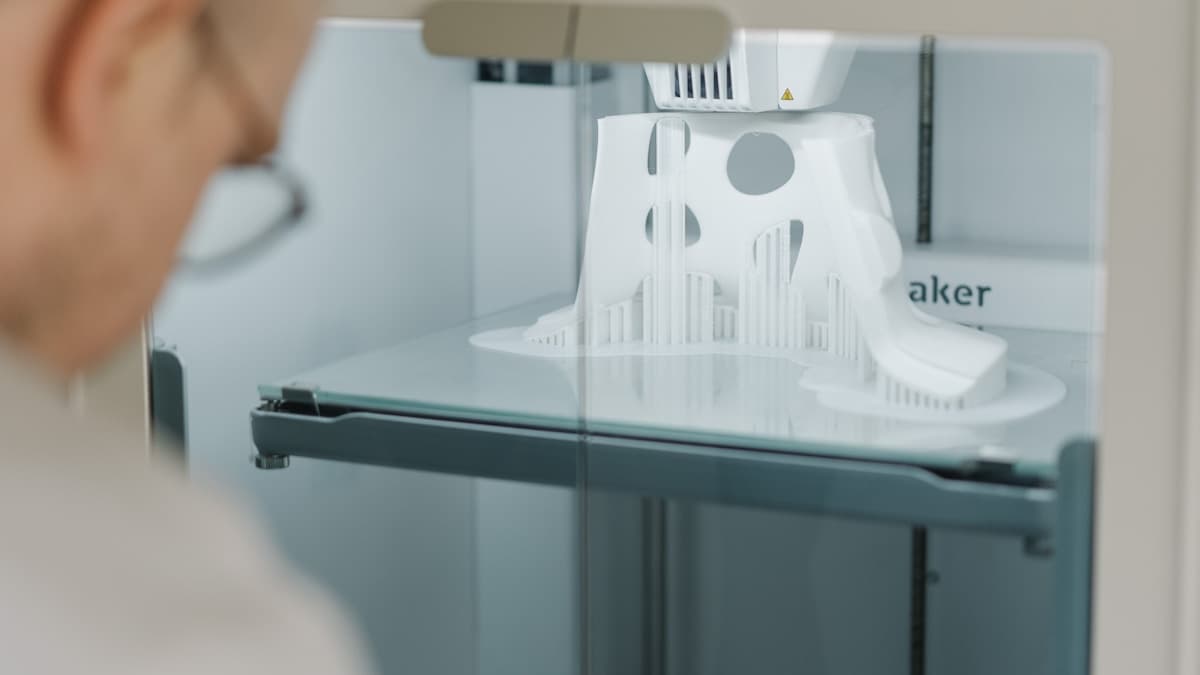
Hero photograph by Tom Claes.