The short version: the best carbon fiber filament for most people is CF-PLA, because it delivers the stiffness and the matte finish at PLA's difficulty level — Proto-pasta Carbon Fiber PLA if finish matters, eSUN ePLA-CF if you are iterating. Step up to Bambu Lab PETG-CF when parts see warmth or weather, Polymaker PolyMide PA6-CF when they carry real load, and Bambu Lab ASA-CF when they live outside. One rule covers all of them: fit a hardened nozzle first, or the filament will quietly ruin your dimensional accuracy inside a week.
Carbon fibre is the most misunderstood upgrade in desktop printing. It is bought for strength and it does not deliver strength — it delivers stiffness, dimensional stability and a finish that hides layer lines. Understanding that distinction is what separates a part that works from an expensive brittle one.
This post contains affiliate links. If you purchase through these links, 3D Prototyping Hub may earn a small commission at no extra cost to you.
This post also contains Amazon affiliate links. As an Amazon Associate I earn from qualifying purchases.
What Carbon Fibre Actually Changes
Every filament on this page is a normal polymer — PLA, PETG, nylon, ASA — with roughly 10–20% chopped carbon fibre mixed into it. Those fibres are short and randomly oriented, and they change four things:
- Stiffness goes up a lot. Flexural modulus can roughly double against the unfilled base. A bracket that visibly deflects in plain PETG stays flat in CF-PETG.
- Warping goes down. Fibre reduces shrinkage as the part cools, which is why CF-nylon and CF-ASA are dramatically more printable than their unfilled versions.
- Toughness goes down. Parts become more brittle: less elongation before breaking, lower impact resistance, and somewhat weaker layer bonding. This is the trade, and it is not small.
- The surface changes. A matte, slightly grainy black finish that hides layer lines better than any other filament type.
So the decision is simple. If the part's problem is that it bends, carbon fibre fixes it. If the part's problem is that it cracks, carbon fibre makes it worse — reach for PETG or unfilled nylon instead. That is a genuine recommendation, not a hedge.
Fit a Hardened Nozzle First
This is the one non-negotiable. Chopped fibre is abrasive, and it widens a brass nozzle within hours of printing. The failure mode is what makes it dangerous: nothing blocks, nothing breaks, and nothing looks wrong. The orifice simply grows, extrusion width creeps up, and parts stop matching their dimensions while every slicer preview stays perfect.
A hardened steel nozzle costs a few dollars and ends the problem. Many people move to 0.6mm for filled filament as well, because the larger orifice lowers pressure and reduces clogging risk. The nozzle guide covers hardened steel against ruby and tungsten carbide if you print filled material constantly.
The Picks
Proto-pasta Carbon Fiber PLA — Best Overall
Proto-pasta effectively created this category and still sets the reference for finish. It prints at ordinary PLA temperatures on an ordinary open-frame machine, warps very little, and produces the deep matte black with a faint fibre texture that people actually buy CF filament for. Stiffness is a substantial step up from plain PLA, so panels stay flat and brackets stop flexing. It remains PLA underneath — it will still soften in a hot car and it is more brittle than the plain version — but for stiff cosmetic parts, camera rigs, enclosure panels and jigs that live indoors, Proto-pasta CF-PLA is the roll to buy first.
Bambu Lab PETG-CF — Best for Functional Parts
CF-PETG is the most useful filled filament for most working parts, and it is badly underrated. Plain PETG is tough and weather-tolerant but noticeably floppy and prone to stringing; the fibre loading stiffens it, flattens large prints and cuts stringing markedly. You get a part that survives warmth, damp and outdoor use without any of nylon's drying and enclosure overhead. It runs fine on any printer with a hardened nozzle, not only on Bambu machines. For functional brackets, mounts, tool holders and fixtures, PETG-CF is the pick that gets used most.
Polymaker PolyMide PA6-CF — Best Engineering Grade
When the part carries genuine load or sits near heat, the filled nylons are where desktop printing stops being prototyping. PA6-CF is stiff, heat-resistant and dimensionally stable, and the fibre cuts the warping that makes unfilled PA6 miserable. The cost is the full support setup: thorough drying, printing from a heated box, an enclosure, a hotend rated well above 250°C and the hardened nozzle. If you are willing to run all of it, PolyMide PA6-CF makes structural brackets, tooling and mechanical parts. The nylon filament guide goes deeper on the filled-nylon family and the alternatives to it.
eSUN ePLA-CF — Best Budget CF Filament
Iterating on a functional part means printing it four or five times before it is right, and premium filled rolls make that expensive fast. eSUN's CF-PLA is the value play: diameter tolerance is looser than the premium rolls and it wants a proper dry plus a little tuning, but it prints genuinely usable stiff parts at a price that makes reprinting painless. Use it to converge on the design, then print the final part in whatever grade the application actually needs. ePLA-CF is the roll to burn through.
Bambu Lab ASA-CF — Best for Outdoor Parts
ASA is the material for anything that lives in sunlight — it holds up to UV and weather where ABS yellows and PLA sags. Its weakness on a desktop machine is warping, and that is exactly what fibre loading addresses. CF-ASA gives you weatherproof, stiff, dimensionally stable parts: vehicle trim, antenna and sensor mounts, garden and irrigation hardware, exterior enclosures. It still wants an enclosure and good ventilation, since ASA emits styrene while printing. For parts that go outside and must stay put, ASA-CF is the answer. The automotive parts guide covers the machines that suit this work.
Dialing CF Filament In
- Dry it, then keep it dry. Filled grades pick up moisture faster than their base polymer. Dry CF-PLA and CF-PETG at roughly 50–65°C, CF-nylon at 70–80°C for 6–12 hours, and print from a heated box. The dry box guide covers the hardware.
- Nozzle up. 0.6mm hardened steel is the comfortable default for filled filament. 0.4mm works but clogs more readily.
- Print a little hotter and a little slower than the unfilled base — typically 5–15°C above and somewhat reduced speed. Fibre raises melt viscosity, so the extruder is working harder than it looks.
- Direct drive strongly preferred. Filled filament is stiffer and snaps in a tightly routed Bowden tube. Fibre also scours PTFE, so inspect the liner periodically.
- Expect a matte, textured surface — that is the fibre, not a defect. It is also why CF grades hide layer lines so well and need so little sanding.
- Design for stiffness, not toughness. Avoid thin snap fits and living hinges in filled material; they will crack. Design for 3D printing covers the wall and fillet choices that suit brittle materials.
Print It or Order It
For stiff jigs, camera rigs, drone frames, enclosure panels and one-off brackets, a roll of CF filament and a hardened nozzle is an easy purchase that pays for itself immediately. Adjacent hardware guides worth reading: the RC and drone parts picks and the build plate guide, since filled filaments are less forgiving on first-layer adhesion than plain PLA.
The calculation changes when the part needs composite performance rather than a stiffer plastic. Chopped fibre at 10–20% loading is not continuous-fibre composite: the industrial processes lay unbroken strands along the load path and reach a strength class desktop printing cannot approach, with material data you can design against. Large parts that must stay flat, tight tolerances, or a batch of identical components all point the same way. Carbon fibre 3D printing services explains what those shops can do, and the 3D Prototyping Hub provider directory lists vetted shops running the process and material you need.
Related Resources
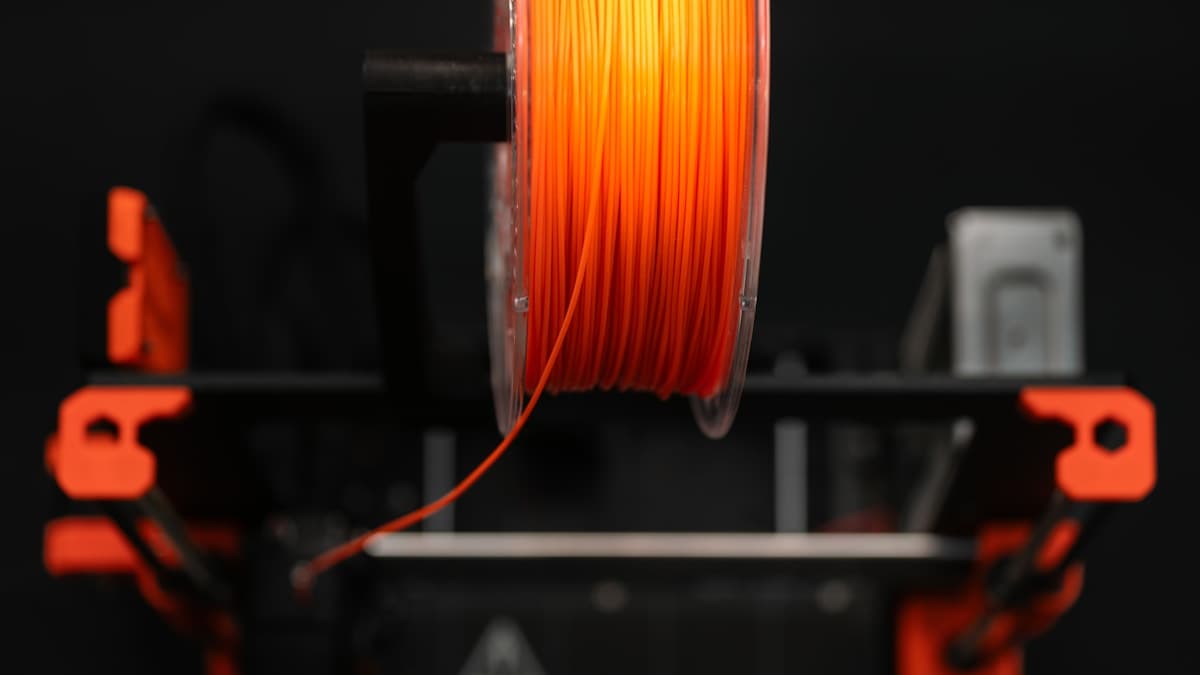
Hero photo by Jakub Żerdzicki via Unsplash. This post contains affiliate links — 3D Prototyping Hub may earn a commission if you purchase through them, at no cost to you. As an Amazon Associate, we earn from qualifying purchases.
Ready to find a 3D printing service provider?
Browse 2,000+ verified providers across the United States and submit your quote request free.
Browse Providers