The short version: the best wood filament for most people is HATCHBOX Wood PLA, because it carries enough real wood flour to sand and stain convincingly while staying printable on an ordinary machine. Step up to colorFabb woodFill when the finish matters more than the print time, use SUNLU Wood PLA while you are learning the material, reach for AMOLEN's walnut and bamboo tones when the part has to match existing furniture, and pick Polymaker PolyWood when you want the look with none of the clog risk.
Wood filament is PLA with milled timber suspended in it, and that one change alters everything about the finished part. It comes off the plate matte instead of glossy, it hides layer lines the way no other common filament does, it sands to a genuine wood surface, it takes stain, and it smells like a workshop while it prints. It is also more brittle than the PLA underneath it and it will block a small nozzle, which is why most people's first spool goes badly.
This post contains affiliate links. If you purchase through these links, 3D Prototyping Hub may earn a small commission at no extra cost to you.
This post also contains Amazon affiliate links. As an Amazon Associate I earn from qualifying purchases.
What "wood filament" actually means
Two different products share the name, and buying the wrong one is the most common mistake here.
Wood-fill is PLA loaded with 10–40% wood flour — pine, birch, bamboo, cork or coconut shell milled fine enough to pass a nozzle. The part contains real timber. It sands into powder rather than smearing, it darkens where you scorch it, and it takes stain unevenly in a way that reads as grain. Higher fibre content means a better finish and a higher clog risk, and every buying decision on this page sits on that trade-off.
Foamed wood-look filament — Polymaker's PolyWood is the widely available example — is pure PLA blown with a foaming agent into a matte, slightly porous surface. It photographs like wood, it is lighter than standard PLA, it prints on a 0.4mm nozzle without a second thought, and it will not stain, because there is nothing in it to absorb the stain.
If the part is going to be sanded and finished, buy fill. If it is going to be printed and used as-is — signage, a lamp diffuser, a prop — the foamed option is the easier life.
What wood-fill demands of your printer
Almost nothing, which is why this is a good material to try. Any FDM machine that prints PLA prints wood-fill, provided you change three things.
- Nozzle size. Go to 0.6mm. Wood particles are soft but chunky, and a handful of them can bridge across a 0.4mm orifice and stop extrusion with no warning. 0.8mm is better again for large decorative parts. Brass is fine — wood is not abrasive the way carbon fibre is — so treat nozzles as consumables rather than buying one hardened one. If you have never swapped one, our nozzle guide covers sizes and the swap itself.
- Temperature. Stay between roughly 190°C and 215°C. Wood scorches somewhere above 230°C, and the resulting char is a hard plug that builds inside the hotend over an hour and then ends the print. Lower temperature also means less stringing, since the carrier is only PLA.
- Retraction. Shorten it, especially on a bowden machine. Long retractions pull fibre-loaded melt back into the cooler part of the throat, where it packs. Direct-drive extruders have an easy advantage here.
Keep it dry, too. Wood flour is more hygroscopic than the PLA around it, so a spool left open on a shelf through a humid month prints with popping, stringing and a furry surface that sanding will not rescue. A dry box matters more for this material than for plain PLA.
The picks
Best overall — HATCHBOX Wood PLA
The default recommendation because it gets the fibre ratio right. There is enough wood in it to sand, stain and smell correct, and not so much that a first-timer on a fresh 0.6mm nozzle spends the evening clearing clogs. Tolerance is consistent spool to spool, which matters more than it sounds when a decorative print runs twelve hours. Start here.
Check HATCHBOX Wood PLA pricing
Best finish — colorFabb woodFill
High pine-fibre content, and the closest thing to real timber once it is off the plate. Sanded to 400 grit and oiled, a woodFill part fools people at arm's length. The cost is printability: run a 0.6mm nozzle minimum, keep the temperature at the low end, and accept that a long print will occasionally need a cold pull. Use it for the piece that matters, not for prototypes of the piece that matters.
Check colorFabb woodFill pricing
Best budget — SUNLU Wood PLA
Cheap enough to learn on. The finish is a step behind the two above and the tone is lighter, but for terrain, planters, ornaments and anything that gets painted rather than stained, the difference disappears. This is the spool to burn while you find your temperature and retraction settings.
Check SUNLU Wood PLA pricing
Best tone range — AMOLEN Wood PLA
Most wood-fill is the same pale beige, which is the reason a lot of wood prints look like plastic. AMOLEN's darker walnut, coconut and bamboo shades start where the others finish, so a part that has to sit next to existing furniture has somewhere to start. Print behaviour matches the category; the tone is what you are buying.
Check AMOLEN Wood PLA pricing
Best wood look without the wood — Polymaker PolyWood
Foamed PLA, no particles, no clogs, no nozzle change, and roughly a third lighter than standard PLA at the same volume. The matte surface hides layer lines as well as real wood-fill does. It will not stain and it will not sand to a timber texture, so choose it when the part is finished the moment it comes off the plate.
Check Polymaker PolyWood pricing
What else you need
If you are still choosing a machine to run all this on, Anycubic's and ELEGOO's desktop FDM ranges both handle wood-fill happily once a 0.6mm nozzle is fitted, and Flashforge's direct-drive machines take short retractions well, which is the setting wood-fill cares about most.
Finishing, and the temperature trick
Wood-fill is the only common filament that rewards sanding rather than punishing it. Plain PLA gums under the paper because friction melts it; wood-fill powders like MDF. Work through 120, 240 and 400 grit, wipe the dust, then apply stain, danish oil or a hard wax. Expect the colour to land unevenly — the stain grips wood flour and skips plastic — which is why the result looks like grain instead of paint.
The other trick is free: because wood scorches, printing the same model with the nozzle stepped between about 195°C and 225°C across its height produces genuine light-and-dark banding. Most slicers can do this with a temperature change at a layer number. On a vase or a lamp shade it turns a flat tan print into something that reads as turned timber. Keep the top of the range under 230°C or you are making charcoal inside the hotend rather than colour on the part.
For workshop parts rather than display pieces, wood-fill is the wrong answer — see the best 3D printers for woodworking for the machines and the PETG-first material logic that jigs and fixtures actually want. And if you are printing massing models or facades, wood tones do a lot of work; our architectural model printer guide covers that use case in full.
Where to go next
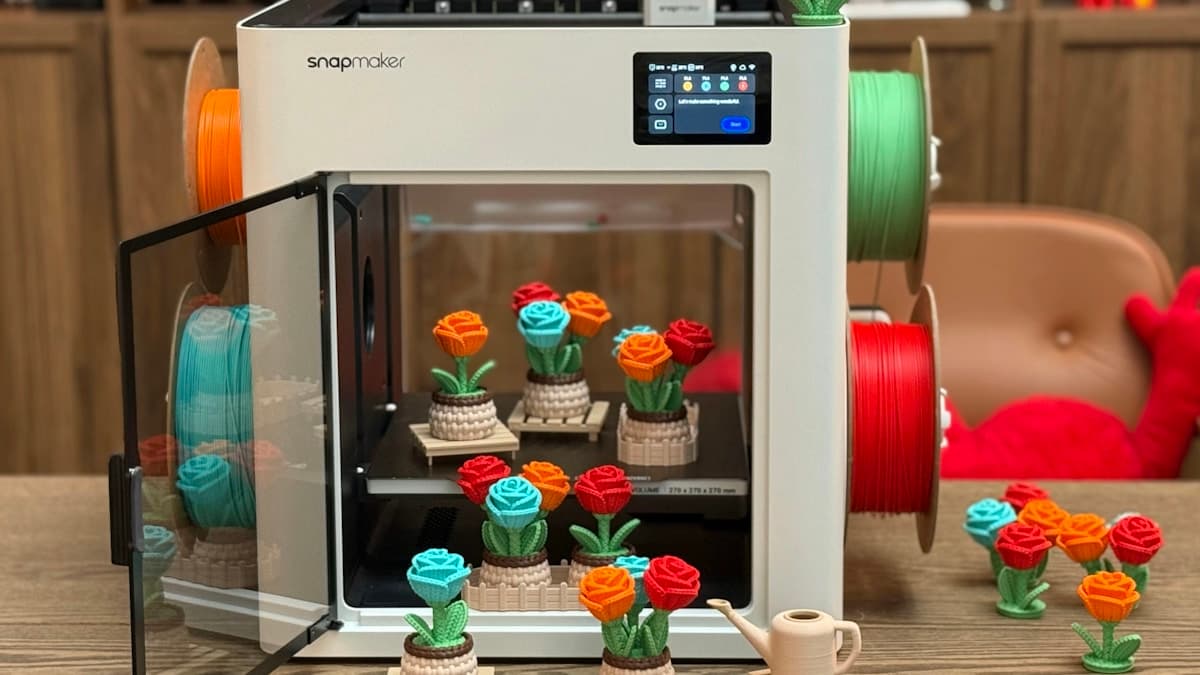
Hero photo by Snapmaker 3D Printer via Unsplash. This post contains affiliate links — 3D Prototyping Hub may earn a commission if you purchase through them, at no cost to you. As an Amazon Associate, we earn from qualifying purchases.
Ready to find a 3D printing service provider?
Browse 2,000+ verified providers across the United States and submit your quote request free.
Browse Providers