Looking for 3D printing services in St. Louis? The 3D Prototyping Hub directory lists 14 providers in the city — start at the St. Louis provider directory, then widen to the Missouri statewide listings if the part needs a process the city line does not cover.
Read the metro rather than the city, though. St. Louis is one of those markets where the city page and the working capacity are not the same list, and knowing the difference saves you a week of phone calls.
Where St. Louis 3D Printing Capacity Actually Sits
The 14 city listings are a mixed set. Several are commercial print, repro and blueprint businesses — the kind of firm that has been producing drawings and signage for decades and added a 3D printer to an existing service menu. Others are genuinely additive-first: a member-access makerspace, a scanning and reverse-engineering specialist, a small prototyping outfit or two. Both kinds can make your part. They are not interchangeable, and the listing alone will not tell you which is which, because none of the St. Louis rows carry recorded process data.
The suburban ring is where the recorded capability sits. The directory lists shops in Chesterfield, St Peters, St Charles County and Arnold, and those are the Missouri listings that actually name their processes — FDM, SLA/DLP and SLS/MJF among them. That arc follows I-64 and I-70 west and northwest out toward Wentzville, which is not a coincidence: it tracks where the metro's manufacturing employment is.
Across the state, Kansas City holds 16 listings and Jefferson City 10, out of 47 in Missouri overall. If a St. Louis shop cannot take the job, that is your next call rather than a national bureau.
One gap worth naming: metro-east Illinois. If you are in Belleville, Edwardsville or O'Fallon, the directory has nothing on your side of the river — its Illinois listings cluster around Chicago, Rockford and Springfield. Cross the bridge; the Missouri side is your local market in practice.
What St. Louis Industry Actually Demands
The work local shops see is shaped by four industries, and knowing which one you are in tells a provider most of what they need.
Aerospace and defense. Boeing's defense business is headquartered in the metro, with a large supplier tier around it and Scott Air Force Base across the river. This is the demand that drives requests for certified processes, material traceability and export-control handling — and the reason a St. Louis shop is more likely than a comparable Midwest market to have been asked those questions before. If your part touches a program, see the aerospace parts guide for what to specify.
Automotive. GM's Wentzville Assembly plant sits in St. Charles County, and the tiered supplier base around it generates steady demand for line-side tooling: locating fixtures, gauges, assembly aids, ergonomic mockups. This is the highest-volume real use of additive in the metro and the least glamorous. Our guide to jigs, fixtures and manufacturing aids covers how to spec them.
Plant science and ag-tech. The Danforth Plant Science Center, Bayer's Creve Coeur crop science campus and the 39 North district make St. Louis one of the densest agricultural research clusters in the country. That demand looks like custom labware, growth-chamber fixtures, sensor housings and one-off rigs — small, low-volume, geometry-specific work that suits FDM and resin well.
Medical and academic. Washington University's medical campus and the BJC system generate surgical planning models, device mockups and research fixtures, and the Cortex district downtown adds startup hardware prototyping on top.
Processes and When to Use Each
| Process | Best for | Typical local availability |
|---|---|---|
| FDM / FFF | Functional prototypes, jigs and fixtures, large low-detail parts, replacement parts | Widely available; the default at nearly every listed shop |
| SLA / DLP resin | Fine detail, smooth surfaces, fit-check models, patterns, dental and lab work | Available at several suburban shops |
| SLS / MJF nylon | Durable end-use parts, complex geometry with no supports, small production runs | Listed by a few shops; often brokered rather than in-house |
| Metal (laser powder-bed, binder jet) | Load-bearing and high-temperature parts, tooling inserts | No Missouri listing records in-house metal — expect subcontract |
The honest caveat: only 7 of the 47 Missouri listings record any process at all. Absence of a tag is missing data, not evidence a shop lacks the machine. Ask. And if the part is metal, read the metal 3D printing guide before you brief anyone, because the questions that separate a real metal supplier from a broker are specific.
What You Can Get Made Locally
- Prototypes and fit-check models — the bread and butter, usually 2–5 days in FDM or resin.
- Jigs, fixtures and shop-floor aids — the highest-value use for the metro's manufacturers.
- Replacement and obsolete parts — often paired with 3D scanning; St. Louis has at least one listed scanning and reverse-engineering specialist, and the reverse engineering guide explains what a usable scan-to-CAD job needs.
- Short production runs — realistic up to a few hundred parts before injection molding wins on unit cost.
- Display, event and architectural pieces — where the metro's commercial print shops are genuinely well-matched, since large-format output and finishing are already their trade.
How to Choose a St. Louis Provider
Ask what machines are on the floor, by model. A shop that answers "we do 3D printing" and a shop that answers "two Bambu X1Cs and a Form 4" are telling you very different things about tolerance, capacity and repeatability.
Ask what is in-house and what is brokered. Neither answer is wrong; both change your lead time and who you call when a part is late.
Send STEP, not just STL. STL discards the parametric geometry, and the shops most able to help you fix a wall thickness or a tolerance problem are the ones that can open the model. File prep is where most quote delays originate, not the printing.
Name the material, not just the process. "PETG" and "ASA" and "PA12" are answers; "plastic" is not. If the part sees heat, UV, chemicals or load, say so in the quote request rather than after the first batch fails.
For program work, establish certifications first. AS9100D, ITAR registration and material traceability are qualifying questions, not negotiating points — and a quote request with a controlled STEP file attached is already a transfer.
For a wider view of the trade-offs, see how much 3D printing costs, the Missouri statewide guide, and our comparison of online versus local services.
Get Quotes from St. Louis Providers
Start with the St. Louis listings, widen to Missouri if you need a process the city does not cover, and brief two or three shops on the same file — a comparable quote is worth more than a fast one. Browse the full provider directory to filter by location and capability.
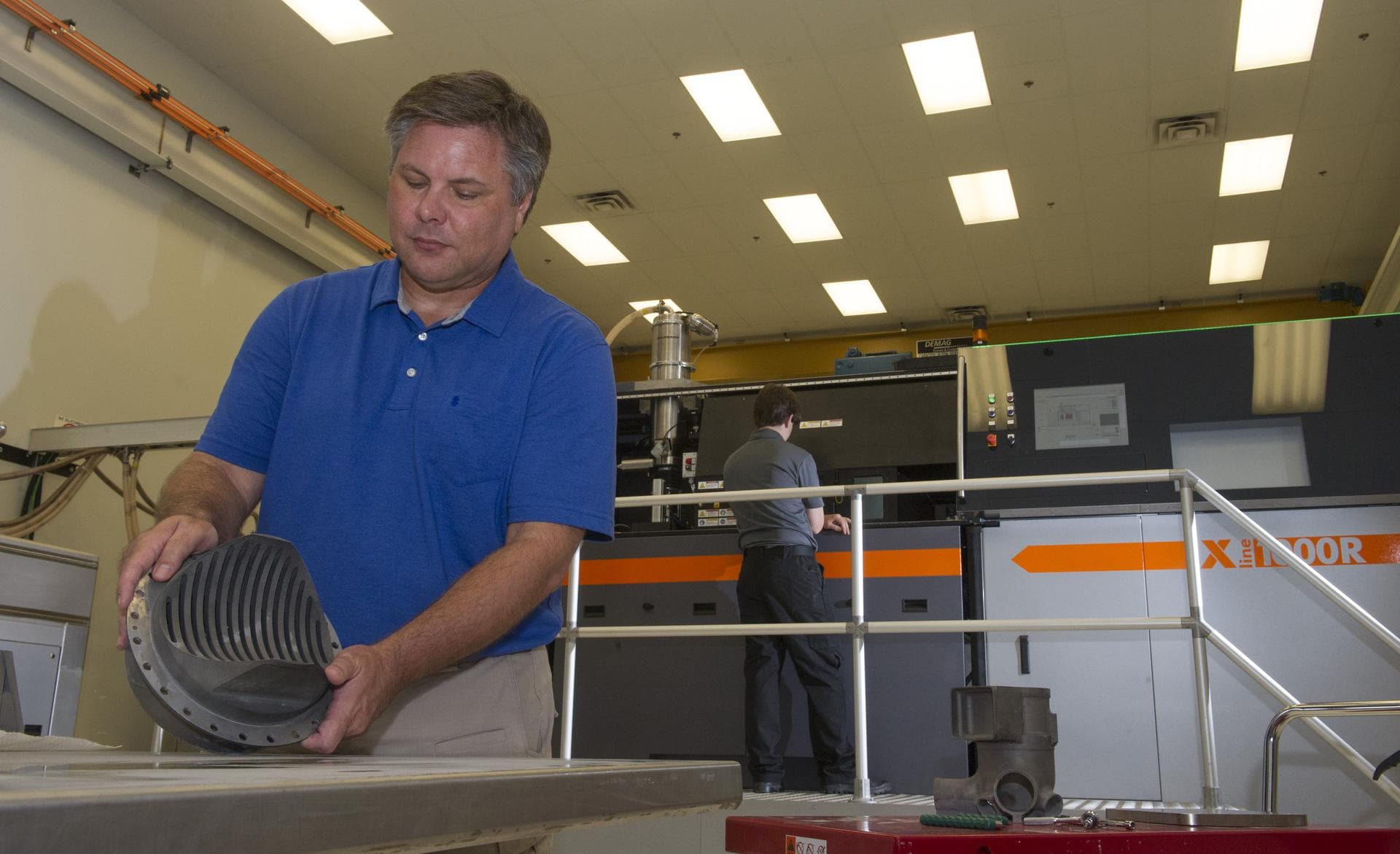
Hero image: NASA / MSFC (public domain), photographer Emmett Given.