Looking for 3D printing services in Sioux Falls? You are looking at the deepest concentration of additive capacity in South Dakota, and it is smaller than you might expect. The 3D Prototyping Hub directory lists 9 providers with a Sioux Falls address — half of the state's 18 listings sitting inside one city — and the Sioux Falls provider directory puts all of them on a single page. Filter, shortlist two or three, send your file.
The second thing to know is more useful than the count. None of the nine records its processes or materials in the directory, which means the sign on the door tells you very little about the machines behind it. This guide covers what the market is actually made of, what the city's employers order, and the questions that separate a shop that can make your part from one that will try.
Where the Capacity Sits
Nine listings is a real market for a city of this size, but it is not a deep one, and its composition matters more than its depth. The Sioux Falls entries break down roughly into four kinds of business:
| What it looks like | What it usually means | First question to ask |
|---|---|---|
| Commercial print house | A sign, repro or offset business that added a filament machine to an existing menu | What can you print that is not flat? |
| Engineering supply / repro | Large-format plan printing for the building trades, additive bolted on | Do you print functional parts or presentation models? |
| Manufacturing and automation shop | Fabrication or automation work where printing supports the real business | Is printing a service you sell, or just something you own? |
| Dedicated 3D printing business | Additive is the product, not an accessory | What machines, what build volume, what materials? |
That spread is normal for a market this size and it is not a criticism. A print house with one well-maintained machine will make you a clean bracket; a dedicated shop will have opinions about layer adhesion. The mistake is assuming the category from the name — two of the nine are explicitly 3D printing businesses, one is a CAD and engineering practice, and the rest sell printing of a kind that was not originally additive at all.
Because none of the nine publishes its process list, treat your first email as a qualifying step rather than an RFQ. Ask what runs in-house, what build volume, and which polymers they stock. You will narrow nine to three in an afternoon.
What Drives Demand in Sioux Falls
The city's order book is not the one a manufacturing town generates, and knowing why tells you which shops will have seen a part like yours.
Health care and medical devices. Sioux Falls is the headquarters city for two large regional health systems, and that concentration is the single biggest driver of specialised printing demand in the state. It produces surgical planning models, custom clinical fixtures, device prototypes and research hardware — small quantities, high specificity, and occasionally a tolerance callout somebody will actually check. 3D printing for medical devices goes deeper on what that work asks of a provider, including the questions about materials and documentation that a general job shop will not expect.
Agriculture and equipment. Sioux Falls sits at the commercial centre of a tri-state farm economy and hosts precision-agriculture technology and livestock and grain-handling equipment manufacturers. The printed work here is mostly jigs, fixtures, enclosures for electronics going onto machinery, and replacement parts for equipment nobody supports any more — the classic case for local additive, because a part that stops a machine is worth more than it costs. See 3D printing services for agriculture and farm equipment for how those jobs are usually specced.
Food processing. Large-scale pork processing and ethanol production both run out of this area, and both generate a steady stream of line change parts, guards, guides and handling components. The constraint is the washdown environment: caustic cleaning, temperature swings and food-contact questions rule out most of the default materials before you start. Conveyor and material-handling parts covers that territory.
Finance, back office and the trades. The city's financial-services sector and its sustained construction growth generate less functional printing and more of the presentation kind — architectural massing models, trade-show pieces, display and signage work. That is exactly the demand the commercial print houses in the list are best positioned to serve.
Processes, and Where to Get Each One
| Process | Best for | Near Sioux Falls |
|---|---|---|
| FDM / FFF | Jigs, fixtures, enclosures, functional prototypes, replacement parts | Assume this is what the city runs |
| SLA / DLP resin | Fine detail, smooth surfaces, master patterns, dental and clinical models | Ask — plausible but unrecorded locally |
| SLS / MJF nylon | Durable functional parts, living hinges, no support scarring, short runs | Humboldt, or out of market |
| Metal | Load-bearing and high-temperature parts, tooling inserts | Humboldt, or out of market |
The exception to the city's filament default sits about twenty minutes west on I-90. The single Humboldt listing is the only provider anywhere in South Dakota that records its full capability in the directory — FDM, SLA/DLP, SLS/MJF and metal, in PLA, ABS, PETG, TPU and stainless steel. For practical purposes it is part of the Sioux Falls market, not a separate one, and it is the first call for anything the city cannot print.
For everything else, the honest answer is ask. A shop that subcontracts SLS to a bureau three states away is giving you a legitimate service, but it changes the lead time, the price and who is accountable when a part comes back out of tolerance. Find out which it is before you commit, not after. Tolerances and accuracy in 3D printing sets out what is reasonable to specify, and how to choose a 3D printing material covers the polymer decision that usually matters more than the machine.
The Market Is Wider Than the City Limits
Sioux Falls sits where I-29 and I-90 cross, and the practical catchment runs well past the city sign in three directions.
Southwest Minnesota is already in the market. Three of the nine Sioux Falls listings answer on 507 numbers, which is the southwest Minnesota area code. The shops themselves plainly do not treat the state line as a boundary, and neither should you.
Sioux City, Iowa carries 8 listings of its own and is about ninety miles south on I-29 — comfortably inside a same-day round trip. If the Sioux Falls nine cannot cover your part, the Sioux City directory is the nearest meaningful alternative rather than a distant fallback. Iowa and Nebraska both carry stronger industrial bases within a freight day.
Minneapolis is roughly three and a half hours away and is the region's deep market — the sensible first check for SLS, certification-sensitive work and anything medical that needs documentation behind it. 3D printing services in Minnesota covers that pool.
The absences close to home are worth naming too. Brandon, Harrisburg, Tea and Dell Rapids are all inside the Sioux Falls commute and carry no listings of their own, and Brookings — home to the state's largest university and a substantial electronics manufacturer an hour north — carries none either. That is a gap in the directory rather than in the ground truth. If you are in one of those towns, start from the statewide page and expect to work with a Sioux Falls shop.
Rapid City, by contrast, is genuinely far: about 350 miles west, across a road that closes in a winter storm. South Dakota is two markets separated by I-90, and from Sioux Falls the eastern one is yours. The South Dakota state guide covers both, and 3D printing services in Fargo, ND is the closest comparable northern-plains market if you want a sense of how this region prices.
How to Choose Between Them
With nine candidates and no published process data, the qualifying call does the work a directory filter normally would. Five questions get you there:
- What runs in-house, and what do you broker out? This changes lead time, cost and accountability more than anything else on the list.
- What build volume? The single most common reason a local quote comes back as a no. Ask in millimetres, not in adjectives.
- Which polymers do you stock, and which can you order? Stocked today and available in three weeks are very different answers on a deadline.
- Who does the file prep? If a shop expects a print-ready STL and you have a STEP file with a tolerance callout, find that out before you send it.
- Can I collect? In a city this compact, collection is a real advantage — and it is the one thing an online bureau cannot match.
Build volume and material availability will eliminate most of the shortlist on their own. For a part that is genuinely urgent, same-day and rush 3D printing services covers what is realistic to ask for, and if you are still weighing local against a bureau, online vs local 3D printing services lays out the trade in full. For anything beyond a handful of units, low-volume 3D printing services is the better framing than a per-part quote.
Winter Changes the Deadline, Not the Part
One local caveat worth planning around: the printing is indoors and unaffected, but the freight is not. A bad ground blizzard closes I-29 and I-90 outright, and that is a normal winter event here. Between November and April, add a day or two either side of a quoted date, and on a genuinely deadline-critical job either collect in person or get a committed date and carrier agreed in writing before the work starts. This is also the strongest practical argument for keeping an urgent job inside the city rather than shipping it in.
Start Here
Nine providers, one page: the Sioux Falls provider directory is the shortest path from a file to a quote. Shortlist on build volume and material first, ask what runs in-house second, and widen to South Dakota statewide or south to Sioux City only when the part needs something the city cannot make.
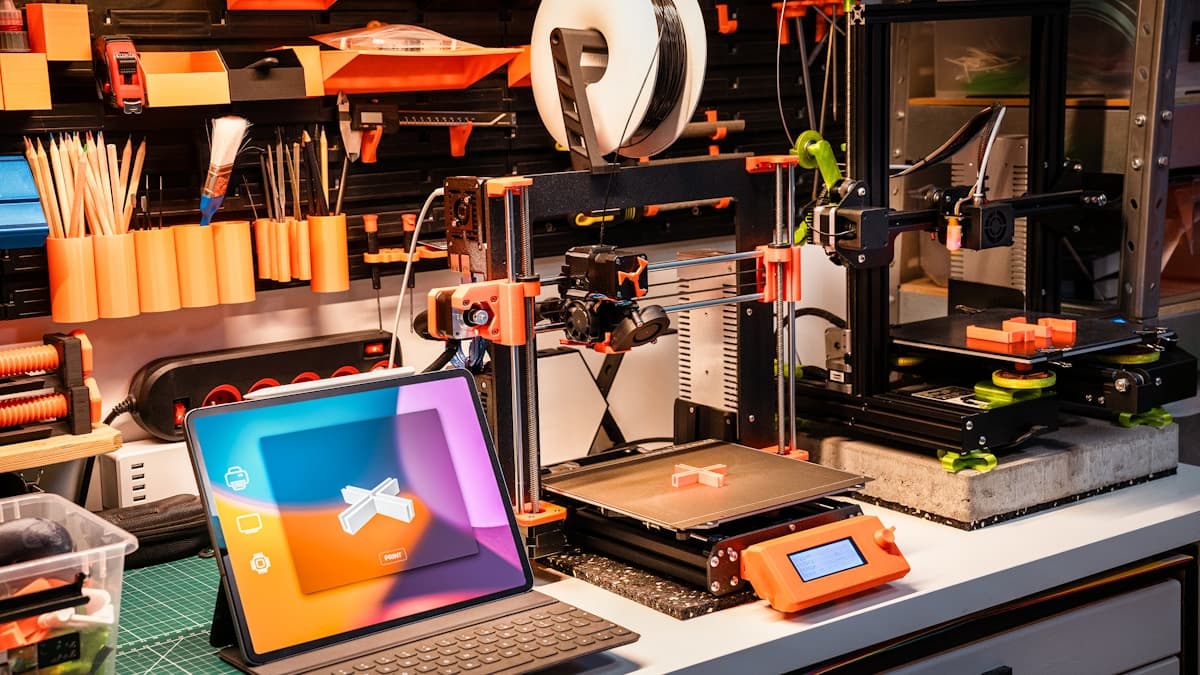
Hero photograph by Jakub Żerdzicki.