Looking for 3D printing services in Minnesota? The state punches above its size in additive manufacturing, for one reason that shapes everything else on this page: Minnesota is one of the densest medical device corridors in the country, and that industry has been buying precision prototyping for decades. The 3D Prototyping Hub directory lists 31 providers across Minnesota. The fastest route to a quote is the Minnesota provider directory: filter by city, technology and material, then send a request straight to the shops that fit your part.
Minnesota Is a One-Metro State
Some states spread their capacity across three or four clusters. Minnesota does not.
| City | Listed providers | Directory page |
|---|---|---|
| Minneapolis | 16 | /providers/location/mn/minneapolis |
| Saint Paul | 7 | /providers/location/mn/saint-paul |
| Duluth | 2 | /providers/location/mn/duluth |
| Willmar | 2 | /providers/location/mn/willmar |
| Eden Prairie, Woodbury, Faribault, Lee Township | 1 each | /providers/location/mn |
The Twin Cities hold 23 of the state's 31 listings — roughly three quarters of Minnesota's capacity inside one metro. That concentration is genuinely useful rather than a limitation, because Minneapolis and Saint Paul are twenty minutes apart and shops quote across both without thinking about it. Search them as one pool, not two.
For most buyers the practical question is therefore not which Minnesota city but which Twin Cities shop. If you are in Rochester, St Cloud, Mankato or Moorhead, the metro is your realistic pool — a two-hour drive to a shop that has done your kind of work beats a local shop that has not.
Our 3D printing services in Minneapolis guide covers the metro in detail, including pricing bands and neighbourhood-level coverage, and the Saint Paul rapid prototyping guide covers the east metro.
Duluth is the one meaningful pocket outside the metro, serving the Iron Range and the port. Willmar anchors west-central Minnesota, where agricultural and food-processing equipment drives demand for replacement parts and fixtures.
What Drives Demand Here
Medical devices, above everything else. Minnesota holds one of the largest concentrations of medical device employment in the United States — the corridor is dense enough to have its own name locally. The practical effect for you as a buyer is a pool of shops accustomed to tight tolerances, documented materials, surgical and anatomical models, and the idea that a part might have to be defensible rather than just functional. Even if you are not in medtech, you benefit: that industry raised the floor on what a competent Twin Cities shop looks like.
Materials science and industrial products. Minnesota's large industrial and materials manufacturers keep steady demand for functional prototypes, test fixtures and process tooling, and have seeded a deep local engineering talent pool.
Powersports and outdoor recreation. Snowmobiles, ATVs, boats and protective equipment are a real Minnesota industry, and it runs on fast iterative prototyping — print it, field-test it in genuinely punishing conditions, revise it, print it again.
Agriculture and food processing. Outside the metro this is the dominant driver. It generates a specific and underrated use case: obsolete replacement parts for machinery that is decades old and no longer supported, reverse-engineered and reprinted rather than sourced.
Aerospace, electronics and computing. A long-established supplier base drives enclosures, connector housings, brackets and low-volume runs with real accountability attached.
Education and research. The University of Minnesota system and the state's technical colleges feed both research printing and the talent pipeline that staffs commercial shops.
The Minnesota Qualifying Question Most Buyers Skip
This is the one section worth reading twice, because it is specific to this state.
Because medical device work is so visible here, a great many Minnesota shops list medtech among the industries they serve. Marketing to device clients is not the same as being qualified for device work, and the gap between the two is where buyers get hurt.
Two questions separate them, and they are different questions:
- Does the shop hold ISO 13485 certification itself? That is a quality-management-system fact about the business. A shop can print an excellent part and have no quality system behind it at all.
- Does it stock the specific biocompatible material you need? Holding USP Class VI or ISO 10993 resin in inventory is a materials fact. "We can order that" means a lead time and a first-article risk you should know about before you commit.
A shop can genuinely have one without the other. Ask both, get both in writing, and treat a vague answer as an answer. If your part is not going near a regulated pathway, you can skip this entirely — but if it is, no other qualifying step matters as much.
Processes Available and When to Use Each
| Process | Best for | Notes |
|---|---|---|
| FDM / FFF | Functional prototypes, brackets, jigs, fixtures, housings | Strong, low cost, most widely available; visible layer lines |
| SLA / DLP resin | High-detail models, surgical and anatomical models, casting patterns | Smooth finish, fine features; parts can be brittle |
| SLS / MJF nylon | Durable functional parts, snap fits, small production runs | No support structures; excellent for complex geometry |
| Metal | End-use metal parts, tooling, instrument and aerospace components | Highest cost, longest lead time; quoted per project |
FDM is the default for functional work and the cheapest, fastest route for brackets, housings and test parts. Resin is the choice when detail and surface finish decide the outcome — which in Minnesota covers a lot of medical and dental modelling. SLS 3D printing earns its place on durable, complex or small-batch nylon parts, especially geometry with internal channels. Metal additive is a specialist service; confirm the capability is in-house rather than subcontracted before you commit.
What You Can Get Printed Locally
- Prototypes — concept models, form studies and functional test parts for design review.
- Functional parts — brackets, housings, jigs, fixtures and end-use components in engineering-grade materials.
- Short production runs — tens to low hundreds of identical parts, the sweet spot for low-volume 3D printing before tooling makes sense.
- Medical and dental models — anatomical models, surgical planning aids and dental patterns, subject to the qualifying questions above.
- Obsolete replacement parts — reverse-engineered components for machinery no longer supported by its manufacturer.
- Large parts — printed whole on large-format machines, or sectioned and bonded.
If you are not sure which process your part needs, say so when you request a quote. Most shops will advise on the right approach as part of quoting — and a provider who talks you out of the wrong process is one worth keeping.
How to Choose a Minnesota Provider
- Is the process in-house? Ask directly. Subcontracted work is common and fine, but it changes lead time and accountability.
- What tolerances do they hold, and on which machines? A number without a process attached to it is marketing.
- What is the real lead time for your quantity? Standard work is often same-week in the Twin Cities; SLS and metal take longer because of batching and post-processing.
- What post-processing is included? Support removal, sanding, dyeing and finishing are frequently quoted separately and can dominate the price on cosmetic parts.
- Have they done work like yours before? A shop that regularly prints surgical models will handle your surgical model better than a generalist quoting it for the first time.
Our guide on how to choose a 3D printing service covers the qualifying process in full, and how much 3D printing costs breaks down what actually drives the number on the quote.
Get Quotes From Minnesota Providers
Start with the Minnesota directory and filter to your technology. Search Minneapolis and Saint Paul together rather than separately — they are one market and treating them as two cuts your options for no reason.
Compare two or three providers rather than taking the first quote. Send the same files and the same requirements to each so the quotes are genuinely comparable, and confirm lead time, materials and post-processing in writing before you commit.
Browse all listed providers to widen the search beyond Minnesota if your part needs a capability the state is thin on.
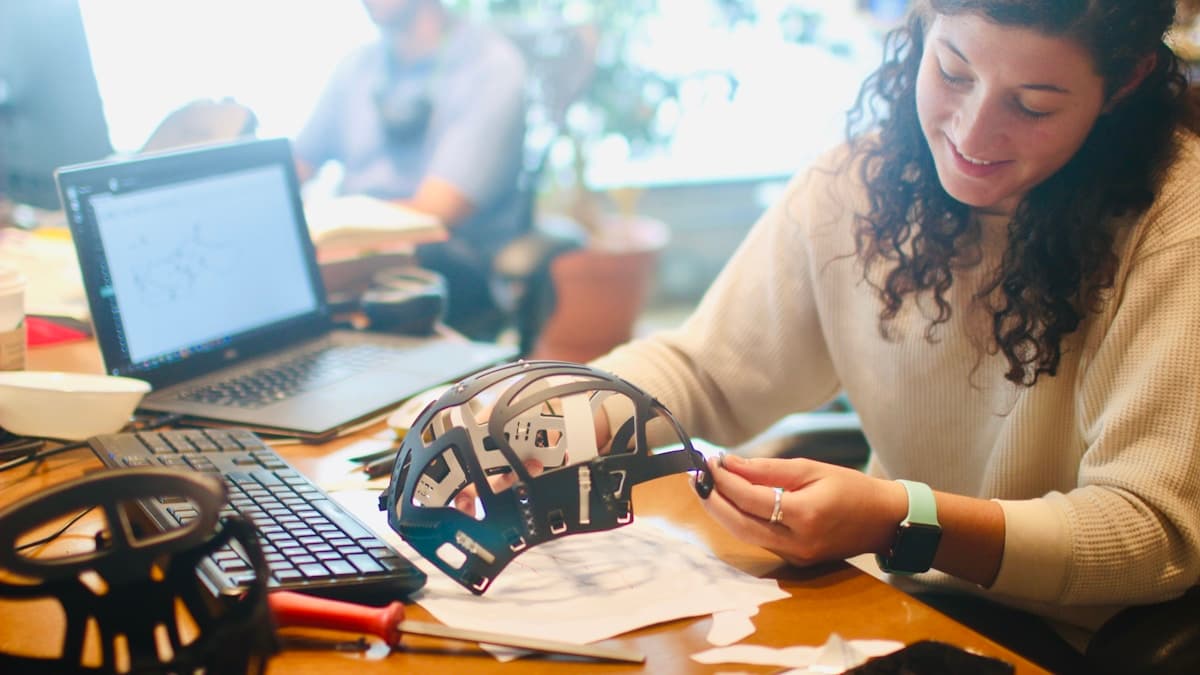
Hero photograph by Tool., Inc via Unsplash.