Looking for 3D printing services in Montgomery? The 3D Prototyping Hub directory lists 12 providers with Montgomery addresses — the largest single-city pool in Alabama — and the shortest route to a quote is the Montgomery provider directory. Pull the list up, qualify two or three by trade, and send your file to the ones that actually run the process your part needs.
That qualifying step carries more weight here than the headline number suggests. Montgomery leads Alabama on listings and not on additive capability, and the gap between those two things is the single most useful thing to understand before you start dialling. This guide covers what the local pool is really made of, what the region's industry means for the work, and what to ask on the first call.
Where Alabama's Listed Capacity Sits
| City | Listed providers | Directory page |
|---|---|---|
| Montgomery | 12 | /providers/location/al/montgomery |
| Birmingham | 11 | /providers/location/al/birmingham |
| Mobile | 9 | /providers/location/al/mobile |
| Huntsville | 7 | /providers/location/al/huntsville |
| Rest of Alabama | 3 | /providers/location/al |
Montgomery holds 12 of Alabama's 42 listings — more than any other city in the state. Read that as a count of listings, not a ranking of capability. Huntsville shows seven and is still where the state's heavy engineering gravity sits, because most of the additive capacity around Redstone and the research park lives inside programmes and contractors rather than on a shop floor you can buy from. The Alabama state guide covers that statewide picture.
One thing about the Montgomery twelve is worth acting on straight away: not one of them records what it prints. No process list, no material list, and no Alabama listing at all is a claimed profile. Statewide, only three listings publish a capability list — two carry no city and one sits in Harvest, near Huntsville. So in this market, capability comes from the call. Every time.
Read the Listings Before You Call
The pool is mixed, and the mix is legible from the business names alone:
- Seven of the twelve trade under a print, copy, sign, graphics or marketing name — commercial printing businesses that added a 3D printer alongside the existing equipment.
- Four carry a 3D name and read as dedicated additive operations.
- One is named for prototyping.
There is a second pattern in the contact details, and it is the most useful thing in the Montgomery data. All seven of the commercial-print listings carry local 334 numbers. All five of the additive-named and prototyping-named listings do not — two Atlanta 404 numbers, two northwest-Florida 850 numbers, and one toll-free 888 line. One of the five is named for Pensacola, roughly 160 miles south.
That is not evidence of anything shady. Numbers port, businesses keep a line from a previous city for years, and a toll-free number is exactly what a shop selling nationally should have. What it does mean is that "local" in a directory listing is a claim about an address, and you should spend one question confirming it: where does the machine sit, and how do I get the part? If the answer is a courier from Atlanta, that may still be the best quote you get — you just want to know it before you plan a same-day collection around it.
For the rest of the conversation, our guide to choosing a 3D printing service has the full qualifying checklist. The short version: ask what runs in-house, ask what machines are on the floor, and ask for a photo of a part like yours.
What the River Region's Industry Changes
Montgomery's economy shapes what local shops are used to being asked for, even though most of the heavy capacity is not for sale to you.
Automotive along I-65. Vehicle assembly in Montgomery and the tier-one and tier-two supplier network spread up and down the corridor generate the steadiest additive demand in the region: jigs, fixtures, line-side aids, check gauges, ergonomic helpers and replacement parts for equipment nobody supports any more. That work is the bread and butter of a good local shop, and low-volume 3D printing is usually the right framing for it rather than prototyping. If your part is vehicle-adjacent, 3D printing services for automotive parts covers what to specify.
Government and the military. Maxwell-Gunter and the state capital keep a large base of offices, training operations and facilities teams in the city. The additive demand this produces is unglamorous and constant — display models, training aids, equipment brackets, signage fittings and one-off fixes — and it is well matched to the print-and-sign shops that make up most of the local pool.
Universities and healthcare. Alabama State, AUM and the city's hospital systems make anatomical models, lab fixtures and student project work a familiar local request rather than an exotic one.
Print and signage crossover. Worth naming, because it cuts both ways. A shop whose day job is large-format print and signage is genuinely good at finishing, colour, mounting and deadlines, and is often the right call for display and fit-out work. It is a poor fit if you need someone to look at your geometry and tell you the boss is going to warp before it prints.
Processes, and When Each Is the Right Call
| Process | Best for | Trade-off |
|---|---|---|
| FDM | Functional prototypes, jigs and fixtures, brackets, large parts, anything in PETG or ASA for outdoor use | Visible layer lines; fine detail limited by nozzle size |
| Resin (SLA/DLP) | High-detail models, dental and medical patterns, small parts with fine features and smooth surfaces | Higher cost per part; most resins are brittle and UV-sensitive over time |
| SLS / MJF nylon | Durable end-use parts, living hinges, complex geometry that would need heavy support in FDM | Higher minimum cost; grainy surface unless finished |
| Metal | Load-bearing and high-temperature parts | Treat as a subcontract or specialist bureau job — not something to expect on a local shop floor |
Most Montgomery jobs are FDM jobs, and most people who ask for resin actually want a surface finish rather than a process. SLA vs FDM printing explained works that decision through on a real part.
Spec It for Central Alabama, Not Just the Drawing
Three habits save money and a week of back-and-forth here.
Say where the part will live before anyone quotes it. PLA is what a small shop stocks by default and it is the wrong answer for a car parked outside in a Montgomery July — it softens in a hot interior and yellows under sustained UV. For anything that lives outdoors, in a vehicle or on a trailer, ask for PETG as the default, ASA where UV exposure is constant, and nylon or a glass-filled grade where load matters. Describe the environment rather than naming a plastic; a good shop will steer you. How to choose a 3D printing material has the full comparison.
Ask how the shop stores its filament. Nylon, PETG and TPU pull moisture out of the air, and central Alabama humidity is the reason a spool that printed cleanly in February strings and delaminates in August. A shop that dries and seals its material will say so without hesitating. One that has never considered the question has told you something useful.
Call out critical dimensions with a number and a direction, not the word "tight" — tolerances and accuracy in 3D printing explains what is realistic from each process — and send a file the shop can actually open. How to prepare files for a 3D printing quote is a five-minute read that prevents most quoting delays.
Getting the Part, Not Just the Quote
Montgomery is compact and easy to drive, which removes the logistics problem that dogs bigger metros — but only if the shop is really here. That is why the address question earns its place on the first call. If you need to collect the same day, and same-day and rush 3D printing is a real category for line-down and deadline work, confirm the handover point before you accept the quote rather than after.
If the answer is that the machine sits in Atlanta, Birmingham or the Florida panhandle, that is fine for a settled file that just needs printing — shipping is cheap and a day of transit rarely matters. It is not fine for an iterative job where you want to hand someone a part, point at the problem and reprint it that afternoon. Decide which of those you are running before you choose.
Start Here
Browse the Montgomery provider directory, qualify two or three by trade rather than by keyword, and send the same file to each. If the city pool is thin for what you need, Birmingham is about 90 minutes north and Huntsville is where the state's engineering depth sits — and the Alabama provider directory and the full provider directory widen it from there.
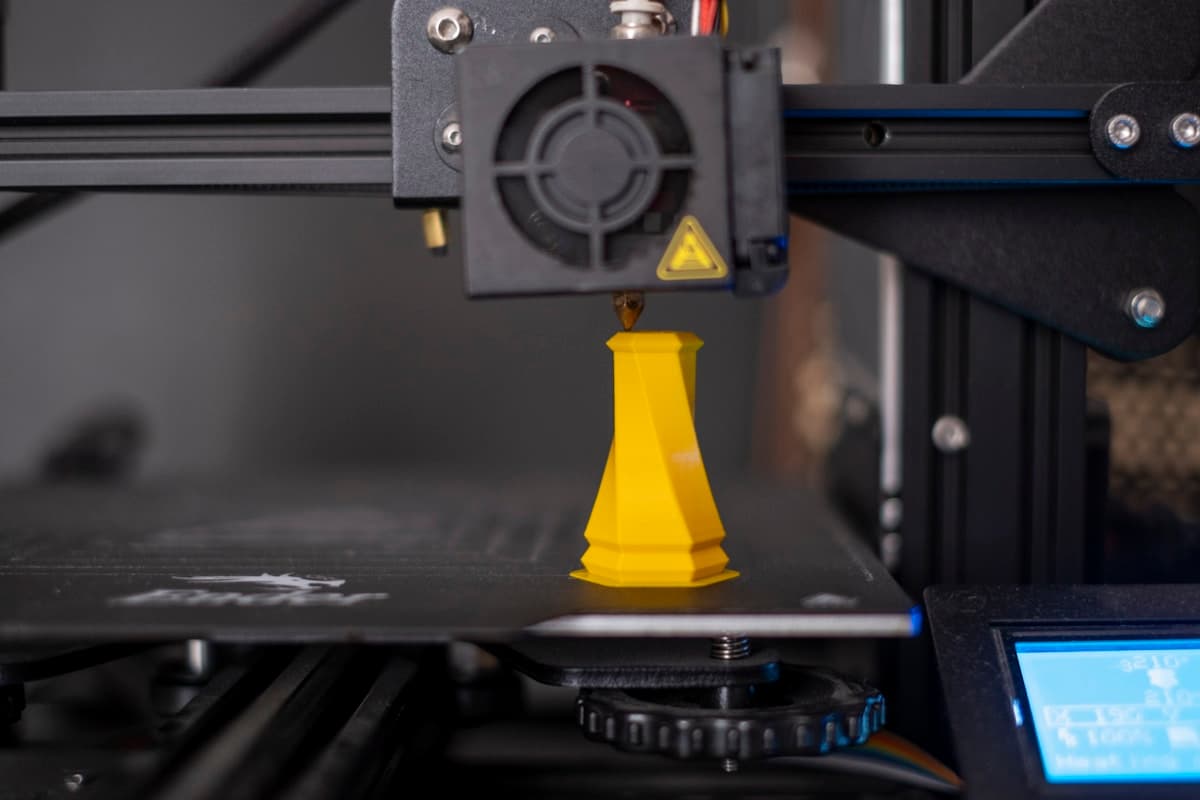
Hero image: open-frame desktop FDM printer mid-job with a finished part on the bed. Photographer unknown (legacy library asset).