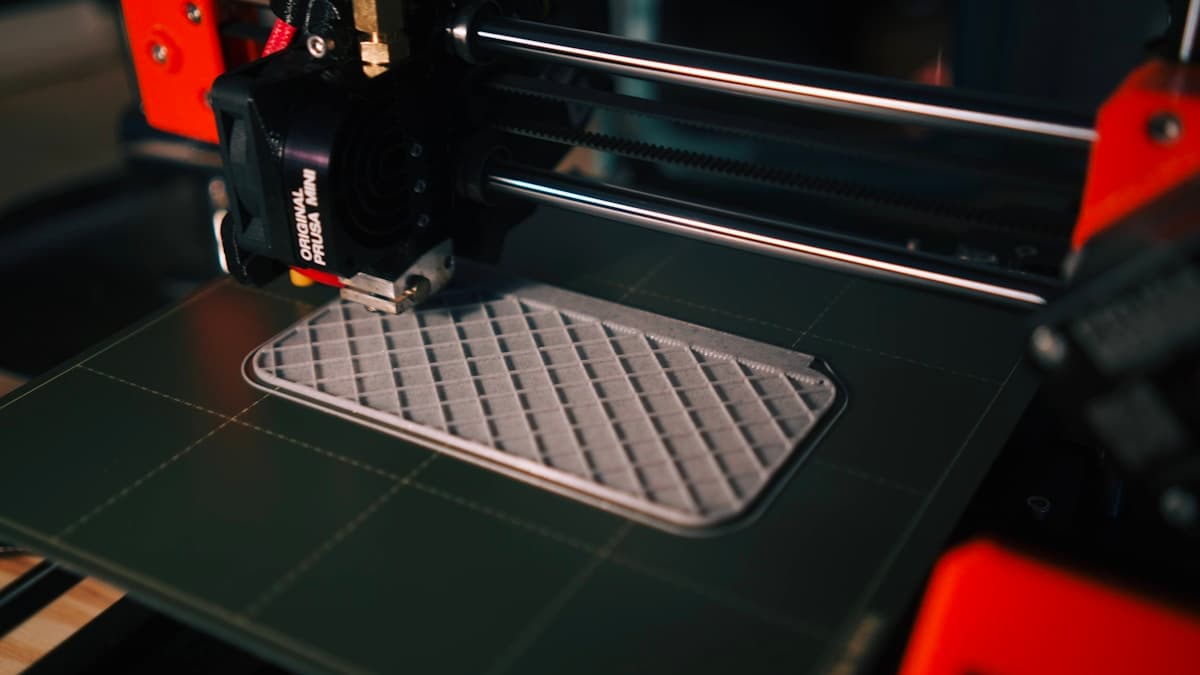
Looking for 3D printing services in Mobile, AL? This is an industrial market with a small, scattered supplier pool, and knowing that before you start saves a round of wasted emails. The 3D Prototyping Hub directory lists nine providers with a Mobile address — start at the Mobile provider directory, filter to the process and material you need, and send your file to the two or three that fit the part.
The second thing to know is that the city line is not the market line. The Gulf Coast runs as one corridor along I-10: Pensacola is about an hour east, Gulfport about an hour west, and New Orleans roughly two and a half hours beyond that. A shop in any of them can quote your part as readily as one on Airport Boulevard. This guide covers what is listed here, what Mobile's employers actually order, and what to ask before you accept a quote.
What the Mobile Market Actually Orders
Mobile's demand comes from heavy industry, and that shapes everything about what is worth printing here.
Aerospace assembly and MRO. The Mobile Aeroplex at Brookley is the single largest driver — commercial aircraft final assembly plus a substantial maintenance, repair and overhaul presence on the same field. Work from this sector is assembly aids rather than flight hardware: locating and drill jigs, protective caps, tool trays, templates, cable-routing guides and training aids. If your part touches a certified assembly process, the paperwork question arrives before the printing question. Our guide to 3D printing services for aerospace parts sets out where the line between tooling and flight hardware sits.
Shipbuilding, repair and the port. Naval and commercial shipbuilding on the Mobile River, barge and vessel repair, and the Port of Mobile's container, bulk and roll-on terminals generate a continuous diet of fixtures, gauges, guards, conduit and cable brackets, and obsolete spares. Shipyards are a classic additive use case for one specific reason: the parts are needed in ones and twos, often for equipment that has outlived its supply chain.
Chemical, paper and heavy fabrication. The industrial corridor running north through Axis and Saraland and south toward Theodore carries chemical plants, paper operations and fabrication shops. Their additive demand is maintenance-driven — line change parts, sensor housings, inspection fixtures — and material choice matters more here than anywhere else in the region, because wash-down, chemical exposure and heat eliminate most of the easy answers.
Marine, outdoor and recreational. Mobile Bay and the Eastern Shore sit in one of the most active recreational boating regions in the country, and that produces real, repeat work: helm and console fittings, vent and trim pieces, rod and cup holders, hatch clips, discontinued fittings for older hulls. 3D printing services for marine and boat parts covers which of those print well and which should be machined.
Research and education. The University of South Alabama's engineering and medical programs add anatomical models, lab fixtures and research rigs — the bulk of the area's high-detail resin demand.
What the Nine Listings Look Like
The composition of a pool matters more than its size, and the Mobile nine split roughly two ways.
Some are additive-first businesses — their main trade is 3D printing and design, and they are the ones most likely to look at your geometry and tell you a wall is too thin to survive a press fit before they quote it.
The rest come from the printing, signage and laser-engraving side: established local firms that run filament machines alongside their core work. Several are genuinely useful for a presentation model, a display piece or a one-off housing. For a load-bearing fixture that has to survive a plant floor, they are a different conversation.
A third thing is specific to this corridor: several listings trade across the Alabama–Florida line, serving Mobile and the western Florida panhandle from one shop. That is an advantage — it widens your pool — but it does mean "local" can mean an hour's drive. Confirm where the machines physically are if you plan to collect.
Neither group is wrong, and a directory listing will not make the distinction for you. The most useful filter in this market is a single question in the first email: what do you print on, and what do you design in? The answer sorts the pool in one reply.
Processes and When to Use Each
| Process | Best for | Realistic local availability |
|---|---|---|
| FDM (filament) | Fixtures, jigs, housings, guards, spares, fit checks, large low-detail parts | Widely available in the city pool — the default here |
| Resin (SLA/LCD/DLP) | Fine detail, smooth surfaces, anatomical and presentation models | Available from some shops; confirm rather than assume |
| SLS / MJF nylon | Durable functional parts, snap fits, complex geometry without supports | Usually brokered or quoted out of the region |
| Metal (DMLS, binder jetting) | End-use metal hardware, high-temperature parts | Treat as an out-of-region route, not a local service |
The honest summary: Mobile is a filament-and-design market. That covers the large majority of what the region orders, and the processes it does not cover locally are reachable within a few hours or by mail. If you are unsure which process a part needs, how to choose a 3D printing material and tolerances and accuracy in 3D printing resolve most of it.
The Gulf Coast Material Question
This is the section that saves Mobile buyers the most money, and it has nothing to do with which shop you pick.
Heat, UV and humidity all work against the default material. A part sitting on a dock, in a vehicle, on a trailer or anywhere a plant floor gets sun will see temperatures that soften PLA, and PLA is what you get by default if you do not specify otherwise — see why 3D prints deform in a hot car and why 3D printed parts fail outdoors for what that failure actually looks like. ASA is the usual answer for sustained sun, PETG for general outdoor duty with a lighter UV load, and glass-filled nylon when the part is structural.
Humidity matters on the supply side too. Nylon, PETG and TPU all absorb moisture from the air, and Gulf Coast humidity is relentless enough that a shop without a sensible drying routine will hand you parts with rough, weak, stringy surfaces. You do not need to audit anyone's equipment — just ask how they store and dry engineering filaments. A shop that has a real answer has thought about it.
Salt air is the third factor, and it is mostly a hardware problem rather than a plastic one: specify stainless or nylon-insert hardware for anything printed that bolts to a boat, a dock or an outdoor structure.
Beyond the City Line
Mobile's nine listings are one pool on a coast with several:
- Gulfport, MS — six listings, about an hour west on I-10.
- Pensacola, FL — two listings, about an hour east.
- New Orleans, LA — nineteen listings, the deepest pool on this stretch of coast.
- Montgomery, AL and Birmingham, AL — twelve and eleven listings, three to four hours up I-65.
Alabama holds 42 listings in total, with Huntsville adding seven more in the state's aerospace cluster. Browse the Alabama state view for all of them, or read 3D printing services in Alabama for how the state's four markets differ. Across the state line, 3D printing services in Mississippi and 3D printing services in Louisiana cover the neighbouring pools. When nothing within driving distance fits, online vs local 3D printing services sets out the trade you are making.
How to Choose Among Them
Ask what runs in-house. In a pool of nine, subcontracting is normal and not disqualifying — but it changes lead time, cost and who answers the phone when a part is late. Ask before the quote, not after.
Say where the part will live. A fixture in a conditioned lab, a bracket on a dock in August and a model on a conference table want three different materials. One sentence about the environment prevents most reprints on this coast.
Separate a rush from a standard job up front. Plant shutdowns, vessel turnarounds and storm-season repairs are all deadline-driven by nature, and a shop that can hold a same-week slot is worth more than one that is slightly cheaper. Same-day and rush 3D printing services covers what rush genuinely costs and when it is achievable.
Treat 20 parts differently from two. The economics change once you need a repeatable batch, and so does the right process — low-volume 3D printing services covers where that crossover sits.
Ask about the file if the work is contract-linked. Aerospace and defense-adjacent work in this region often carries data-handling requirements. Ask who touches the file, whether any stage is subcontracted, and what happens to it afterwards; 3D printing services, NDAs and IP protection lists the questions worth putting in writing.
Get two quotes on the same file. Not to squeeze the price, but because the way two shops read the same geometry tells you which one is paying attention.
Get Quotes From Mobile Providers
Browse the full Mobile, AL directory, filter to the process and material you need, and send the same file — with the quantity, the deadline and one line about where the part will live — to two or three shops. If the process you need is not in those nine listings, check Gulfport and New Orleans next, and the full provider directory after that.
Hero photograph by Kadir Celep.