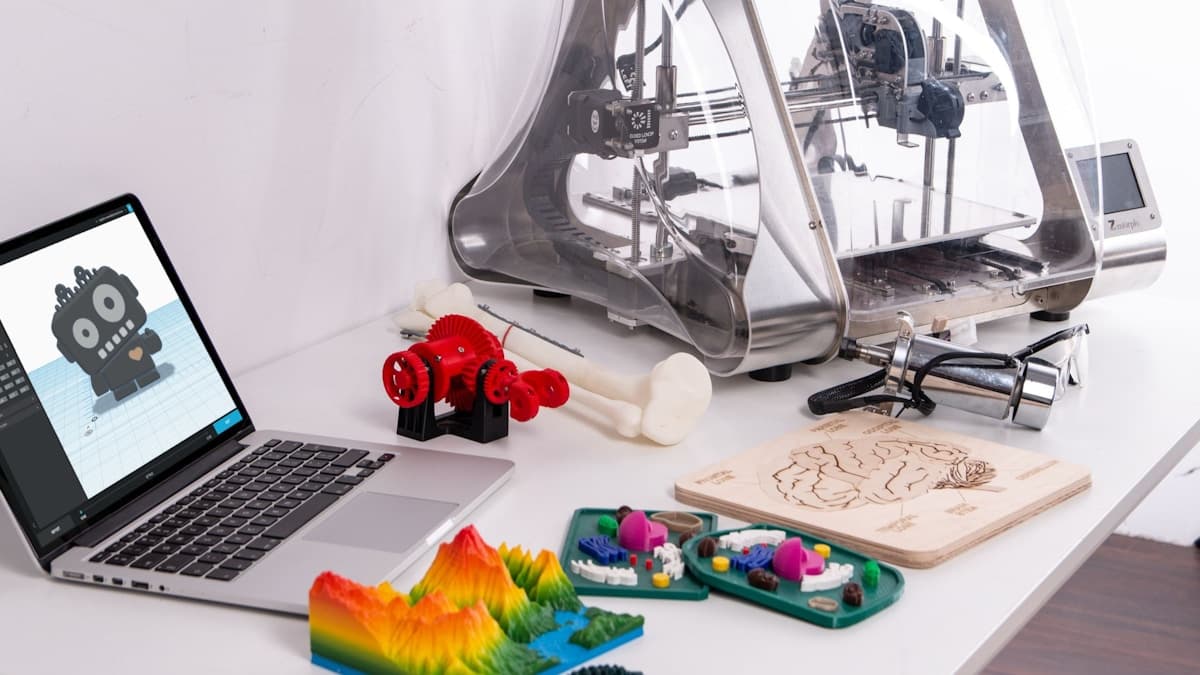
Looking for 3D printing services in Charleston? The 3D Prototyping Hub directory lists 12 providers with Charleston addresses — more than any other city in South Carolina — and the fastest route to a quote is the Charleston provider directory. Pull up the list, qualify two or three by trade, and send your file to the ones that actually run the process your part needs.
That qualifying step matters more here than the headline number suggests, because Charleston is at once the deepest pool in the state and the least legible one. Not a single Charleston listing records what it prints. This guide covers what the local pool is really made of, where the rest of the metro's capacity sits, and what to ask before you hand over a file.
Where the Metro's Listed Capacity Sits
| City | Listed providers | Directory page |
|---|---|---|
| Charleston | 12 | /providers/location/sc/charleston |
| North Charleston | 1 | /providers/location/sc/north-charleston |
| Mt Pleasant | 1 | /providers/location/sc/mt-pleasant |
| Rest of South Carolina | 20 | /providers/location/sc |
Fourteen of South Carolina's 34 listings sit in the Charleston metro — comfortably the state's densest cluster, and enough that you should not need to ship a routine job out of the region. The South Carolina state guide covers how that compares with Columbia and the Upstate, where the state's heaviest manufacturing actually is.
One oddity is worth acting on. The twelve listings inside the city limits publish no processes and no materials at all, and none of the 34 statewide is a claimed profile. The two suburban listings — one in North Charleston, one in Mt Pleasant — are the only ones in the metro that publish a capability list, and both record FDM, resin and powder-bed nylon alongside PLA, ABS and PETG. That does not make them better shops than the twelve. It does mean that if you want to start from a published capability rather than a cold call, you already know where to start.
Read the Listings Before You Call
The Charleston pool is mixed, and the mix is legible from the business names alone:
- Six of the twelve trade under a print, copy, graphics or promotional name — commercial printing businesses that added a 3D printer alongside the existing equipment.
- Three carry an additive or 3D name and read as dedicated operations.
- Two are makerspaces or learning centres, which changes the transaction: some will run a job for you, others sell you access and expect you to run it yourself. Ask which before you drive over.
- One is a materials-reuse and repurposing fabrication business.
That shapes what a first conversation should sound like. A commercial print or graphics shop that added a printer is a reasonable fit for a straightforward part from a finished, watertight file, and a poor fit if you need someone to look at your geometry and tell you the boss is going to warp. A makerspace is excellent for iterating cheaply on your own time and wrong for a deadline you cannot personally staff.
Ask what runs in-house, ask what machines are on the floor, and ask for a photo of a part like yours. Our guide to choosing a 3D printing service has the full qualifying checklist.
What the Lowcountry's Industrial Base Changes
Charleston's economy gives the additive market a shape you can use, even though most of the heavy capacity is not for sale to you.
Aerospace. Commercial aircraft assembly in North Charleston has pulled a supplier and services ecosystem in around it over the past fifteen years. Shops that grew up serving that work are comfortable with drawings, revision control and tolerance callouts — not universal in the desktop-printing world, and worth seeking out if a dimension on your part is critical. If that is your world, 3D printing services for aerospace parts covers what to specify.
Automotive and the port. Two vehicle assembly plants sit within an hour of the peninsula, and the container port is among the busiest on the East Coast. Both generate the same everyday additive demand: jigs, fixtures, line-side aids, gauges and replacement handles for equipment nobody makes parts for any more. That work is the bread and butter of a good local shop and the reason low-volume 3D printing is usually the right framing for it, rather than prototyping.
Boats and salt air. Recreational and working boats are everywhere here, and printed parts end up on them constantly — brackets, clips, vent covers, custom fittings for hardware that was discontinued a decade ago. Salt and sun are unforgiving of the wrong plastic. 3D printing for marine and boat parts works through the material trade-offs.
Medical and research. A large academic medical presence downtown means anatomical models, surgical planning aids and lab fixtures are a familiar request locally rather than an exotic one.
Processes, and When Each Is the Right Call
| Process | Best for | Trade-off |
|---|---|---|
| FDM | Functional prototypes, jigs and fixtures, brackets, large parts, anything in PETG or ASA for outdoor use | Visible layer lines; fine detail is limited by nozzle size |
| Resin (SLA/DLP) | High-detail models, dental and medical patterns, small parts with fine features and smooth surfaces | More expensive per part; most resins are brittle and UV-sensitive over time |
| SLS / MJF nylon | Durable end-use parts, living hinges, complex geometry that would need heavy support in FDM | Higher minimum cost; grainy surface unless finished |
| Metal | Load-bearing and high-temperature parts | Treat as a subcontract or a specialist bureau job — not something to expect on a local shop floor |
Most Charleston jobs are FDM jobs, and most people asking for resin want a surface finish rather than the process. SLA vs FDM printing explained works that decision through on a real part.
Spec It for the Climate, Not Just the Drawing
Two Lowcountry-specific habits save money here.
Say where the part will live before anyone quotes it. PLA is what a small shop stocks by default and it is the wrong answer for a car parked on a Charleston summer afternoon, let alone a deck locker. PETG is the sensible default for outdoor and marine work, ASA where UV exposure is constant, nylon or a glass-filled grade where load matters. How to choose a 3D printing material covers the full comparison.
Ask how the shop stores filament. Nylon, PETG and TPU are hygroscopic, and coastal humidity is the reason a spool that printed cleanly in March produces stringing and weak layer adhesion in August. A shop that dries and seals its material will say so without hesitating. One that has never thought about it is telling you something.
Two more things that save a day each: call out critical dimensions with a number and a direction rather than the word "tight" — tolerances and accuracy in 3D printing explains what is realistic — and send a file the shop can actually open. How to prepare files for a 3D printing quote is a five-minute read that prevents most quoting delays.
Getting the Part, Not Just the Quote
The metro's geography is the one logistics factor worth planning around. The listings cluster on and around the peninsula, while the industrial base sits up in North Charleston, Ladson and out toward Ridgeville, with Mt Pleasant across the Ravenel Bridge. None of that is far in miles, and all of it can be slow at the wrong hour on I-26 or across a bridge. If your job depends on collecting the same day — and same-day and rush 3D printing is a genuine category here — favour a shop on your side of the water and agree the handover up front. For a settled file that just needs printing, shipping is cheap and the bridge stops mattering.
Start Here
Browse the Charleston provider directory, qualify two or three by trade rather than by keyword, and send your file to the ones that fit. If the city pool is thin for what you need, the North Charleston and Mt Pleasant listings publish their processes, and the South Carolina provider directory and the full provider directory widen it further.
Hero photograph by Xiaole Tao.