3D printing services for schools and universities solve a narrower problem than most vendors admit. The machine in the lab already handles coursework — what it cannot handle is the part that is too big for its bed, the material it was never designed to run, the class set of thirty due Friday, and the capstone model that cannot be re-printed if it fails overnight. Those jobs go out. This guide covers which ones, how education procurement actually pays for them, what to send, and how to qualify a shop that can invoice an institution rather than a credit card. When you are ready to source, browse the 3D printing provider directory.
What Schools Send Out, and What Stays In the Building
The split is not about capability. It is about whether the work teaches anything.
Keep in-house: iteration. Students learn 3D printing by designing something, printing it, discovering the hole is 0.4mm too small and fixing it before the next class. That loop is the entire pedagogical value, and no outside provider can deliver it on any budget or schedule. A desktop FDM machine exists to be used badly by beginners, and it should be.
Send out: everything the loop does not need. Five categories cover nearly all of it.
Parts larger than the bed. Architecture and civil engineering programs hit this constantly — site models, terrain, sectional building studies. Segmenting a model into eighteen pieces to fit a 220mm bed teaches nothing about architecture and costs a week. This is ordinary large-format printing work for a shop.
Engineering-grade materials. Formula SAE, Baja, rocketry, robotics and concrete-canoe teams need parts that survive load and heat: nylon, carbon-fibre-filled composites, SLS PA 12, occasionally metal. These are not classroom materials, and the competition schedule does not forgive a failed print.
High-detail resin. Biology and nursing anatomical models, dental and prosthodontics coursework, fine-arts and jewellery pieces, palaeontology replicas. Resin is where a professional machine visibly outperforms a classroom one, and it is also where classroom chemistry gets complicated — see the safety section below.
Class sets and batches. Thirty identical lab jigs, a hundred department open-day giveaways, replacement fixtures for a teaching lab. This is low-volume production, priced per part rather than per hour of somebody's machine time.
Deadline-critical single pieces. The accreditation exhibit, the donor presentation, the conference poster model. If a failed print cannot be re-run in time, do not run it on a machine with a queue of student jobs in front of it.
How Education Actually Pays for It
This is the section most vendor guides skip, and it is the one that decides whether a project happens.
Outsourcing converts capital into consumables, and that is often the whole argument. A $3,000 printer is a capital equipment request with an approval chain, an IT or facilities review, a space allocation and a depreciation schedule. Three thousand dollars of print orders is instructional supplies, spread across a year, approved by a department chair. Identical money, completely different path — which is why a department that cannot get a machine approved can frequently get the same parts made. The broader trade-off is laid out in 3D printing services vs buying your own printer.
Confirm the provider can be paid the way you pay. Ask whether they invoice against a purchase order on net-30 terms, and whether they will complete supplier onboarding — a W-9, a certificate of insurance naming the institution, and registration in whatever vendor portal your district or university runs. That paperwork routinely takes longer than the printing. Start it in August, not the week the grant deadline lands.
Know your p-card ceiling. Most institutional purchasing cards carry a single-transaction limit, commonly a few thousand dollars. Under it, a card is by far the fastest route. Splitting one order into two to duck the ceiling is a procurement violation at most institutions, so if a job is over the line, run it as a PO from the start.
Sole-source justification is real and usually easy. If exactly one nearby shop runs the material you need, say so in writing with the technical reason. Procurement offices reject vague justifications and accept specific ones.
Grant-funded work has its own clock. Funds that expire at fiscal year end cannot pay for a part delivered in July, and the invoice date, not the order date, is usually what counts.
Process Selection
| Process | Best for in education | Typical materials | Watch for |
|---|---|---|---|
| FDM | Coursework, iteration, large models, class sets, teaching aids | PLA, PETG, ABS, PA-CF | Cheapest per part; layer adhesion is the weak axis — orient load across layers, not along them |
| SLA / DLP resin | Anatomical and dental models, fine detail, art and jewellery | Model, clear and castable resins | Highest detail; parts are brittle and yellow under UV, so it is a display material rather than a load-bearing one |
| SLS / MJF | Competition-team parts, functional assemblies, batches | PA 11, PA 12, TPU | No supports and excellent nesting, so quantity is cheap; grainy grey surface unless dyed |
| Metal powder bed fusion | Research hardware, materials-science coursework | Stainless, Ti-6Al-4V, Inconel | Genuine research capability at genuine research prices; lead time follows the build queue |
Most school orders are FDM, and the reason to leave is specific: detail sends you to resin, toughness sends you to SLS, temperature and stiffness send you to metal or a filled composite. If the reason is not one of those, FDM is correct.
Specifying the Job
Send solid model files where you have them. A STEP or a native CAD file carries real geometry; an STL carries a triangle mesh approximating it. For student work an STL is usually all that exists, and that is fine — but a provider can fix a wall thickness in a STEP file and can only warn you about one in an STL. The difference is covered in STL vs STEP files.
Check student files before they leave. Four problems account for most rejected education orders: a model exported in inches and interpreted as millimetres, a non-manifold mesh from a sketch-based tool, walls thinner than a nozzle can extrude, and a part designed with no clearance at all between mating components. A five-minute check in the slicer catches all four.
State the deadline as a delivery date and say what it is for. "Needed by 14 November" is useful; "needed for the capstone presentation on 14 November, and the presentation cannot move" tells a provider whether to warn you or to reschedule you.
Say what the part has to do. A display model, a functional fixture and a load-bearing bracket have different answers for material, orientation and infill, and the provider can only choose well if they know which one it is. How to prepare files for a 3D printing quote covers the full checklist, and how much 3D printing costs explains what actually drives the number back.
Safety, Liability and Why Some Jobs Should Leave
Schools carry duties a workshop does not, and this is a legitimate reason to outsource rather than an excuse.
Photopolymer resin is a skin sensitiser, isopropyl alcohol in wash quantities is a flammable-storage question your fire code already answers, and both sit awkwardly in a room full of minors. ABS and nylon release ultrafine particles and should be enclosed and ventilated. Overnight printing in an unsupervised room is a conversation with facilities and possibly with your insurer, not a decision a department makes alone. The practical baseline for resin work is in resin safety and post-processing basics — read it before deciding a classroom resin printer is the cheap option, because the ventilation, PPE, storage and waste-disposal costs are the real price, and a few outsourced parts a semester frequently undercut it.
Qualifying a Provider
For coursework parts, price and turnaround are the whole decision. For anything that a program depends on, ask five questions.
- Do you invoice against a purchase order, and have you onboarded as a supplier to a school or university before? Experience here is worth more than a low quote.
- What is your current lead time, and what happens if a build fails? You want the re-print policy stated before you need it.
- Will you review the file and tell me what will not print? A shop that prints exactly what you sent and lets it fail is not serving a customer who is teaching.
- What do you do with my files afterwards? Written confirmation of no reuse and deletion on request. For export-controlled research, ITAR registration is a hard requirement.
- Can you quote the same part in two processes? A provider who will show you FDM against SLS, with the trade-off explained, is one you can keep using.
A shop that already works with a nearby campus will recognise all five questions immediately. Working with a local provider also makes a site visit possible, which is a genuinely good field trip and occasionally turns into a sponsor relationship.
Get a School or University Project Quoted
Decide first whether the job is teaching something. If it is, print it in the building and accept the failures as the point. If it is not — too large, wrong material, too many, or due on a date that cannot move — send it out, and start the supplier paperwork before the deadline exists rather than after. Browse 3D printing providers, ask two or three for the same quote, and pay attention to which one asks what the part has to do.
Related Resources
- 3D Printing Services vs Buying Your Own Printer — the capital-versus-consumable decision in full
- Best 3D Printers for Schools and Classrooms — for the machine that stays in the room
- Low-Volume 3D Printing Services — class sets and batch pricing
- 3D Printing Services for Labs and Custom Labware — teaching phantoms, bench fixtures and departmental hardware
- How to Prepare Files for a 3D Printing Quote — what to send and what to check first
- Resin Safety and Post-Processing Basics — before any resin machine enters a classroom
- Browse 3D Printing Providers — send the job out
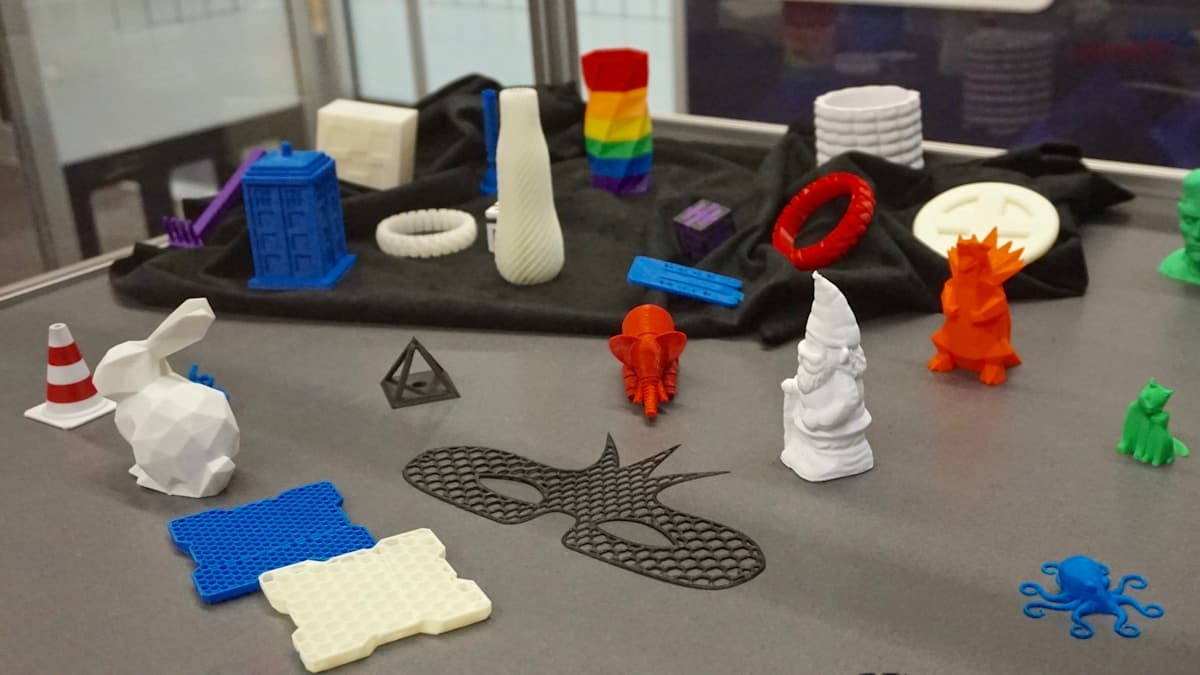
Hero photo: Locanam 3D Printing via Unsplash.