The quote came back, but not as a number. It came back as a list: thicken this wall, add a radius here, split the part, this hole will not come out at 2 mm. It reads like the shop is redesigning your work before it has made anything. A 3D printing shop asking you to change your part is doing something narrower and much less personal — it is telling you the handful of places where your geometry collides with the process it just quoted, while changing them is still cheap. If you are still choosing who to send the package to, browse the 3D printing provider directory and look at what each shop publishes about minimum features and tolerances before you send a file.
A DFM Note Is a Risk Report, Not a Critique
Design-for-manufacturing feedback sorts into three buckets, and they are not equally negotiable:
- Cannot be built as drawn. The part exceeds the build volume, or a feature is below the machine's minimum. There is no version of this where the shop prints it and it works.
- Can be built, will probably fail. A wall that prints but delaminates, a boss that snaps off with the supports, a hollow volume with no escape path. The shop has seen this part shape fail before.
- Can be built, costs more than it needs to. A feature that forces a bad orientation, doubles the support volume, or adds a secondary operation. Change it and the price moves.
Ask which bucket a note is in and the whole exchange gets shorter. A shop will tell you — "this one is a hard stop, these two are cost, this one is your call" — and you only have to make a judgement about the last group.
The Six Requests You Will Actually Get
| The request |
What is behind it |
What it costs to decline |
| Thicken a wall |
A wall thinner than the process can resolve prints as a single weak pass, or not at all |
Delamination, a visible gap, or a feature that simply is not there |
| Add a radius or a fillet |
Sharp internal corners concentrate stress exactly where layers bond |
Cracks from the corner outward under load |
| Split the part and add alignment features |
It does not fit the build volume, or fits only in an orientation that ruins it |
A no-quote, a much larger machine, or a far higher price |
| Add a drain or escape hole |
Enclosed volumes trap uncured liquid or loose powder with no way out |
Trapped material, weight you did not expect, failed post-processing |
| Upsize a small hole, or allow for drilling |
Small holes come out undersized and out of round in every process |
A hole you have to open yourself, or a part that does not accept its fastener |
| Reorient, and accept marks on one face |
Every orientation puts support witness marks somewhere |
The scar lands on the face you were going to photograph |
The pattern is the same each time: the note names a feature, the feature has a dimension, and the dimension is below or above something the shop publishes. If a note names no feature and no number — just "this will not print well" — ask for the specific one. A vague note is not DFM, it is a shrug, and it leaves you unable to act.
The Rules Most Notes Come From
You can predict four of the six before you send anything.
Minimum wall. On filament processes the practical floor is tied to the extrusion width: a wall below roughly two passes prints as a single bead with nothing to bond to. Resin-based processes resolve finer, but thin walls there fail differently — they survive printing and then bend or snap during washing and curing. Either way, a wall you designed at 0.8 mm because it looked fine on screen is the single most common note.
Minimum hole and pin. Holes print undersized and pins print oversized, both for the same reason: the melt or the cured layer spreads slightly past where the geometry said to stop. That is why shops ask you to upsize a small hole or let them drill it afterwards — the detail is in why 3D printed holes come out undersized.
Unsupported overhang. Past roughly 45 degrees from vertical, an overhang needs support, and support has to come off something. When a shop asks to add a chamfer under a lip, it is usually trying to delete a support structure that would otherwise be removed from a surface you care about.
Build volume. Check it before you design, not after you quote. Scaling a part up is not a neutral operation either — stiffness and warping do not scale with the drawing, which is the whole of why 3D printed parts fail when you scale them up.
A fuller version of all four lives in our design for 3D printing guidelines. Clearing them in CAD is cheaper than clearing them by email.
Which Changes Are Yours and Which Are Theirs
There is a clean line, and it is worth stating out loud in the thread:
- Geometry is yours. Wall thickness, hole sizes, radii, splits, drain holes. These change fit, strength and function, so they are your decision even when the shop proposes them.
- The build is theirs. Orientation, support type and placement, layer height, nesting, machine choice. These are inside the price you accepted.
That matters when a note crosses the line. If a shop asks you to redesign a part so it supports itself better, it is asking you to solve a build problem with your geometry — sometimes reasonable, sometimes a sign it is quoting a process that does not suit the part. Either way you are entitled to ask what the alternative orientation costs instead.
Splitting Is the One Worth Saying Yes To
Of all the requests, the split is the one buyers resist most and should resist least. A part at the edge of a build volume prints slowly, fails late and fails expensively — and a failure at hour 19 is a failure you pay for in lead time, not just material.
Say yes, but set the terms: ask for located alignment features rather than a flat butt joint, agree which face the seam crosses, and specify how it is bonded. A seam planned in CAD disappears; a seam improvised at the machine is why split 3D prints never line up.
Answer in One Email
The exchange usually takes three rounds. It can take one if you answer like this:
- Go through the notes in order and give each one a verdict — accept, decline, or "tell me what this is for."
- State intent on anything you decline. "The 0.6 mm web is a living hinge" is information the shop does not have and will act on.
- Say who makes the change. If the shop edits the model, ask for the revised STEP back and give it a revision letter.
- Ask whether the quote and lead time move, and get the revised number before approving.
- Attach the changes to the package rather than leaving them in the thread — the person quoting and the person measuring are rarely the same person, which is also why your shop asks for a 2D drawing.
Then the final answer is a single approval against a specific revision, which is what makes a reorder reproducible months later.
A Shop That Sends Notes Is Doing You a Favour
The alternative is not a shop with no objections. It is a shop that prints what you sent, ships it, and lets you discover the thin wall yourself — and an instant-calculator quote with no human in it will do exactly that, which is part of why human quotes cost more than instant calculators. A DFM note is unpaid engineering time spent before the invoice exists. It is the clearest signal available that someone opened your file.
Ready to send yours out? Find 3D printing providers in the directory, filter by process, and send the model to two shops that match the job — then compare their notes as well as their numbers. Where the two lists agree, that feature really does need changing.
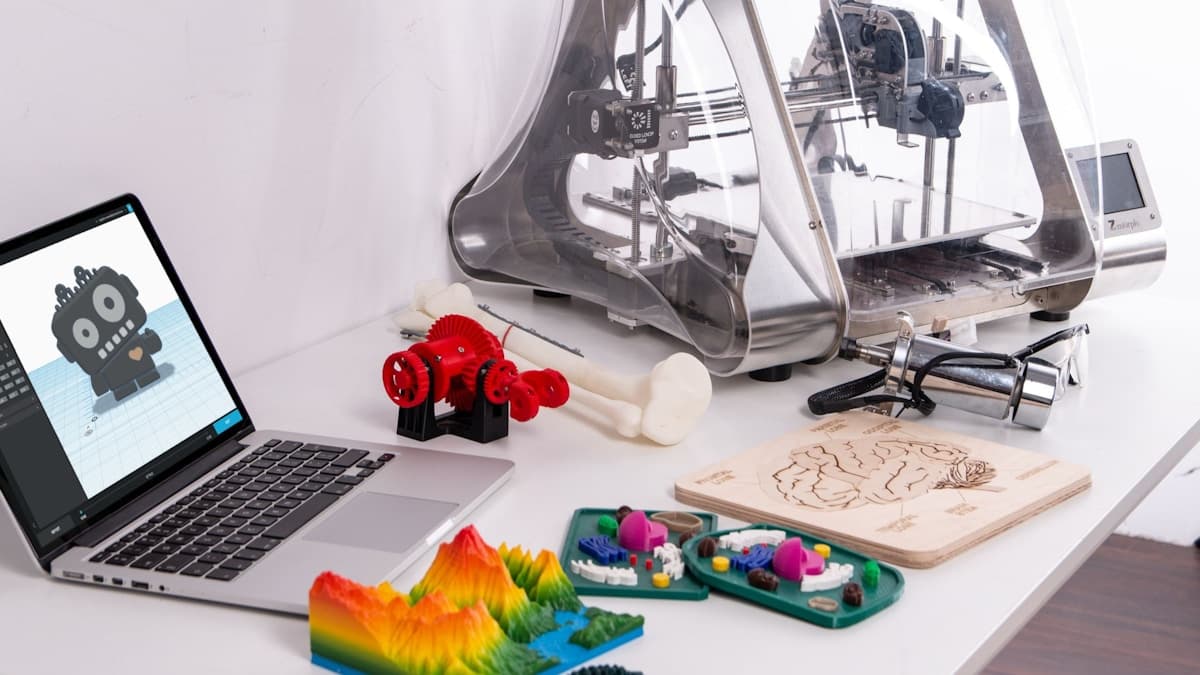
Hero photograph by Xiaole Tao (Unsplash).
Ready to find a 3D printing service provider?
Browse 2,000+ verified providers across the United States and submit your quote request free.
Browse Providers