The part is a 40 mm cable clip. It weighs eleven grams, it would print in under an hour, and the quote came back at $120. Nothing is wrong with the quote. The minimum charge on a 3D printing order is not a markup on your part — it is the price of opening a job at all, and it lands on a cable clip exactly as hard as it lands on a housing that fills the plate. Once you can see what sits inside that floor, you can usually get several hundred dollars of parts for the number you were already going to pay. If you are still choosing who to send the package to, browse the 3D printing provider directory and compare published minimums before you compare part prices.
The Floor Pays for Handling, Not for Plastic
Material is the smallest line in almost every small order. What you are actually buying is a sequence of human and machine events that happens once per job, whatever the job contains:
- An engineer opens the file and confirms it is printable — wall thickness, closed geometry, units, features that will not survive.
- Someone quotes it, answers your email, and raises the order.
- The job is scheduled into a machine that already has a queue.
- It is sliced, oriented and nested on the plate.
- The machine is prepared, loaded and started.
- Parts come off, supports come off, and someone cleans and inspects them.
- They are measured against whatever was specified, packed, labelled and shipped.
- An invoice is raised and chased.
Count the steps that get cheaper because your part is small. Slicing is marginally faster, support removal is marginally quicker, and the material is nearly free. Everything else is identical.
| Scales with the part |
Fixed per job |
| Material consumed |
File review and printability check |
| Machine hours on the plate |
Quoting and order admin |
| Support removal labour |
Scheduling and queue slot |
| Finishing area, if finishing is specified |
Slicing, orientation and nesting |
| Shipping weight |
Machine setup, start and teardown |
|
Inspection setup and packing |
A shop that quotes the left column alone on a tiny part loses money on every one it accepts. The minimum is the right column, given a number.
Four Shapes the Minimum Takes
They are not interchangeable, and the quote rarely says which one you are looking at.
1. A minimum order value. The whole package has to clear a figure. Ten different parts on one purchase order share one floor, so consolidating genuinely helps. This is the most common structure at shops that handle prototype work.
2. A minimum per line item. Each distinct part number carries its own floor. Those same ten parts now carry ten of them, and consolidating buys you nothing but a single shipment. Shops that run this structure are pricing the fact that ten part numbers mean ten setups, ten inspections and ten bags.
3. A separate setup or lot charge. The fixed cost is broken out as its own line and the unit price sits below it. This is the most honest version, because you can see exactly what the second, fifth and fiftieth part cost — and therefore exactly what filling the job is worth.
4. A build-volume minimum. On processes where a build is prepared, run and post-processed as a single unit, the quote can be written against the build rather than the part. One small part is priced against a chamber that could have held forty. The floors here are the highest, and they move the most when you fill them.
Commonly published order minimums are round numbers chosen by each shop rather than an industry figure, and they vary by an order of magnitude between a one-machine local shop and a bureau running industrial equipment. Read the published number before you read the part price — it is the variable that decides whether a small job is viable at a given shop at all.
Why It Feels Like a Penalty on Small Jobs
The floor is invisible on a $4,000 order and it is the entire price on a $20 one. That is the whole of the experience, and it explains the two things buyers find most irritating about small quotes.
The first is that one part costs almost what five parts cost, which is covered in detail in why your 3D printing quote is higher than the calculator — the instant estimate prices the geometry, and the human quote prices the job. The second is that the same part can be quoted at wildly different numbers by two shops that are both being reasonable. A shop with a high floor is not gouging you; it is telling you its cost structure is built for production runs. Our guide to low-volume and short-run 3D printing services covers what changes when the quantity is genuinely in the hundreds.
How to Stop Wasting the Minimum
You are going to pay the floor. The question is what you get for it.
Fill the order, not the part. Ask the shop directly: "what quantity brings the price to the minimum?" Any competent shop will answer, because the answer is in the quote already. If one clip is $120 and six clips are $138, order six. Prototype spares are the cheapest insurance in the business — one gets drilled, one gets dropped, one goes in the box you ship to the customer.
Combine projects into one package. If the shop runs an order minimum rather than a per-line one, everything you were going to send in the next month should go in the same order: the bracket, the two jig plates, the enclosure lid. One setup, one queue slot, one shipment.
Keep material, process and finish consistent across the batch. A batch that shares one material runs as one job. Three materials means three runs, three setups, and usually three floors — the consolidation you thought you were doing never happened.
Do not split one batch across two purchase orders. Each order is a separate setup and generally a separate minimum. Splitting for administrative convenience pays the floor twice for one job. Splitting deliberately — a single first article to confirm fit before committing to fifty — is a different decision, and a good one.
Send it after the design freezes. A revision mid-queue restarts the fixed cost, and so does a second order placed because the first one went out before you were sure. This is the same dynamic that leads shops to ask for a PO or a deposit before they start: the fixed cost is incurred early, long before a part exists.
Match the shop to the size of the job. A single small bracket belongs at a small shop. A hundred production parts belong at a bureau whose minimum you will never notice. Sending both to the same place guarantees one of them is mispriced.
When Paying the Floor Anyway Is Correct
There are jobs worth a $120 cable clip, and it is worth naming them so you do not over-optimise.
- The fit check that unblocks everything. If one part tells you whether the assembly closes, the floor is cheaper than a week of waiting.
- The part that stops a line. When a machine is down, the comparison is not plastic against plastic. Same-day and rush 3D printing services carry their own premium on top of the minimum, and it is still usually the cheap option.
- The prove-out before a real batch. Pay one floor to confirm the dimension, then order the fifty with confidence.
What is not worth it is paying the floor for one part, finding the fit is wrong by half a millimetre, and paying it again next week for the corrected version plus the spares you should have ordered the first time.
Five Questions Before You Send the File
- What is your order minimum, and is it per order or per part number?
- Is setup quoted as a separate line, or absorbed into the unit price?
- What quantity of this part brings the total to that minimum?
- Does the minimum change for this process or material?
- If I add two unrelated parts in the same material, does one minimum cover all three?
Five questions, one email, usually answered the same day. The answers tell you more about how a shop will treat a small account than any amount of browsing — and if the broader price structure is still unclear, our 2026 breakdown of what 3D printing costs covers the drivers behind the unit price itself.
Ready to put a number on it? Find 3D printing providers in the directory, filter by process and location, and send the same package to one small shop and one larger one. On a job near the minimum, the spread between those two quotes is frequently larger than the job.
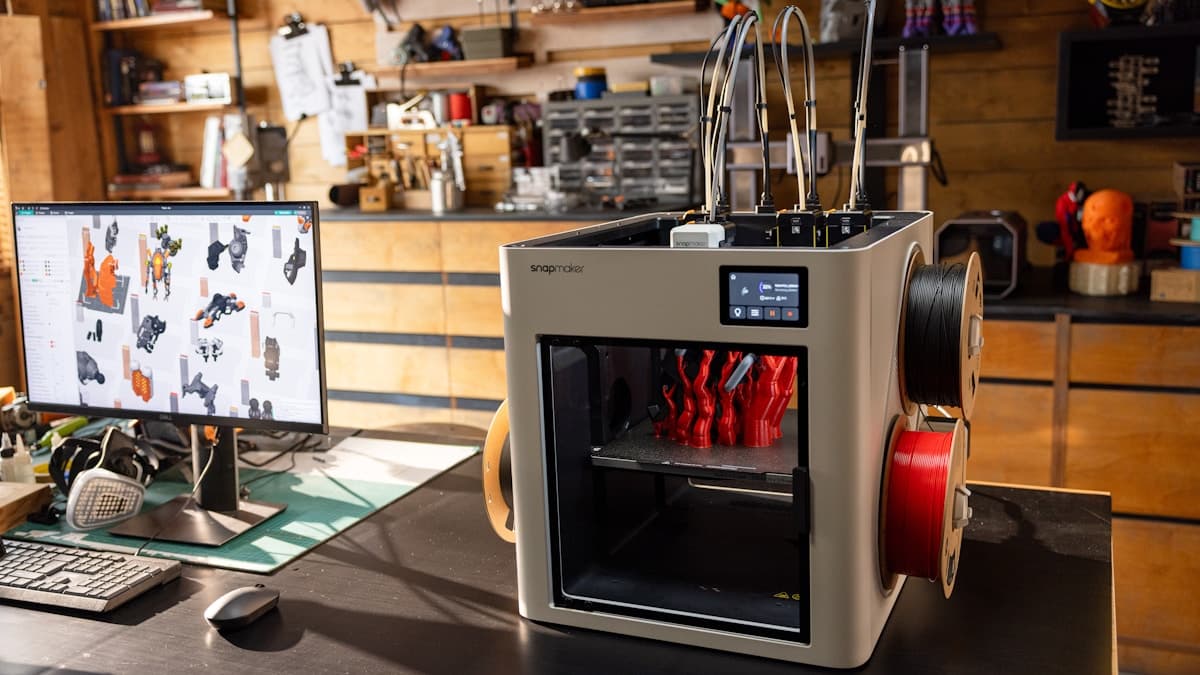
Hero photograph by Snapmaker 3D Printer (Unsplash).
Ready to find a 3D printing service provider?
Browse 2,000+ verified providers across the United States and submit your quote request free.
Browse Providers