The direct answer: the 3D Prototyping Hub directory is the fastest way to find vetted Xometry alternatives across all 50 US states. Filter by technology, submit a quote request, and compare directly against Xometry's pricing on the same geometry.
If you want to understand the full picture — where Xometry falls short, where it wins, and what each alternative actually looks like — read on.
What Xometry Is — and Where It Has Limits
Xometry is a manufacturing marketplace. You upload a CAD file, their algorithm generates an instant quote, and the job gets routed to one of their thousands of networked suppliers. You don't know who is printing your part. The model is optimized for speed, automation, and breadth of manufacturing capability.
For well-defined, print-ready files in standard materials, that model works well. But it has real limits:
Price. Xometry adds a platform margin on every order. For straightforward FDM work in PLA, PETG, or Nylon, that margin is often 20–40% above what a local shop would quote directly on the same part.
No relationship. Every order is anonymous. If a part fails your quality requirements, you're working through a support ticket — not walking into a shop and showing someone the problem in person.
Revision friction. Design change after submission means a new quote and a fresh lead time. On an iterative prototype where you expect 3–4 revision cycles, that compounds quickly.
Algorithm limits on complex geometry. Xometry's instant quoting works reliably on simple geometry. Complex internal channels, exotic material specs, or non-standard surface finish requirements often kick out of the algorithm and go to manual review — eliminating the speed advantage.
None of this makes Xometry a bad choice. It makes it the right choice for specific use cases and the wrong one for others.
The Alternatives Worth Considering
1. Local 3D Printing Service Providers
The most underused Xometry alternative. Local print shops quote directly — no platform margin, no anonymous supplier routing. You deal with the people running the machines.
The practical advantages over Xometry:
- Price. No intermediary. Direct shop rate on FDM and SLA work is consistently lower for standard parts.
- Revision speed. File update today, reprint tomorrow. No re-quoting, no fresh lead time.
- Design feedback. A local operator who has printed thousands of parts will flag printability issues before they become failed prints. Xometry's algorithm won't.
- Quality accountability. You can visit in person, inspect parts before accepting delivery, and have a direct conversation when something isn't right.
The 3D Prototyping Hub directory covers over 2,000 US-based providers across all 50 states. Filter by technology and location, submit a quote request directly, and compare the number against your last Xometry invoice.
Find local alternatives by state:
- California 3D Printing Services — largest provider density, strong SLA and metal capability
- Texas 3D Printing Services — industrial FDM and SLS across Houston, Dallas, and Austin
- New York 3D Printing Services — high-density NYC metro, full material library available
- Michigan 3D Printing Services — deep FDM and SLS expertise, automotive prototyping roots
- Illinois 3D Printing Services — multiple full-service bureaus in the Chicago metro
- Ohio 3D Printing Services — established industrial corridor, FDM and SLS options
- Pennsylvania 3D Printing Services — certified providers across the state
- Florida 3D Printing Services — growing provider base, FDM and SLA widely available
If you're earlier in the evaluation process, our guide on how to choose a 3D printing service covers exactly what to check when you're comparing providers directly.
2. Online Marketplace Alternatives
If you need the automated-quoting model but want to compare pricing across platforms, these are the closest Xometry comparisons:
Protolabs — The original online manufacturing service. Tends to be higher-priced than Xometry but with tighter quality controls and a more established track record for production-grade parts. Strong for injection molding and CNC in addition to 3D printing.
Craftcloud — Aggregates quotes from multiple suppliers simultaneously. Useful for price comparison but adds another layer of abstraction. Strong on material breadth.
Hubs (now Protolabs Network) — Was the leading Xometry competitor before acquisition. Now integrated into the Protolabs ecosystem. Still available as a quoting channel but with less independent supplier diversity than before.
Sculpteo — Consumer- and pro-oriented, strong on SLS nylon and specialty materials. Higher per-part cost than Xometry for standard FDM; competitive for SLS and multi-material runs.
For choosing between any of these platforms, the deciding factors are usually material availability, tolerance capability, and lead time — not price alone. See our breakdown of SLA vs. FDM 3D printing if the technology choice is still open for your project.
3. In-House Printing
The alternative that eliminates per-part cost entirely. For teams ordering more than twice a week on standard FDM geometry, the economics of in-house printing versus Xometry typically reach break-even within 2–4 months.
The calculation is straightforward: total Xometry spend per month ÷ machine cost + monthly material cost = payback period. For teams spending $400–$800/month on Xometry FDM orders, a $300–$600 desktop machine pays back fast.
For teams bringing resin printing in-house, Chitu Standard Resin in 10KG bulk brings per-print material cost well below what Xometry charges for equivalent SLA output.
In-house printing is not the right call for every application. It trades machine overhead and operator time for speed and zero per-part cost. For occasional complex parts, exotic materials, or applications requiring certifications — SLS, DMLS, ISO 9001, AS9100 — an external service will still be necessary. But for the bulk of iterative FDM prototype work, in-house eliminates the Xometry dependency entirely.
When Xometry Is Still the Right Choice
A fair comparison means acknowledging where Xometry wins:
Supplier breadth. Xometry's network covers manufacturing processes most local shops can't match — DMLS, binder jetting, urethane casting, CNC in 30+ materials, sheet metal. For a one-stop quote across multiple processes on a complex assembly, no local shop will match that.
Instant quoting on standard geometry. If your part is simple, your file is print-ready, and you don't need to talk to anyone — Xometry's automation is genuinely fast. A quote in under a minute for a clean FDM part is a real convenience.
Scale. For production quantities (50+ identical parts), Xometry's network can batch across multiple suppliers at once. A single local shop may not have the capacity or want the order.
No relationship management. Some buyers prefer the anonymous transactional model. No phone calls, no follow-up, no back-and-forth.
The right answer isn't "Xometry or not Xometry" — it's matching the job to the right supply channel. Routine FDM prototypes and local providers are a natural fit. Complex multi-process assemblies at scale are a natural fit for Xometry. Most buyers benefit from having both options available.
Find Local Alternatives Now
Search the directory by your state and service type. Every listing includes a direct quote request form — submit your geometry and requirements to multiple local providers and compare against Xometry's quote on the same part. The price difference often speaks for itself.
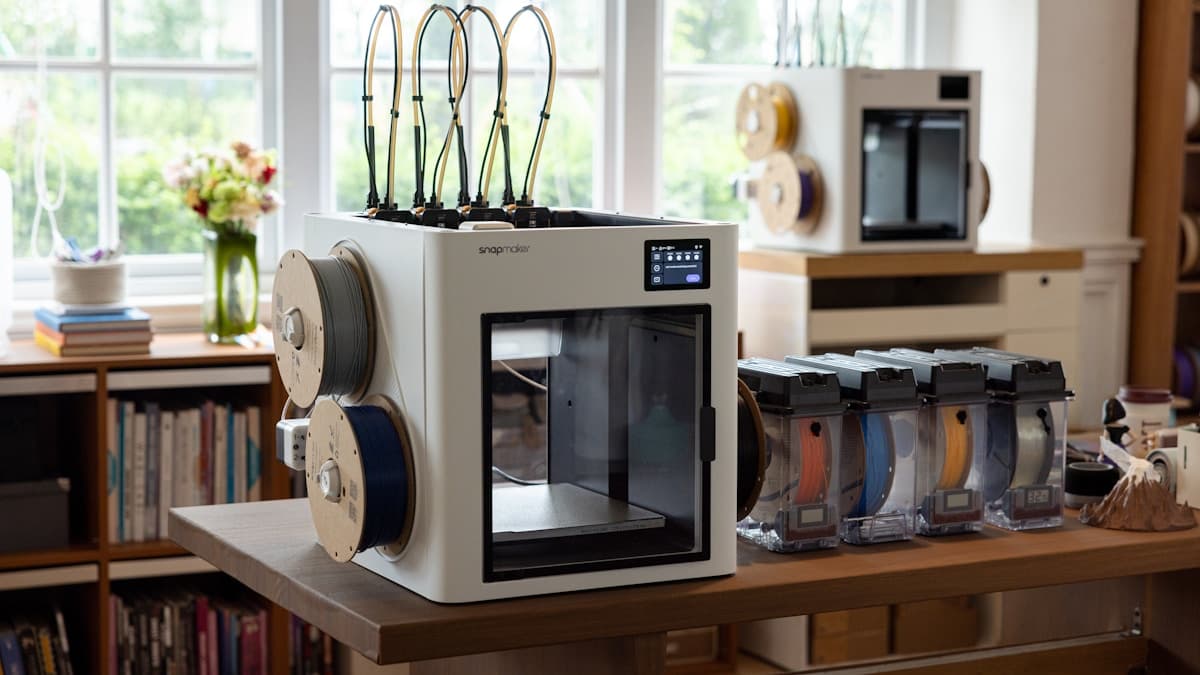
Hero photo by Snapmaker 3D Printer via Unsplash.