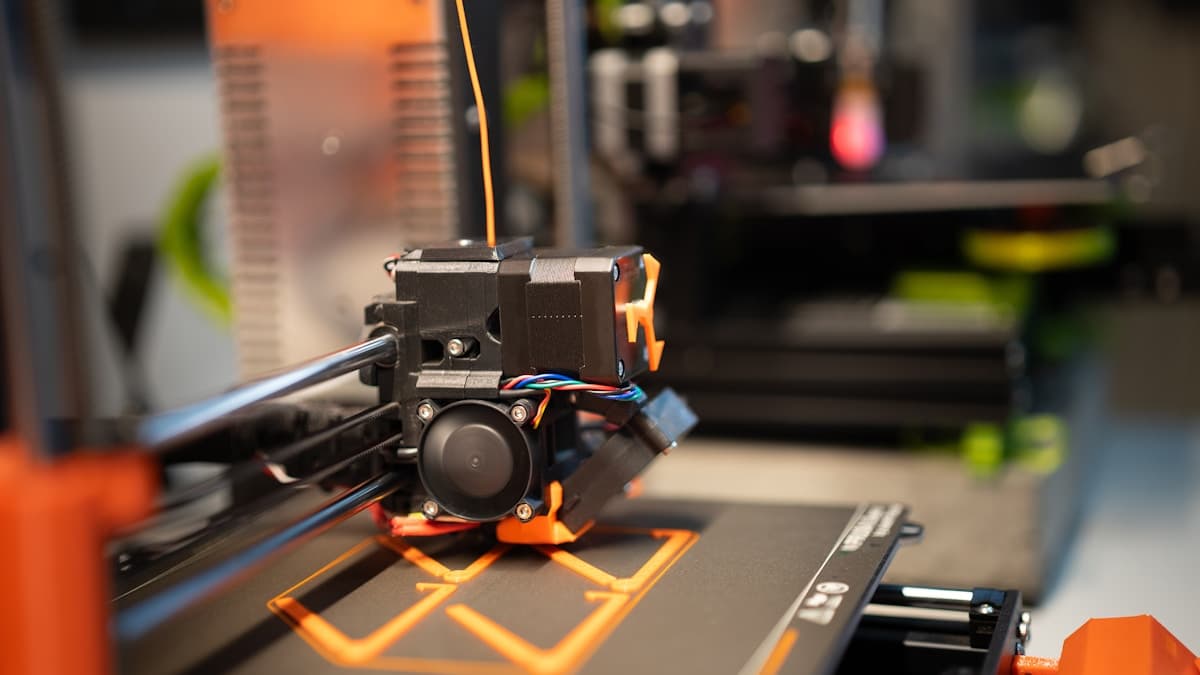
The short version: Overture TPU 95A is the best flexible filament for most people — consistent, sealed against moisture, and cheap enough to learn on. Polymaker PolyFlex TPU95 is the pick when a flexible part has to print right the first time, and NinjaTek NinjaFlex 85A is the genuinely rubbery option if 95A isn't soft enough for what you're making. The brand on the spool matters far less than three settings: a direct-drive extruder, a slow print speed, and a dry roll.
TPU is the filament people buy when a rigid part keeps failing — a clip that snaps, a mount that transmits every vibration, a case that cracks on the first drop. It's the one common material that compresses and springs back. It also has a reputation for jamming printers, and that reputation is earned by Bowden machines and default slicer profiles rather than by the material itself. This guide covers which rolls are worth buying, how to pick a hardness, how to stop the jamming, and where the line sits between printing a flexible part yourself and ordering it from a provider.
This post contains affiliate links. If you purchase through these links, 3D Prototyping Hub may earn a small commission at no extra cost to you.
This post also contains Amazon affiliate links. As an Amazon Associate I earn from qualifying purchases.
Pick the Hardness Before You Pick the Brand
TPU is sold by Shore A durometer, and that number changes the part and the print more than any brand difference does.
| Hardness | Feel | Prints like | Best for |
|---|---|---|---|
| 98A–D scale | Barely flexible, tough | Close to a stubborn PETG | Impact-resistant parts, living hinges |
| 95A | Firm rubber, springs back | Manageable on direct drive | Cases, damping feet, most parts |
| 85A | Soft, squishy, rubber-band-like | Demanding, direct drive only | Gaskets, seals, soft grips |
95A is the default for good reason. It is flexible enough that parts genuinely compress and rebound, and stiff enough that the extruder can push it without the filament buckling into a coil. Almost every "best flexible filament" recommendation is a 95A roll.
Go softer only when you have a specific reason — a gasket that must seal against an irregular surface, a grip that needs to feel like rubber rather than like firm plastic. 85A parts are noticeably nicer in the hand, and noticeably harder to produce. Go firmer when you want impact toughness rather than squish; at that end you're closer in behavior to PETG with more give.
The Picks
Overture TPU 95A — Best All-Around Value
Overture is where to start. Diameter is consistent enough to feed reliably, the winding is clean so it doesn't tangle mid-print, and spools ship heat-sealed with desiccant — which matters more for TPU than for almost any other common filament. It's forgiving while you're finding your machine's retraction and speed settings, and cheap enough that a few failed prints while learning don't sting. For most people printing cases, feet, and gaskets, Overture TPU 95A is all the flexible filament they need.
Polymaker PolyFlex TPU95 — Best Premium Consistency
PolyFlex is the roll for parts that can't fail. Polymaker holds tighter diameter tolerance than budget flexibles, and consistent diameter matters more with TPU than with rigid materials — a thin spot lets the drive gear slip and a thick spot jams the heat break, and with flexibles you don't get the clean recovery you would with PLA. It costs more per kilogram, and for casual printing that premium isn't necessary. When a flexible part is going into something that matters, PolyFlex TPU95 earns it.
NinjaTek NinjaFlex 85A — Best Soft Flexible
NinjaFlex is the reference soft flexible, and 85A is a different material experience from 95A — it stretches, squashes, and feels like rubber rather than like firm plastic. That softness is exactly what makes it demanding: it buckles easily in the filament path, so it needs a direct-drive extruder, slow speeds, and patience. Don't make it your first flexible roll. When you specifically need a soft seal or a grip that gives, NinjaFlex 85A is what the harder rolls can't do.
SainSmart TPU 95A — Best Color Range
SainSmart has been in flexibles a long time and stocks a wide color selection, including translucents that look genuinely good on cases and light diffusers. It prints predictably at 95A and tolerates being slightly out of tune better than premium rolls do, which makes it a reasonable roll to experiment on. SainSmart TPU is an easy pick when the part is visible and the color matters.
eSUN TPU 95A — Best Everyday Workhorse
eSUN is the dependable middle: widely stocked, consistent enough once dry, and priced low enough to keep on the shelf for whenever a flexible job comes up. It's not the tightest-tolerance roll here, but it rarely surprises you. For ongoing work — iterating on a gasket profile, printing a batch of damping feet — eSUN TPU keeps the cost of iteration down.