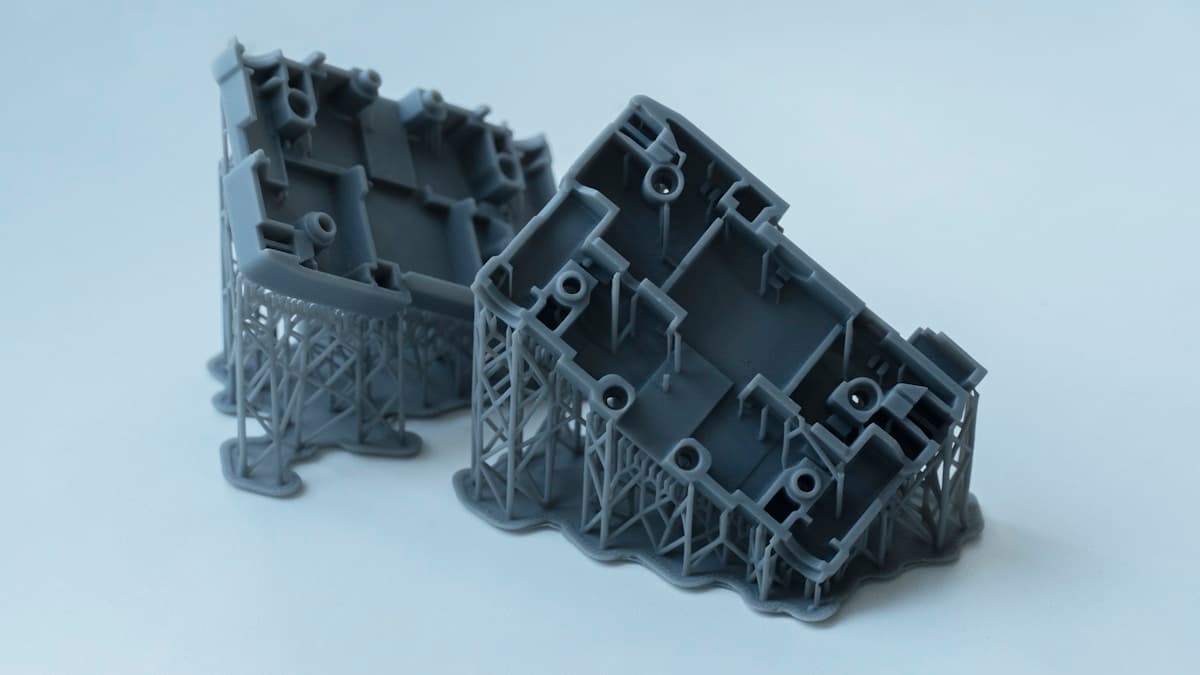
The short version: for most people the best 3D printing resin is a standard 405nm resin from an established brand — Anycubic, ELEGOO, Siraya Tech, or Phrozen. Standard resin is the cheapest per litre, holds the finest detail, and is what every consumer MSLA printer is tuned around. Buy something else only for a specific reason: water-washable if you don't want isopropyl alcohol in the house, or a tough / ABS-like resin if the part gets handled instead of displayed. Resin is a consumable, not a machine — the right move is to buy one litre, dial it in, and only then buy more. If you need one high-detail part and not a workflow, order it from a provider instead.
Resin is where most new SLA owners overspend and under-think. The bottle costs a fraction of the printer, so it gets chosen on colour and price — and then the prints fail, and the printer gets blamed. This guide covers what actually separates one resin from another, the resin types worth knowing, which to buy for which job, and the honest line where buying resin stops making sense.
This post contains affiliate links. If you purchase through these links, 3D Prototyping Hub may earn a small commission at no extra cost to you.
This post also contains Amazon affiliate links. As an Amazon Associate we earn from qualifying purchases.
What Actually Makes a Resin "the Best"
Colour is the first thing you see on the listing and the least important thing in the bottle. What actually determines whether a resin works for you comes down to four things:
- The job the part has to do. This is the whole decision. A display miniature and a functional clip are different problems, and no single resin is best at both. Detail and toughness trade against each other — resins that capture the crispest detail tend to be more brittle, and resins engineered for impact resistance give up some fineness.
- Cleanup you'll actually tolerate. Standard resin needs an isopropyl alcohol wash. Water-washable resin rinses in water. This sounds minor until you're the one buying, storing, and disposing of alcohol in a spare room. The resin you'll keep using is the one whose cleanup you don't dread.
- Wavelength match. Every current consumer MSLA printer cures at 405nm, and resin has to match. In practice any 405nm resin works in any consumer machine — but check the bottle rather than assuming.
- Freshness and handling. Resin is a chemical with a shelf life that UV degrades. A well-stored bottle of mid-priced resin outperforms a premium bottle that's been sitting in a sunlit window.
Notice what isn't on that list: brand loyalty. You are not locked into your printer manufacturer's resin, and paying a brand premium buys you much less than choosing the right type for the job.
Resin Types, Explained
Most of the confusion in resin shopping is that different formulations are sold side by side as if they're interchangeable colours of the same product. They aren't. These are the types worth knowing:
| Type |
Cleanup |
Best for |
Trade-off |
| Standard |
IPA |
Detail, display, general use |
More brittle than tough resins |
| Water-washable |
Water |
Indoor printing, easy cleanup |
Often more brittle; contaminated rinse water |
| Tough / ABS-like |
IPA |
Parts that get handled |
Gives up some fine detail |
| Plant-based / eco |
Varies |
Low odor |
Usually costs more |
| Flexible |
IPA |
Gaskets, soft parts |
Niche; needs tuning |
| Castable |
IPA |
Jewelry, investment casting |
Specialist; burnout-specific |
| Dental / biocompatible |
IPA |
Medical, dental |
Validated systems only — not a home material |
The first three cover almost everyone. The bottom four exist for real reasons, but if you don't already know you need them, you don't.
The Picks
1. Standard 405nm Resin — Best Overall
This is the bottle to buy first, and for a lot of people it's the only bottle they ever need. Standard resin is the cheapest per litre, resolves the finest detail, and — crucially — is the formulation your printer's default profiles were built around, so it's the resin most likely to just work. Both major brands make a solid one. If you own a Photon Mono, the Anycubic resin line is the path of least resistance; if you own a Mars or Saturn, ELEGOO's resin range is the natural pairing. Neither is locked to its own machines — buy whichever is on sale.
2. Water-Washable Resin — Best for Easy Cleanup
The case for water-washable is entirely about the workflow around the print. Standard resin means a tub of isopropyl alcohol you have to buy, store, keep away from ignition sources, and eventually dispose of. Water-washable means a rinse in plain water. If your printer lives in a spare room, an apartment, or anywhere you'd rather not keep a litre of solvent, that difference is the whole decision.
The honest trade-offs: water-washable resins are commonly reported as more brittle than a good standard resin, and they want a properly dialled exposure. And the rinse water is not innocent — it's resin-contaminated waste, it must never go down the drain, and you cure it in sunlight until the residue solidifies before disposing of the solids. It's easier than alcohol, not free of consequence. Browse water-washable 405nm resin if that trade suits how you print.
3. Tough / ABS-Like Resin — Best for Functional Parts
Standard resin's real weakness is brittleness. A part printed in it looks superb and can shatter when dropped, which is fine for a display miniature and useless for a clip, a bracket, or an enclosure that gets opened. Tough or ABS-like resins are formulated to absorb impact instead of cracking, and they're what you reach for when the part will be used rather than looked at.
You pay for it in fineness — a tough resin generally won't hold the crispest micro-detail a standard resin will. That's the trade, and it's usually the right one for functional work. Most major brands sell an ABS-like or tough formulation alongside their standard line, including both ELEGOO and Anycubic.
4. Siraya Tech Blu / Tenacious — Best for Engineering-Minded Work
Siraya Tech is the brand enthusiasts name when the conversation turns to resin that has to perform mechanically rather than photograph well. Blu is their well-known detail-and-strength formulation; Tenacious is the flexible, impact-absorbing one that experienced users frequently blend into a harder resin to take the brittleness off it. That blending practice is exactly the kind of thing that signals a materials-led brand rather than a printer brand selling bottles alongside machines.
This is not the first resin to buy. It's the one to graduate to once you know your printer, you've dialled in a standard resin, and you've hit a specific mechanical limit you now need to engineer around. If that's you, Siraya Tech's range is where to look.
5. Plant-Based / Eco Resin — Best for Low Odor
Ask people what they dislike about resin printing and the answer is rarely detail or price — it's the smell. Plant-based resins are formulated with plant-derived components specifically to cut odor, and for a printer that shares a room with a human, that's a real quality-of-life difference rather than a marketing angle.
Two honest caveats. "Low odor" is not "no odor," and — this is the one that matters — reduced smell does not mean reduced hazard. Uncured resin is a skin irritant whatever it's derived from, and plant-based resin needs the same gloves and the same ventilation as any other. It usually costs more, too. If odor is your sticking point, plant-based resin is worth the premium; don't buy it expecting to skip the safety gear.
Matching Resin to Your Printer
The good news is that this is simpler than it looks. Every current consumer MSLA and LCD resin printer cures at 405nm, and any 405nm resin will physically work in any of them. You are not locked into your printer brand's bottles, and cross-brand mixing of the same type is routine.
What does change between bottles is exposure time. A new resin — even a new colour of the same resin — can want a different exposure than the one you dialled in last month. Dropping a fresh bottle into an old profile and blaming the printer when the print fails is the single most common resin mistake. Run a short exposure test with any new bottle before committing an eight-hour print to it.
The exceptions worth naming: closed professional systems such as Formlabs use cartridge-based validated materials rather than open bottles, and anything not marked 405nm doesn't belong in a consumer machine. Check the bottle.
If you're still choosing the machine itself, start with Best Resin 3D Printers in 2026, or SLA vs. FDM Printing Explained if you haven't settled on resin over filament yet.
Storage, Safety, and the Stuff Around the Bottle
Resin is a consumable chemical, and it behaves like one:
- Store it dark. UV cures resin — that's the entire operating principle — so light is what ruins it in the bottle. Keep it sealed, cool, and out of sunlight, and it typically stays usable for around a year or more. Follow the shelf life printed on the bottle.
- Shake before every print, and filter resin back out of the vat rather than leaving it in the machine between jobs.
- Gloves and ventilation, always. Uncured resin is a skin irritant and the fumes are unpleasant. Nitrile gloves, a ventilated space, and keeping the printer out of living and sleeping areas is the baseline — regardless of resin type or marketing.
- Cured resin is inert. The finished part is safe to handle. It's the liquid stage that needs respect.
- Dispose of waste responsibly. Uncured resin, contaminated alcohol, and water-washable rinse water all get cured in sunlight until solid, then disposed of as solids. Nothing liquid goes down the drain.
The bottle is only part of the cost. Budget for isopropyl alcohol (unless you go water-washable), nitrile gloves, FEP film replacements, and a wash and cure station — see Best Resin Wash & Cure Stations in 2026 for that side of the workflow, and Best 3D Printing Tool Kits & Accessories in 2026 for the rest of the bench.
Buyer Recommendation Summary
- First bottle, any printer → a standard 405nm resin from Anycubic or ELEGOO. Dial it in before buying more.
- You don't want alcohol in the house → water-washable. Accept slightly more brittleness and cure your rinse water.
- The part gets handled, not displayed → tough / ABS-like. Give up some detail, keep the part in one piece.
- You've hit a mechanical limit and know it → Siraya Tech Blu or Tenacious.
- The smell is your dealbreaker → plant-based. Still wear the gloves.
- You need one detailed part, not a workflow → skip the bottle and order it from a resin provider.
Should You Buy Resin or Order the Part?
Buying resin makes sense once you already own the rest of the workflow — the printer, the wash and cure station, the alcohol, the gloves, the ventilation — and you print often enough to finish a bottle before it ages out. That's the case resin is built for: fast iteration on detailed parts where doing it yourself beats ordering each one.
It stops making sense in three places. When you need a specialty material you can't safely run at home — biocompatible, castable, or validated engineering resins are professional-system territory, not a home purchase. When the part exceeds your build volume. And when you need one high-detail part and would otherwise be buying an entire workflow to make it, then storing the leftovers until they expire.
In all three cases, ordering the finished part is the cheaper answer. Browse the 3D Prototyping Hub directory for a provider running SLA or DLP and order just the part — no bottle, no alcohol, no cleanup. For medical and anatomical work specifically, see 3D Printed Anatomical Models from CT Scans.
Related Resources
This post contains affiliate links — 3D Prototyping Hub may earn a commission if you purchase through them, at no cost to you. As an Amazon Associate, we earn from qualifying purchases.