Cosplay and prop making is the one hobby where you genuinely benefit from two different kinds of 3D printer. Armor, helmets, and big weapons want a large-format filament (FDM) machine with the build volume and tough materials to make wearable parts. Masks, accessories, insignia, and display pieces want a resin printer that captures fine detail. That's why the best 3D printers for cosplay and props aren't a single winner — they're a short list organized by what you're making. This guide covers what cosplay demands from a printer, how FDM and resin compare for this work, our category picks for 2026, and how to finish the parts once they're printed.
This post contains affiliate links. If you purchase through these links, 3D Prototyping Hub may earn a small commission at no extra cost to you.
This post also contains Amazon affiliate links. As an Amazon Associate I earn from qualifying purchases.
What Cosplay and Props Demand From a Printer
Cosplay pulls a printer in two directions at once, and no single machine is ideal at both ends:
- Build volume for armor and helmets — chest plates, pauldrons, and full helms are big. A larger plate means fewer printed sections, fewer seams to glue, and less filling and sanding. For big wearables, build volume matters more than almost anything else.
- Detail for masks and accessories — sharp facial features, filigree, small insignia, and textured surfaces need resolution that filament can't hit at small scale. This is resin territory.
- Material capability — wearable parts get stressed, flexed, and sometimes left in a hot car. Plain PLA is too brittle. You want tough PLA+ and PETG for most parts, and ASA or ABS for anything that lives in heat or sun.
- Ease for beginners — most cosplayers are makers first and machinists never. A printer with a mature slicer, a big community, and lots of tutorials saves you more time than any spec sheet.
Because those needs conflict, the honest answer is that a complete cosplay setup is often one large FDM printer plus one resin printer. Start with whichever matches the bulk of your builds. If most of your work is armor, helmets, and large weapons, buy the FDM printer first and add resin later for detail pieces. If you mostly make masks, busts, and intricate accessories, start with resin. Trying to force one machine to do everything is where most beginners get frustrated — a tiny resin plate can't print a helmet, and a filament printer can't hold crisp mask detail no matter how slowly you run it.
FDM vs Resin for Cosplay — Pick by Part
Neither technology "wins" for cosplay. They cover different parts of the same costume. Here's how they compare for this specific work:
| Factor |
Large-format FDM |
Resin (MSLA) |
| Best for |
Armor, helmets, big weapons, structural props |
Masks, busts, accessories, fine insignia |
| Build volume |
Large — big plates common |
Smaller plates, part-height limited |
| Detail at small scale |
Good, needs sanding |
Excellent, minimal sanding |
| Part strength |
Tough (PLA+/PETG/ASA) |
More brittle, better with tough resins |
| Wearability |
Great — light, sandable, paintable |
Heavier parts, best for small pieces |
| Workflow mess |
Low — spool in, part out |
Higher — gloves, ventilation, wash & cure |
| Ease for beginners |
Friendlier |
Steeper (safety + post-processing) |
The short version: build the suit on FDM, build the fine detail on resin. If you want the wider landscape beyond cosplay, our best resin 3D printers in 2026 and best large-format 3D printers in 2026 guides go deeper on each technology.
Best Large-Format FDM for Armor and Helmets
The workhorse for wearables. For chest plates, helms, and big props, build volume is the whole game — a bigger plate means fewer glued seams. Large-format FDM machines in the 300mm-plus range, often badged Max or Plus, are the picks here. Anycubic's Kobra large-format FDM printers give you a big, tall build area at a friendly price, and the community around them is deep. On the ELEGOO side, the ELEGOO Neptune FDM line, including the big-plate Max models, is a longtime cosplay favorite for exactly this reason — lots of plate, tough material support, and a huge base of tutorials. Both handle PLA+ and PETG well, which is what most armor should be printed in.
Best Budget FDM to Start With
Get printing without overspending. If you're new and want to learn the workflow before committing to a giant machine, a standard-size FDM printer prints helmets in a few pieces and most props in sections you bond together. The same Anycubic Kobra and ELEGOO Neptune families scale down to smaller, cheaper models that share slicers and settings with their large-format siblings — so you learn on a small one and graduate to a big plate later without relearning everything. For a broader shortlist across budgets, see our best 3D printers for beginners in 2026 and the overall best 3D printers in 2026 roundups.
Best Resin Printer for Masks and Fine Detail
When detail is the whole point. For masks with sharp features, display busts, jewelry, insignia, and small accessories, resin reproduces detail that filament can't touch at that scale — and it needs almost no sanding on visible faces. Anycubic's Photon resin printers are a proven, affordable entry point, and ELEGOO's Saturn resin line gives you a larger plate for bigger masks and batching small parts. Both use high-resolution mono LCDs. Note that resin brings a messier, safety-conscious workflow — gloves, ventilation, and a wash-and-cure step are not optional. Our best resin for 3D printing in 2026 guide covers which resins suit detail versus durability, and the same detail principle is why resin dominates our best 3D printers for miniatures in 2026 picks.
Best Enclosed FDM for ASA and ABS Prop Parts
For heat-resistant, outdoor-durable parts. If your prop will sit in a hot car, live outdoors, or take real mechanical stress, ASA and ABS resist heat and sun far better than PLA — but they warp badly without a stable, warm chamber. That's where an enclosed printer earns its keep. Flashforge's enclosed FDM printers hold chamber heat, which reduces warping and layer splitting on ASA and ABS parts. For most cosplayers, PLA+ and PETG cover the majority of a build, and an enclosed machine for ASA/ABS is a second-printer upgrade rather than a starting point — but if durability outdoors is the goal, it's the right tool.
Buying Criteria — What to Actually Prioritize
- Build volume first — for cosplay, plate size beats almost every other spec. Bigger plate, fewer seams.
- Material support — confirm the FDM printer handles PLA+, PETG, and ideally ASA. For resin, standard high-detail plus a tough option.
- Community and slicer maturity — popular printers have the most cosplay-specific tutorials and pre-tuned profiles.
- Total workflow cost — factor filament or resin, a wash-and-cure station for resin, and finishing supplies. The machine is half the spend.
- Don't overbuy on day one — a mid-size FDM printer plus finishing skill beats a giant printer you haven't learned to run.
Finishing 3D-Printed Props
A raw print isn't a finished prop — the finishing is where it becomes convincing. For FDM parts, the standard loop is sand, prime, sand, paint: knock down layer lines with progressively finer sandpaper, hit the part with a filler primer to fill the remaining texture, sand again, then paint. Epoxy smoothing coatings or spot filler speed up large flat surfaces. Resin parts usually need far less — a light sand on any support marks, then prime and paint.
A few habits make finishing go faster. Print armor in the orientation that puts layer lines where they matter least, and plan your seams where they'll be hidden or where panel lines already belong. Bond big pieces with a strong plastic-safe adhesive, then fill the seam, sand it flush, and prime over it so the joint disappears under paint. For flexible detail like straps or padding, print in a flexible filament or pair the printed shell with foam. Small choices at the print stage save hours at the finishing bench.
Two safety notes: always wear a respirator or dust mask when sanding either material, and cure resin fully before you handle or sand it. Our resin safety and post-processing basics guide covers gloves, ventilation, washing, and curing in detail — read it before your first resin print.
When to Use a Service Instead of Buying
Buying a printer only makes sense if you'll use it. If you need a single hero helmet, a one-off mask, or a small run of prop parts — and you don't want to own, learn, and maintain a machine plus a finishing setup — a printing service gets you a professionally printed part with no learning curve. Many cosplayers do both: print the bulk armor at home and outsource the one showpiece that has to be perfect. It's the same calculus as deciding whether to buy a resin printer at all — worth it if you print regularly, overkill if you don't.
Get Your Cosplay Parts Printed or Pick Your Printer
If you'd rather not buy, learn, and finish a printer yourself, browse the 3D Prototyping Hub directory and request a quote from a vetted provider. Whether it's a single helmet, a detailed mask, or a batch of armor pieces, you'll get direct quotes from verified shops with FDM and resin capability — no account required.
Ready to build your own? Start with a large-format FDM printer for armor and a resin printer for detail, and stock up on tough PLA+ and PETG filament for the wearable parts. Build the suit on filament, build the detail on resin, and finish patiently — that's the whole system.
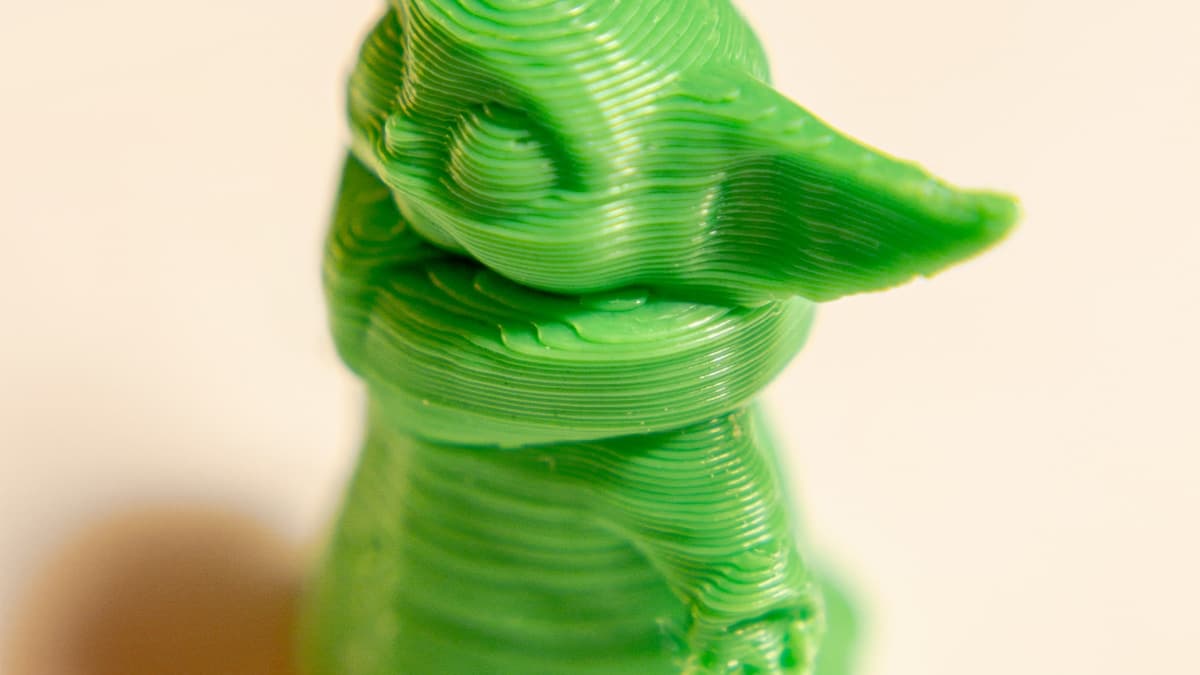
Hero image: 3D-printed figurine via Unsplash.
Ready to find a 3D printing service provider?
Browse 2,000+ verified providers across the United States and submit your quote request free.
Browse Providers