The fastest way to find 3D printing services in Austin is the 3D Prototyping Hub Texas directory. Filter to your area — Central Austin, the North Austin tech corridor, or the Round Rock manufacturing belt — pick your technology (FDM, SLA, or SLS), and submit a direct quote request to verified local providers. Most respond within one business day.
Austin has gone from a maker-and-music town to one of the country's most active hardware and semiconductor markets in barely a decade, and its 3D printing landscape reflects that. The right provider for a downtown startup chasing a demo deadline isn't always the right one for a North Austin chip-adjacent engineering team — knowing how the metro's additive capacity is laid out saves you both money and time.
Austin's 3D Printing Market by Area
Greater Austin isn't one market — it's a few overlapping ones, each with a different character. Where you look should depend on what you're making.
Central Austin and the East Side. Downtown and the East Side carry the city's startup and maker density — design studios, early hardware teams, and a strong independent maker community. Expect fast FDM iteration and presentation-grade SLA, with many teams ordering prototypes on tight, demo-driven schedules.
North Austin and the Domain. The technology corridor running north toward the Domain and into the semiconductor zone concentrates larger engineering teams and chip-adjacent suppliers. Providers serving this area are accustomed to functional prototypes, engineering materials, and the tolerances that hardware and semiconductor work demand.
Round Rock, Pflugerville, and Cedar Park. The northern suburbs carry Austin's established manufacturing base, anchored by major technology employers. Providers here tend to be comfortable with functional parts, short production runs, and tooling rather than display models alone. For functional prototypes and jigs, these shops are often a better and more affordable fit than the urban core.
South Austin and the outer metro. South of the river and out toward the suburbs, a mix of smaller bureaus and maker-oriented shops serve a steady flow of prototyping and small-batch work, frequently at lower overhead than Central Austin.
What Austin Teams Are Printing
The mix of work tracks closely to the industries driving the metro, and knowing which bucket your part falls into helps you pick the right provider:
- Hardware startup prototypes. Austin's deep startup ecosystem leans on local bureaus for fast, low-quantity prototype runs, bouncing between FDM iteration and SLA review models on tight timelines.
- Semiconductor and engineering fixtures. The chip and hardware base drives demand for jigs, fixtures, custom tooling, and functional test parts in engineering thermoplastics, where accuracy and material performance matter.
- Functional prototypes and tooling. Suburban manufacturers print brackets, housings, and pre-production parts in tough materials like nylon and ABS that need to survive real use.
- Design and presentation models. The startup and design density drives demand for high-detail cosmetic prototypes and pitch pieces where finish carries the work.
- Maker and small-batch production. Austin's strong independent maker culture generates a constant flow of short-run product parts, custom goods, and small-batch manufacturing.
The practical takeaway: a provider that excels at fast cosmetic SLA models isn't automatically right for a functional nylon engineering fixture, and vice versa. Identify your use case first, then shortlist providers whose equipment and material range match it.
How to Choose an Austin 3D Printing Provider
Don't limit yourself to your neighborhood — or even the metro. Because you upload an STL and receive parts by mail, a downtown startup can use a Round Rock shop and save on overhead, and a North Austin team can use a South Austin specialist for fine-detail work. Start broad with the Texas provider listings and narrow by capability, not just zip code.
Match technology to the job before you shortlist. FDM for functional thermoplastic parts, jigs, and fixtures; SLA for high-detail cosmetic models; SLS for durable nylon assemblies with complex geometry. A shop optimized for one isn't automatically the right call for another — and the best providers will tell you when your part wants a different process.
Confirm materials and certifications up front. If you're printing for a semiconductor, aerospace, or regulated application — increasingly common in the Austin area — verify engineering-grade material availability and any required certifications before you send geometry. Production and certified work is a different conversation than a concept model.
Weigh core overhead against suburban value. If price matters more than proximity, get a quote from both a Central Austin provider and a suburban one on identical geometry. The difference can be meaningful, and shipping a small part across the metro costs little.
Get two or three quotes on identical geometry. Pricing and lead time vary more than people expect, even within one metro. Comparing the same STL across providers is the only apples-to-apples way to choose. How to Choose a 3D Printing Service walks through the full vetting checklist.
Technologies Available in Austin
FDM — The most widely available technology across the metro. ABS, PLA, PETG, nylon, and composites for functional prototypes, jigs, and fixtures. Fastest rush turnaround. Lead time: 2–5 days standard, 24–48 hours rush in the metro.
SLA — High surface detail and dimensional accuracy for visual models and cosmetic prototypes. Austin's design and startup density make this well-served here. Lead time: 3–5 days.
SLS — Durable nylon parts with no support structures — the right call for snap fits, living hinges, internal channels, and short production runs. A strong match for the region's hardware work. Lead time: 5–7 days.
Metal and engineering grades — Available at a subset of providers serving the semiconductor and aerospace base, for functional and pre-production parts that demand validated material properties. For an overview of when this is the right path, see Metal 3D Printing Services.
If you're not sure which process your part needs, the better Austin shops will tell you on the quote call — describe how the part functions and let them recommend a material and orientation. That advisory conversation is part of what separates a real service bureau from a print-on-demand button.
When In-House Printing Helps
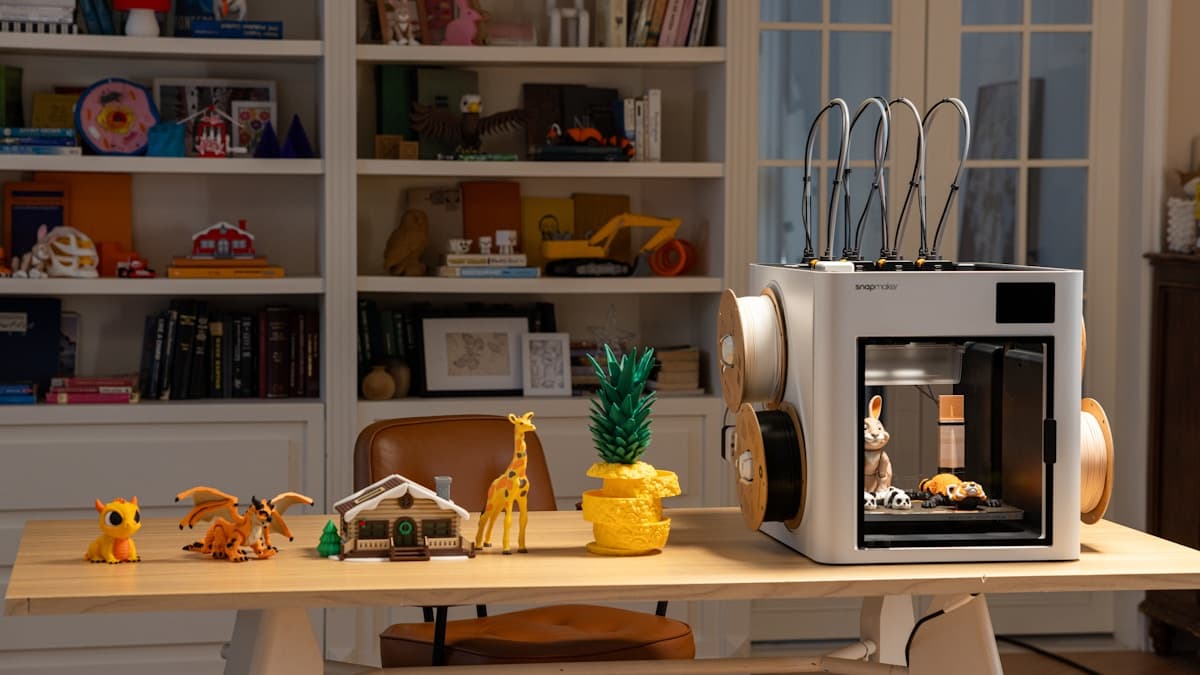
For the early-iteration work — the fit checks and concept models you cycle through before committing to a bureau order — a desktop FDM machine on-site removes the wait entirely, which matters when you're racing a product timeline.
This doesn't replace an Austin bureau for SLA, SLS, nylon production, metal, or certified work — but for the rapid back-and-forth of early design, in-house plus a local provider is the fastest combination. For more on building that workflow, see 3D Printing Services for Product Development Teams.
Request a Quote From Austin Providers
When you're ready for production-grade parts, browse the Texas directory, shortlist two or three providers that run the technology your part needs — across the core and the suburbs if price matters — and submit a quote request on the same file to each. You'll have comparable quotes back, usually within a business day. Run a 3D printing shop in the Austin area and aren't listed yet? Claim your listing to start receiving quote requests from local buyers.
Related Resources
- How to Choose a 3D Printing Service — evaluation criteria for any provider
- 3D Printing Services for Product Development Teams — iterate faster, validate sooner
- SLA vs. FDM Printing Explained — choose the right technology before you order
- Texas Provider Directory — browse verified Texas providers
Hero photo by Kumpan Electric on Unsplash.