The face came back with the cheek smeared into the jaw, the hair a spiky crust, the eyes two craters, and somewhere around the shoulders the whole torso has leaned. Nothing was wrong with the scanner. A 3D scan of a face or body fails for reasons a scan of a bracket never does, and almost all of them come back to one thing: the scanner is built on the assumption that its subject is rigid, and a person is not. This guide reads each defect, fixes what technique can fix, and is honest about the point where the answer is a scanning service rather than another sitting.
This post contains affiliate links. If you purchase through these links, 3D Prototyping Hub may earn a small commission at no extra cost to you.
This post also contains Amazon affiliate links. As an Amazon Associate we earn from qualifying purchases.
Read The Defect Before You Rescan
Six failures cover nearly every disappointing portrait or body capture, and they do not share a fix.
| What you see |
What it actually is |
Where to start |
| Face smeared, features melted together |
Subject moved during the capture |
Shorten the capture, support the head |
| Hair a spiky crust, or missing entirely |
Strands below point spacing, dark, self-shadowing |
Cap it and sculpt it later |
| Eyes as craters or holes |
Wet specular surface, plus blinking |
Close the eyes, model them after |
| Doubled chin, layered jaw, ghost surface |
Tracking lost, then re-registered wrongly |
Rigid references, shorter passes |
| Torso bent, shoulders out of square |
Drift plus the subject sagging in the pose |
Markers, sectioned captures |
| Skin smooth and featureless, tracking drops |
Geometry tracking has nothing to lock onto |
Switch to texture tracking |
A Person Breaks The One Assumption Every Scanner Makes
An optical scanner builds a model by aligning each incoming frame to the frames it already has. That arithmetic only works if the surface it is matching has not changed shape since the last frame. On a part, it has not. On a person, it changes continuously.
Quiet breathing moves the chest and shoulders on a roughly four-second cycle. Standing sway is involuntary and continuous. Swallowing moves the whole throat and jaw. Even seated and trying hard, a subject is moving by something in the order of a millimetre — which is an order of magnitude larger than the 0.05–0.1mm accuracy figure on the box.
That comparison is the single most useful thing to understand here. On a living subject, the accuracy number is not the limit — the motion is. Buying a more accurate scanner to fix a smeared face does not work, because the error you are fighting was never the scanner's. What helps is anything that shortens the window during which the subject can move.
Cut The Capture Time, Not The Quality
Everything below reduces the motion budget, in rough order of how much it buys you.
- Move the subject, not the scanner. A fixed rig on a tripod with the subject seated in front of it removes operator motion from the problem entirely, and lets you capture in short defined bursts instead of one long sweep. Rotate the person in defined steps — a swivel stool with a mark on the floor — and align the sections afterwards.
- Support the head. A high-backed chair, a headrest, or a wall. "Hold still" is not an instruction anyone can follow for ninety seconds; a physical rest is.
- Scan in regions, not in one heroic pass. Front of face, then left three-quarter, then right. Each section is short enough that the subject has not meaningfully moved inside it, and each one overlaps on rigid features — the bridge of the nose, the brow ridge, the ears — that you can align on later.
- Use the breath. For a torso or full-body capture, ask the subject to exhale and hold for the length of a pass. Radiographers do this for the same reason, and it costs nothing.
- Give instructions before each pass, not during. Talking moves the jaw, and the jaw is usually the region people care most about.
Hair, Eyes And Skin Each Fail Differently
These three are where most of the frustration lives, and each has a different cause.
Hair is not capturable, and that is a hardware fact rather than a technique problem. A strand is far finer than the point spacing of any consumer scanner, so it is never sampled. It is usually dark, so what light does land on it mostly does not come back. And it self-shadows, so the scalp under it is never in line of sight. The output is a spiky crust over a hole. Flatten it under a plain silicone swim cap or a nylon stocking, scan the smooth cap, and add hair in a sculpting tool afterwards — that is how portrait capture is actually done, not a compromise.
Eyes fail twice over. A cornea is wet and specular, so it reflects the projected pattern away like a mirror rather than scattering it back, and whatever data does arrive is wrong rather than missing. Blinking adds motion on top. Have the subject close their eyes for facial passes and build the eyes in modelling afterwards. This also settles the safety question in the right direction — before pointing any scanner at a face, read the manufacturer's eye-safety statement for the specific projection mode you are using, and treat silence on the topic as a no.
Skin is mostly fine, until it is shiny. Oil and sweat on a forehead or nose produce the same specular dropout as a machined face. The answer on a person is a translucent cosmetic setting powder, lightly applied. It is not self-vanishing scanning spray — that is for the rigid half of this work, where it earns its price: glossy prosthetic sockets, helmets, casts, moulded props and shiny costume pieces. Keep it away from skin, eyes and airways.
Beards, eyelashes and nostrils belong in the same category as hair: fine, dark, or out of line of sight. Plan to model them rather than to capture them.
Tracking Has Nothing To Hold Onto On A Body
Most handheld scanners offer more than one tracking mode, and the default is usually the wrong one for a person.
Geometry tracking matches incoming frames by shape. It works beautifully on a part with distinctive features and badly on a human, because a cheek, a forehead and a back are large, smooth and nearly symmetrical. This is what produces the doubled jaw and the ghost surface.
Texture tracking matches on colour instead, and skin has plenty of colour variation even where it has almost no geometry. On faces this is usually the mode that works, and it is one of the reasons a scanner with a colour camera is worth more here than its accuracy specification suggests.
Marker tracking is the fallback for torsos and full-body work, and the rule is simple: markers go on a close-fitting garment and on the fixed surfaces around the subject, never on skin. Positioning marker dots on a plain fitted top, a cap and the floor give the software references that do not depend on anyone holding a pose. Place them irregularly — an even grid gives the software repeating patterns to confuse.
If tracking is lost mid-pass, delete the orphaned section rather than stitching it. A mesh holding two versions of the same cheek has no correct answer hidden inside it — the same rule that applies when a scan of a part comes back noisy or full of holes.
What The Hardware Genuinely Changes
Technique fixes most bad portrait scans. Where it does not, these are the specifications that matter for living subjects, stated from what manufacturers publish rather than from a shootout we did not run:
- Frame rate and capture mode. The faster the scanner builds data, the smaller the window in which the subject can move. Single-shot and high-frame-rate capture is worth more on a person than a tighter accuracy figure, and it is the specification most buyer guides ignore.
- A colour texture camera. It gives you texture tracking on featureless skin, and it gives you a usable likeness at the end. On faces this is close to mandatory.
- Working volume. A scanner sized for small objects forces more passes across a torso, and every extra pass is more drift. Match the volume to the subject.
- Light source. Bright structured light is precise and tiring to sit in front of; infrared is much more comfortable for a subject who has to stay still, which is itself a motion fix.
Revopoint's handheld scanner line is the consumer range most often pointed at people; check frame rate and texture capture per model, because they differ across the POP and INSPIRE families. At the budget end, 3DMakerpro's handheld scanners include infrared models aimed at large objects and full-body capture, which is the comfort argument above made in hardware. And when portrait or body scanning is a production function rather than an evening, SHINING 3D's EinScan standalone range is the fixed-rig answer — mounted, calibrated, and aimed at a seated subject who never has to be chased around.
If you are choosing a scanner generally rather than solving a face, the broader comparison is in our 3D scanner buyer guide, which covers scan volume and workflow alongside accuracy.
When To Hand It Over
Three situations where another sitting is the wrong next step.
The capture has to fit someone. Orthotic and prosthetic work does not end at a mesh — the scan is rectified, relieved and turned into a device, and that is a clinical workflow with a provider attached rather than a modelling exercise.
The subject cannot hold still. Children, patients and anyone in discomfort are not a technique problem. Professional setups capture the whole subject in a fraction of a second with multiple synchronised cameras, which removes motion from the data instead of managing it.
The anatomy is internal. Optical scanning sees surfaces and nothing else. Bone, vessels and organs come from CT or MRI, and that is a separate pipeline covered in 3D printed anatomical models from CT scans.
For everything else, work the list in order: shorten the capture, support the subject, cap the hair, close the eyes, switch to texture or marker tracking, and model what was never going to be captured. Most "bad scanner" portrait problems are one of those. When they are not, the providers in our directory scan people as well as parts, and will send back a mesh you can build on.
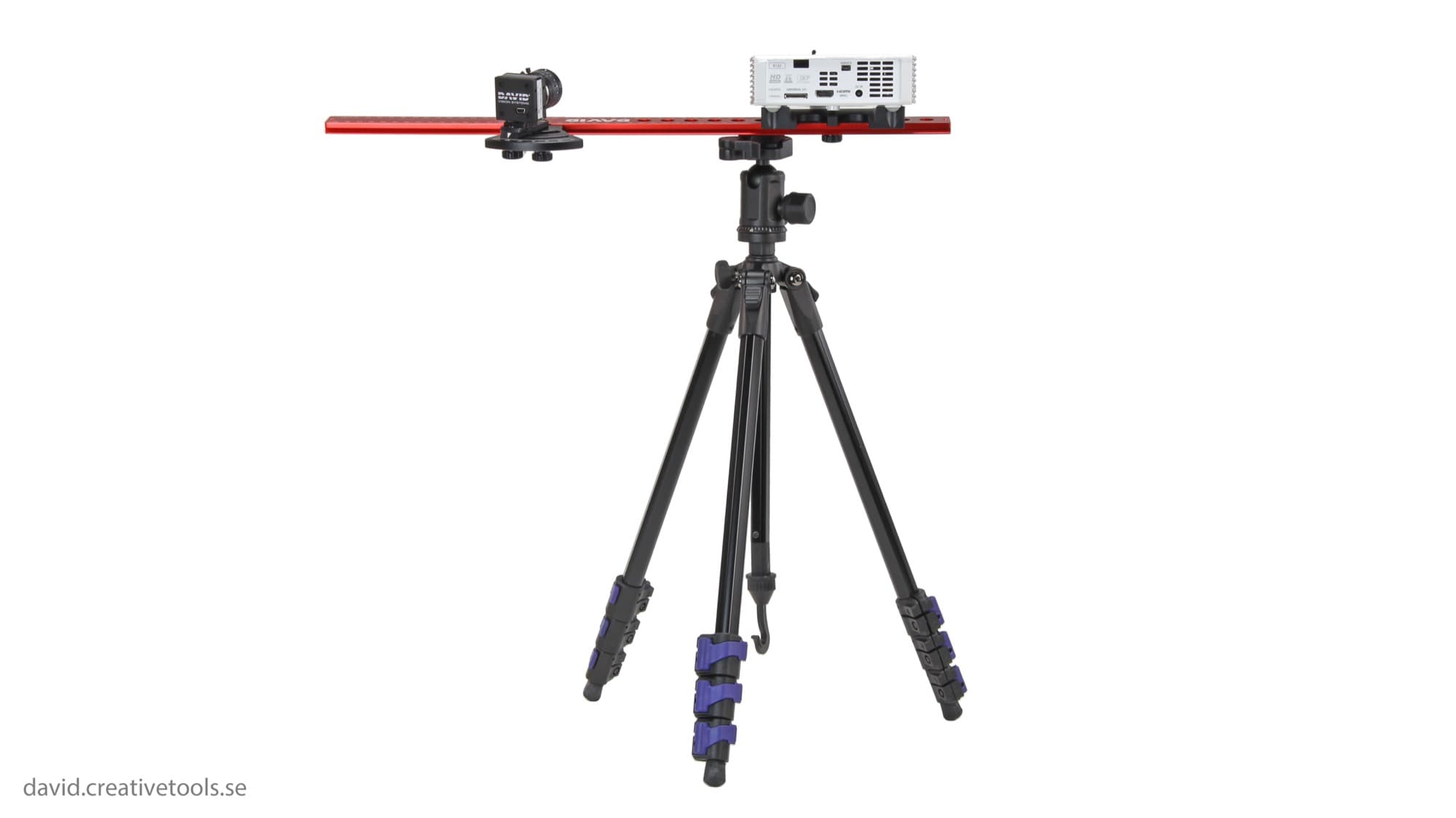
Hero photo by Creative Tools via Wikimedia Commons, licensed CC BY 2.0.