You printed a cookie cutter, a measuring scoop and a funnel for decanting rice. The spool was labelled food grade, the model came from a reputable designer, and the parts look fine. They are still not what anyone in the industry would call a food-safe 3D printed part — and the reason has almost nothing to do with the plastic on the spool. Food safety is a property of a finished article under stated conditions of use, and printing changes the article in four ways the spool label was never describing.
This post contains affiliate links. If you purchase through these links, 3D Prototyping Hub may earn a small commission at no extra cost to you.
This post also contains Amazon affiliate links. As an Amazon Associate I earn from qualifying purchases.
This is worth getting straight once, because the answer is not "never" — it is a short list of conditions, and most kitchen prints fail two or three of them for reasons you can fix in an afternoon.
Four Things Must Be True, and the Filament Is One
A supplier who sells food-contact parts for a living has to be able to say yes to all four of these. A spool label speaks to the first, partially.
| What has to be true |
What usually goes wrong at home |
| The polymer is approved for this food, temperature and duration |
The base resin is fine; the pigment in your colour is undocumented |
| Everything else in the part is approved too |
Colourant masterbatch, additives, and whatever the nozzle contributes |
| The surface can be returned to a clean state |
Layer crevices and internal voids cannot be reached by washing |
| It stays intact under its actual service conditions |
PLA deforms in a wash cycle it was never specified for |
The first line is where the label lives. "Food grade PLA" is a claim about polylactic acid, a polymer that genuinely does appear in food packaging — made as pellets, in a controlled factory, usually uncoloured. The pigment that makes your filament orange arrives as a masterbatch the filament maker buys in, and almost no consumer brand publishes what is in it. Ask one directly and the honest answer is normally that the resin is compliant and the finished coloured filament is not certified as anything.
Nothing about that makes PLA dangerous. It makes the label a statement about an input, not about the object on your counter — which is the distinction that the rest of this article is built on, and the same distinction a commercial shop works through when you order a food-contact part properly.
The Nozzle Is a Food Contact Surface
Everything that ends up in your part passed through a brass tube about 0.4mm across. Standard nozzles are made from free-machining brass, an alloy that normally contains a couple of percent lead precisely because lead makes it cut cleanly at that size. How much of it, if any, transfers into extruded plastic at 210°C has not been well characterised for desktop printers, and that uncertainty is the whole reason to act: a stainless steel nozzle costs a few dollars and removes the question rather than answering it.
The melt path above the nozzle matters more, and more certainly. Whatever you printed last week is still in there in small quantities — carbon fibre, a heavily pigmented ABS, a cleaning compound, the degraded remains of a PTFE liner if you have been running hot. A nozzle that has printed abrasive composite is also physically eroded, which is a separate problem covered in why prints get worse after a nozzle change. Before a run you intend to put near food, do several cold pulls with cleaning filament, and if you print above 240°C consider an all-metal hotend so there is no PTFE liner cooking against the filament in the first place.
If kitchen-adjacent parts are a regular job rather than a one-off, the clean answer is a machine that has only ever run one material. A second entry-level printer from ELEGOO's current range or Anycubic's costs less than most people's cookware and settles cross-contamination permanently, which no cleaning routine does.
Layer Lines Are the Real Hygiene Problem
This is the one that cannot be bought away, and it is geometric rather than chemical.
An extruded wall is a stack of rounded beads. Where two beads meet there is a groove, and on a 0.2mm layer height that groove is tens of microns deep and runs continuously around the part. Inside the wall there are more voids: perimeter-to-infill boundaries, the spaces between infill lines, any gap left where the slicer could not quite fill a thin region — the same internal porosity that makes printed parts leak when you expect them to hold liquid.
A sponge does not reach into a 40-micron groove. Neither does a dishwasher jet. Food residue does, because it is liquid when it arrives and solid afterwards. The consequence is not that your cookie cutter is poisonous — it is that a printed surface cannot be verified clean, so it fails the third condition in the table above no matter which filament produced it. An injection-moulded spatula is cleanable because its surface is a polished steel tool's negative; yours is a stack of beads.
Three things genuinely help:
- Print the food side flat against a smooth plate. The bottom layer takes the plate's finish, so a smooth PEI sheet or glass gives you one genuinely smooth face. A textured plate stamps its grain into that face instead.
- Design out the traps. No blind holes, no captive internal cavities, generous radii instead of sharp internal corners, and nothing that can hold water after a wash.
- Treat the part as a consumable. A cookie cutter used once for a batch and replaced after a few months is a very different risk proposition from a reused scoop that lives in a flour bin.
Heat and Washing Break the Part, Not Just the Rules
The fourth condition is the easiest to test and the one most prints fail outright.
| Material |
Softens around |
Hot hand-wash |
Dishwasher |
Printability |
| PLA |
55–60°C |
Deforms |
No |
Easy |
| PETG |
~80°C |
Fine |
Top rack, with care |
Easy |
| ABS/ASA |
~100°C |
Fine |
Tolerates it |
Needs an enclosure |
| PP (polypropylene) |
~100°C service |
Fine |
Yes |
Hard — warps badly |
A domestic dishwasher washes at roughly 50 to 60°C and can rinse well above that, which is why PLA comes out of one visibly changed; the mechanism is laid out in why dishwashers ruin 3D printed parts. PETG is the sensible default for anything that meets warm water, and our PETG buying guide covers how the brands differ in practice. Polypropylene is what your existing food containers are made of and is the most honest choice on chemistry — it is also miserable to print, warping off almost every surface, so take that as a real cost rather than a footnote. How these trade-offs apply more broadly is in how to choose a 3D printing material.
Coatings and the Thing They Do Not Transfer
The obvious move is to seal the surface, and it half works.
A cured epoxy or food-contact varnish does fill the grooves, and a sealed part is genuinely more cleanable than a bare one. What it does not do is move the manufacturer's compliance onto your part. A coating sold for food contact states a cure schedule, a film thickness and a set of conditions — often citing the resinous-coating rules at 21 CFR 175.300 — and every one of those assumes correct application. On a printed part you are the applicator: a bubble over a layer crevice, a thin spot on a vertical face, or a knife scratch six weeks later re-exposes the plastic underneath, and nothing announces it. Most clear casting epoxies sold to makers make no food-contact claim at all. Read the manufacturer's own wording and believe only that.
The better version of the same idea is to stop having food touch the print. Print the master, cast the mould, and let the food meet a platinum-cure silicone the manufacturer certifies instead of the plastic you extruded. It is also the one route where the layer lines become an asset, since they transfer as texture into the mould — just check the datasheet actually says food contact, and read why silicone won't cure on 3D printed masters before you pour, because PLA masters poison certain silicones.
Where a Printed Part Is Genuinely Fine
Shortening the exposure is more effective than improving the material, and these cases clear the bar on their own terms:
- Dry, brief contact, then washed or binned — cookie cutters, stencils, dough stamps, a funnel for rice or coffee beans.
- Food never touches the print — jar openers, shelf organisers, a holder for a steel bowl, a jig for cutting something else.
- Mould masters and formers — the print shapes a certified material rather than the food.
- Shape prototypes — you are testing how it feels in the hand before the real one is machined or moulded.
What stays off the list: anything cut on, anything that holds liquid for hours, anything hot, anything reused daily, and anything for someone immunocompromised or very young.
When to Have It Made Properly
If the part has to be reusable, washable and defensible, that is a manufacturing job rather than a printing job, and the quickest way to find out what it should cost is to describe the duty rather than the process. Say what food it touches, at what temperature, for how long, how it is cleaned, and whether it has to meet a standard such as NSF for commercial kitchen equipment.
Shops answer that question for a living. Some will come back with a printed part in a certified material with a specified finish; plenty will come back saying it should be machined from food-grade stock or moulded, because that is cheaper than making a printed one defensible. Both answers are useful, and both are faster to get than they look — compare shops by process and location in our provider directory.
The filament label was never the question. The part is.
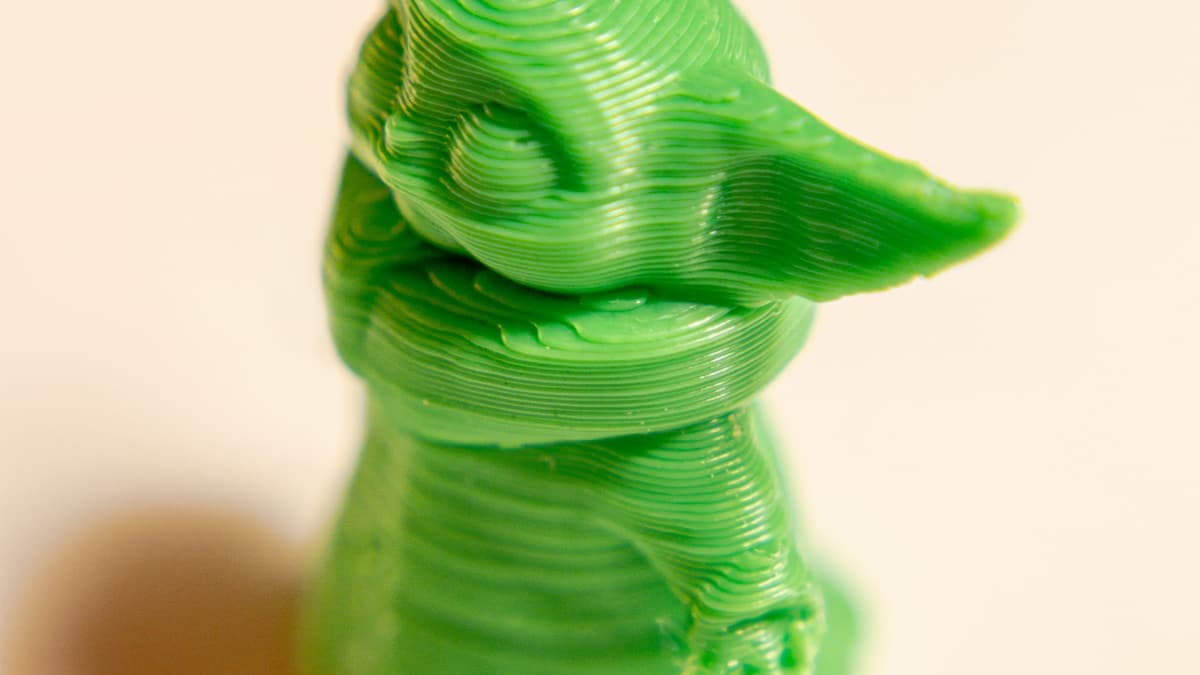
Hero photo by "Girl with red hat" via Unsplash.
Ready to find a 3D printing service provider?
Browse 2,000+ verified providers across the United States and submit your quote request free.
Browse Providers