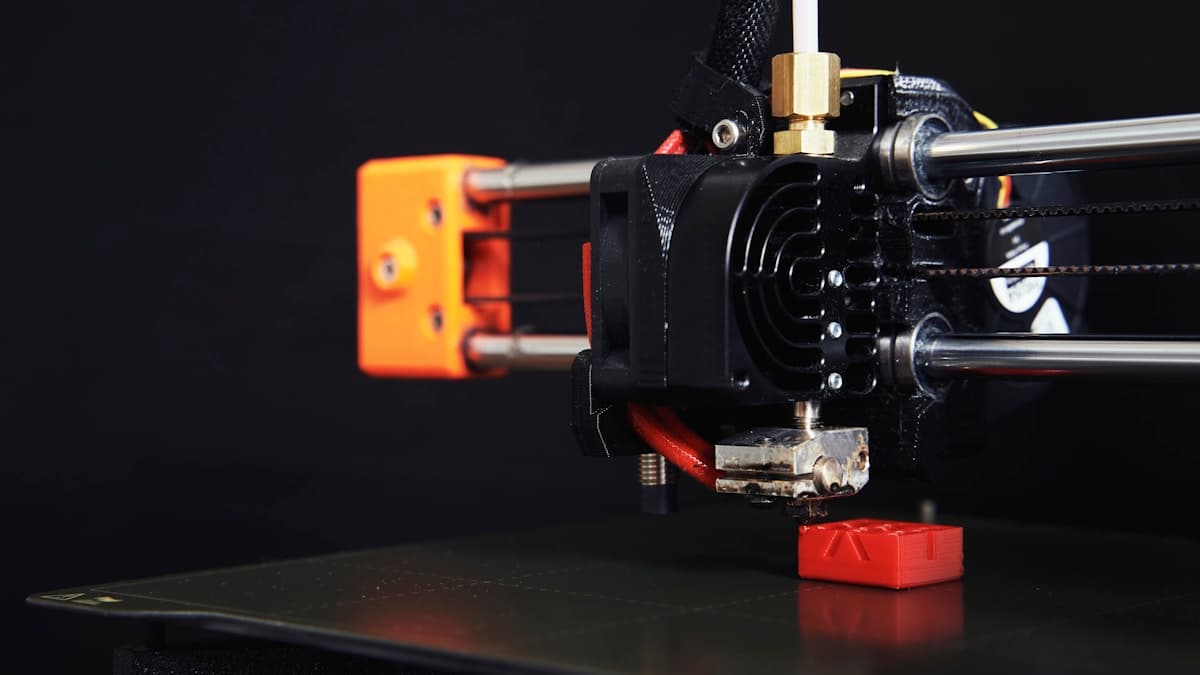
The fastest path to rapid prototyping services in Winston-Salem, NC is the 3D Prototyping Hub directory. Filter to North Carolina, select the technology type you need — FDM, SLA, SLS, or metal — and submit a direct quote request to verified Piedmont Triad providers. Most respond within one business day.
If you want to understand what drives Winston-Salem's prototyping market, what technologies are available, and how to select the right provider for your project, read on.
Why Winston-Salem Has a Real Prototyping Market
Winston-Salem is not a typical secondary manufacturing city. The Wake Forest Innovation Quarter — a 1.5 million square foot urban research district — hosts more than 170 companies in biotech, pharmaceutical, and health technology. Wake Forest Baptist Medical Center is one of the largest academic medical systems in the Southeast. Hanesbrands, headquartered here, runs active product development across apparel and consumer goods.
That combination creates consistent, real demand for rapid prototyping across material types: biocompatible resins for medical device work, engineering-grade FDM for consumer product iteration, and precision SLA for investment casting patterns in manufacturing applications.
The broader Piedmont Triad — Winston-Salem, Greensboro, and High Point — gives buyers access to a regional provider network. Greensboro providers are 30–45 minutes away and expand available capacity when local shops are at capacity. High Point's furniture manufacturing heritage has produced shops with strong short-run fabrication capability that directly overlaps with prototyping work.
Technologies Available in the Piedmont Triad
FDM — Fused Deposition Modeling
The most widely available technology across Winston-Salem and the surrounding region. Materials include ABS, PLA, PETG, nylon 12, polycarbonate, and carbon fiber composites. Best for functional prototypes, assembly fixtures, and design iteration where speed matters more than surface finish. Lead time: 2–5 days standard, 24–48 hours rush for simple geometry.
SLA — Stereolithography
High surface detail and dimensional accuracy (±0.002–0.005 inches). Used for visual models, medical device prototypes, investment casting patterns, and parts where surface quality is required before secondary processing. Formlabs platforms are common at regional providers, with resin libraries covering standard, high-temp, biocompatible, and castable options. Lead time: 3–5 days.
SLS — Selective Laser Sintering
Durable nylon parts without support structures — the right call for assemblies with living hinges, snap fits, and internal channels that FDM can't build cleanly. Strong mechanical properties throughout the part. Lead time: 5–7 days. Not all Piedmont Triad shops run SLS in-house; some route SLS work to partner bureaus in Charlotte or the Research Triangle.
Metal 3D Printing
DMLS and binder jetting for 17-4 stainless steel, titanium, and Inconel. Available from select Charlotte-area and Research Triangle providers, typically a 1–2 hour drive from Winston-Salem. Metal prototyping projects should be quoted with full inspection and certification requirements upfront. Lead time: 2–4 weeks.
How to Choose a Winston-Salem Rapid Prototyping Provider
Match technology to application first. An FDM shop with fast turnaround may not carry the SLA resin library or SLS powder management your project requires. Confirm available materials and post-processing options — bead blasting, vapor smoothing, painting — before sending geometry for quote.
For biotech and medical device work — verify the provider's certifications and material data sheets before submitting anything with biocompatibility requirements. ISO 13485 certification and material lot traceability are not standard at every shop. The Wake Forest Innovation Quarter network is a useful starting point for identifying vetted vendors who understand regulated-industry documentation requirements.
For consumer product and apparel work — local shops serving the Hanesbrands and furniture manufacturing corridor are accustomed to aesthetic and fit requirements alongside functional ones. Surface finish, color matching, and soft-touch material options are worth discussing upfront before the quote.
For production tooling and fixture work — confirm the shop's capability for engineering thermoplastics (nylon, polycarbonate, Ultem) and their post-processing options. Functional tooling prototype requirements differ significantly from design validation requirements, and not every shop is set up for both.
See also: How to Choose a 3D Printing Service — a full breakdown of evaluation criteria that applies to any Piedmont Triad provider.
When In-House Printing Makes Sense Alongside a Service
For Winston-Salem engineering teams running more than 8–10 FDM prints per month on standard geometry, a desktop machine typically pays back within 3–4 months compared to repeated service bureau orders.
In-house doesn't replace a service bureau for SLS, SLA, or regulated work. But for the FDM iteration volume most engineering teams accumulate, a hybrid approach — desktop for rapid design cycles, bureau for final or complex geometry — is almost always the most cost-effective setup.
Related Resources
- How to Choose a 3D Printing Service — evaluation criteria that apply to any North Carolina provider
- SLA vs. FDM Printing Explained — which technology is right for your project
- Where to Get Something 3D Printed — full breakdown of options from local bureaus to online platforms
- 3D Prototyping Hub NC Directory — browse all verified North Carolina providers by city
Hero photo by Christian Englmeier on Unsplash.