The carton arrives, you hear something move inside it before you have the tape off, and the bracket you waited nine days for has snapped through its thinnest section. A 3D printing order that arrives damaged is one of the few supplier failures where the cause is genuinely ambiguous — the part may have broken in a parcel hub, or it may have left the shop already cracked and been packed by someone who did not look. The two have different fixes and different people paying for them. This guide covers how to tell them apart in the first five minutes, what makes printed parts more fragile in transit than machined ones, and the four lines in an RFQ that prevent most of it. If the shop you used cannot pack a carton, browse the 3D printing provider directory and give the next job to one that can.
The First Five Minutes Decide Whether You Have a Claim
Before you lift anything out, photograph it. The carton from the outside on all six faces, the carrier label, the open carton with the parts still in position, then each damaged part where it sat. That sequence is what both a carrier claim and a supplier reprint request run on, and it takes ninety seconds.
Then do not throw the packaging away. Carriers routinely ask to inspect the carton and the void fill before settling a claim, and a claim with no packaging to inspect is usually denied on the spot. Keep the box, the fill and the bags until the matter is closed.
Finally, check the whole shipment before you report. Partial breakage reported twice is two conversations and two reprints, and a shop that is reprinting one part anyway would rather put all three in the same build.
Transit Damage and Shipped-Broken Damage Look Different
This is the diagnostic that decides everything downstream, and it is usually readable off the part itself.
| Signal |
Broke in transit |
Shipped that way |
| Fracture face |
Bright, clean, sharp-edged |
Dull, or glossy along a layer line |
| Debris |
Fragments loose in the bag or carton |
Bag clean, no fragments |
| Both halves |
Present |
Sometimes one piece missing |
| Location in carton |
Against a wall or a crush point |
Anywhere, often centred |
| Carton exterior |
Crush, puncture or drop mark |
Undamaged |
| Pattern across order |
One or two parts, same side of box |
Same feature on every part |
That last row is the strongest single tell. If the identical feature failed on all six parts, no parcel network did that — it is a design or process failure that the shop should have caught, and the conversation is about a reprint with a changed approach rather than about a claim. Why 3D printing orders come back wrong covers that class of failure, where the parts are intact but not what you specified.
A third case sits between the two and is the one buyers miss: the part cracked during de-support or post-processing, the technician saw a hairline and judged it cosmetic, and normal handling finished the job. The tell is a fracture that starts at a support witness mark and has one aged face and one fresh one.
Printed Parts Break in Transit More Easily Than Machined Ones
Three reasons, and none of them are the shop being careless.
Layer adhesion is directional. A printed part is strong in the plane of its layers and weaker across them, so a knock that a machined aluminium bracket would shrug off can split a printed one along a plane you cannot see. Why 3D prints snap along layer lines explains the mechanism, and it is the same mechanism in a parcel hub as on a bench.
Prototype geometry is thin. Printed parts exist precisely because they can carry lattices, filigree, unsupported spans and tall thin bosses that would be uneconomic to machine. Every one of those is a stress concentrator with very little material behind it.
The common materials are stiff rather than tough. PLA and standard photopolymer resin both have high stiffness and low impact energy — they do not bend before they break. A cosmetic resin part with a 1 mm wall will survive a careful hand and not a 70 cm drop onto a conveyor. Why 3D printed parts shatter on impact sets out which materials absorb energy and which simply transmit it.
The Packaging Failures That Cause Most of It
In practice the damage traces back to a short list:
- Parts bagged together. Two parts in one bag abrade each other for the whole journey and chip every raised edge.
- Loose fill instead of immobilisation. Peanuts let a part migrate to a carton wall over a few hundred miles, and the wall is where the impacts land.
- No rigid insert under an unsupported span. A lattice panel or a thin plate needs something flat behind it; void fill alone lets it flex until it cracks.
- Heavy parts over light ones. Stacking order inside the carton matters more than total fill volume.
- Single-wall board on a long route. Fine for a regional trip, marginal across a continent with two transfers.
- Flat-pack envelopes. Anything that fits through a letter slot is sorted by machines that assume paper.
None of this is exotic, and a bureau that ships prototypes weekly already knows it. The orders that arrive damaged are usually the ones where packaging was never specified, so it defaulted to whatever was on the bench.
Four Lines in the RFQ That Prevent It
Packaging is a line item. Shops will quote it, and almost nobody asks:
- Bag each part individually. Cheap, and it removes abrasion entirely.
- Immobilise in foam or paper void fill, with at least two inches on every face, rather than loose fill.
- Name the fragile features. "The hex lattice panel and the three 4 mm bosses — rigid insert or separate carton." A packer who knows what to protect will protect it.
- State complete or partial shipment. If the order is dated, two shipments mean one damaged carton cannot take out the whole delivery.
Add a fifth if the parts matter: order one spare of anything genuinely fragile. A second copy inside the same build is a fraction of what a second order costs two weeks later, and it converts a schedule failure into an inconvenience. The same logic appears in why your 3D printing order is late — nearly every recovery option is cheaper when bought in advance.
Design and Material Choices That Survive a Parcel Network
If parts keep arriving broken from shops that pack well, the part is the problem rather than the packing.
Thicken the feature that keeps failing, add a fillet where it meets the body, and stop asking an unsupported span to be both thin and stiff. Where a cosmetic surface forces a fragile orientation, printing in two pieces and bonding after delivery is often the sane trade — see why split 3D prints never line up for how to split it so the joint does not become the next defect.
On material, move up the toughness ladder if the part has to arrive functional: PETG, ABS and ASA tolerate far more impact than PLA, and sintered nylon tolerates more than any of them. You give up some surface finish and some dimensional crispness, and tolerances and accuracy in 3D printing sets out what that trade actually costs on the features you care about.
When the Fix Is to Remove the Carrier Entirely
For a part on the critical path, the most reliable packaging improvement is not packaging. Collecting from a shop within driving distance removes every transfer, every conveyor and every claim process from the problem, and it lets you inspect the parts on the bench with the person who made them — which is also when a marginal part gets caught instead of shipped.
That is the strongest argument for keeping a local supplier in the mix even when an online bureau quotes lower. Search the directory by state — Texas, for example — to find shops inside collection distance, and read online vs local 3D printing services for where the two models genuinely diverge on cost and risk rather than just appearing to.
Get the Next Order Packed Properly
Send the four packaging lines with your next RFQ, name the fragile features, and ask what the shop's reprint policy is before you place the order rather than after a carton arrives rattling. Browse 3D printing providers, send the same brief to two or three, and treat the packaging answer as part of the quote — because a part that arrives broken was never cheaper, whatever the unit price said.
Related Resources
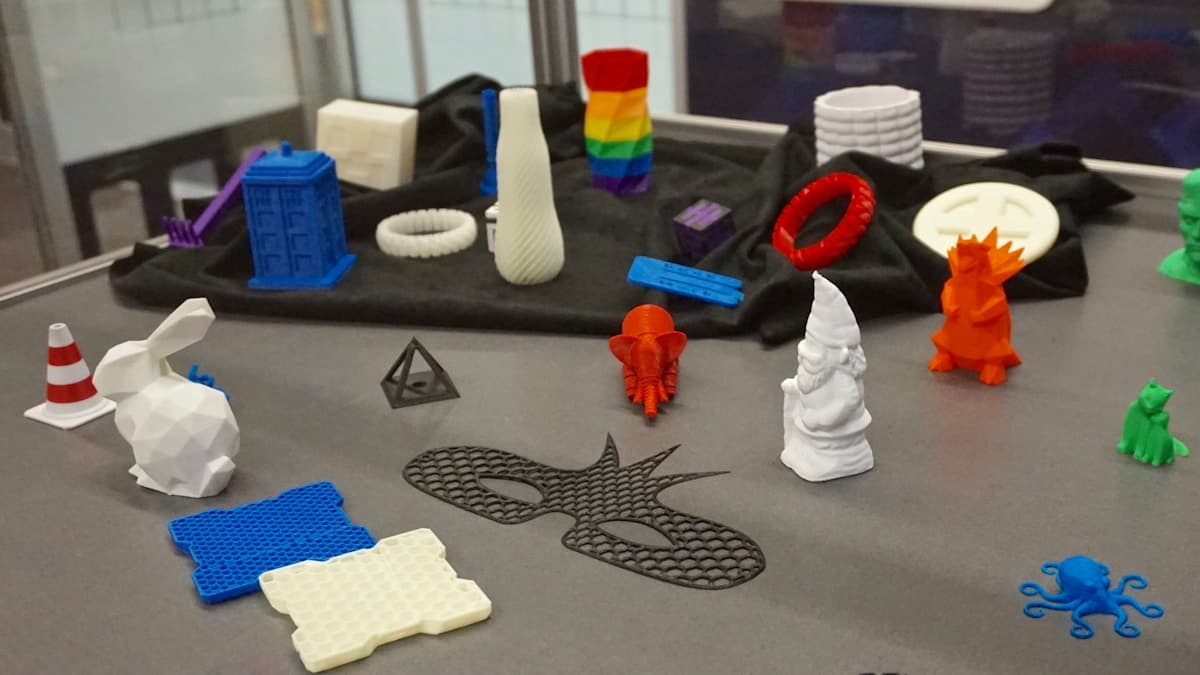
Hero photo: Locanam 3D Printing via Unsplash.
Ready to find a 3D printing service provider?
Browse 2,000+ verified providers across the United States and submit your quote request free.
Browse Providers