The fastest way to find 3D scanning services in Fort Lauderdale is the 3D Prototyping Hub directory. Filter by Florida and look for providers listing 3D scanning, reverse engineering, or metrology services. Most South Florida providers respond within one business day.
If you want to understand what scanning services are available, what they cost, and how to spec a project correctly before you submit a quote request — this guide covers it.
Why Fort Lauderdale Has a Real 3D Scanning Market
Most mid-sized US cities have 3D printing service providers. Fewer have a genuine 3D scanning ecosystem. Fort Lauderdale does — and the driver is the marine industry.
Broward County is home to one of the largest marine manufacturing and service clusters in the world. Fort Lauderdale International Boat Show is the largest in the US. The marine service and refit industry around Bahia Mar, Pier 66, and the New River generates continuous demand for one specific scanning use case: reverse engineering of legacy and obsolete components.
Boats built 10–30 years ago have hardware — fittings, mounts, brackets, covers, pump housings — that is no longer manufactured. When those parts fail, the fastest path to replacement is scan the original, generate a CAD model, and either print or machine a replacement. Fort Lauderdale service providers understand this workflow. It's not a niche application here — it's a primary revenue driver for several local shops.
Beyond marine, the broader South Florida market generates scanning demand from aerospace MRO operations at Fort Lauderdale Executive Airport and Hollywood International, commercial construction and architecture, medical device manufacturing in the Boca Raton–Palm Beach corridor, and general industrial metrology.
Types of 3D Scanning Available in the Fort Lauderdale Area
Structured-Light Scanning
The most common technology among Fort Lauderdale service providers. A projector casts a known light pattern onto the object surface; cameras capture the distortion of the pattern to calculate geometry. Accuracy: ±0.05–0.1mm depending on the system. Best for: small-to-medium parts (under 18 inches), high surface detail, objects that can be stationary during capture. Typical turnaround: 1–3 days for scanning, 3–5 additional days for CAD conversion.
Laser Line Scanning
Faster capture for larger objects and more complex geometries. A laser line sweeps across the surface while the scanner tracks position. Accuracy: ±0.1–0.25mm. Best for: medium-to-large parts, assemblies, objects where scan speed matters more than maximum accuracy. Common for marine component work and large industrial parts.
Photogrammetry
Camera-based capture using multiple overlapping photographs processed into a 3D mesh. Best for: very large objects (full boat hulls, architectural elements, structures) where physical scanner access is limited. Accuracy: ±1–5mm depending on setup. Used extensively for architectural documentation and heritage capture in the South Florida market.
Metrology-Grade CMM Scanning
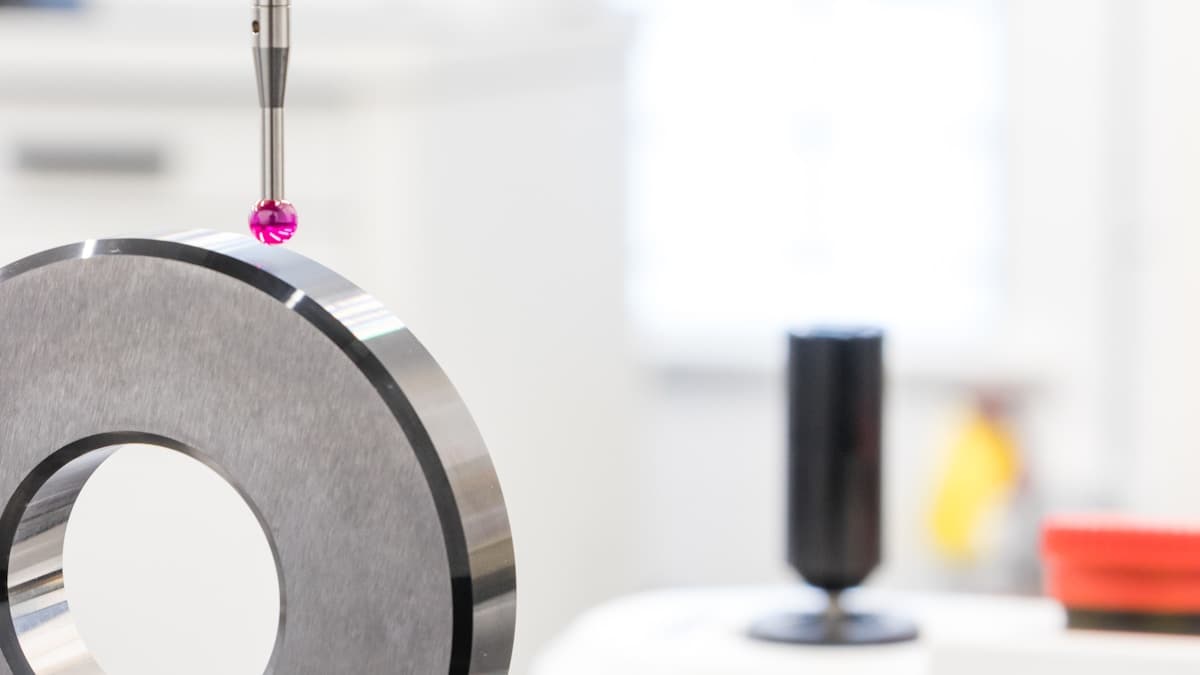
Coordinate Measuring Machine scanning using touch probes or scanning heads on a precision articulating arm (FARO, Romer, Hexagon). Accuracy: ±0.01–0.05mm. Used for quality inspection against engineering drawings, first article inspection, and tight-tolerance part verification. Available at full-service engineering shops in the Fort Lauderdale metro. Required for aerospace and defense parts inspection.
CT Scanning
Industrial computed tomography for internal geometry capture — the only way to scan internal features without destructive disassembly. Used for inspection of internal channels, wall thickness measurement, and failure analysis. Available at specialized facilities in the South Florida region. Quoted by object size and inspection requirement. Not widely available — expect to contact multiple providers before finding one with CT capability.
Common Use Cases in the Fort Lauderdale Market
Marine Reverse Engineering
Obsolete cleats, pump housings, custom brackets, helm components, windlass covers — if the part doesn't exist in a catalog, scanning is the path to replacement. The workflow: bring the original part to the provider, scan it, receive a STEP file, approve the geometry, print or machine a replacement. Providers in the Fort Lauderdale market have this workflow on lock. It's repeatable, well-priced, and fast.
Industrial Quality Inspection
Manufacturing clients use scanning for first article inspection (FAI) against engineering drawings, in-process quality control, and root cause analysis on reject parts. The output is a dimensional deviation report comparing the scanned part to the nominal CAD model. Required for AS9100 and ISO 9001 quality systems. Multiple Fort Lauderdale-area providers offer this as a standard service.
Scan-to-Print Workflows
For teams that already print in-house or with a service bureau: use scanning to capture a physical object, generate a printable mesh or STEP file, and produce parts on demand. Common for product development, custom brackets, and replacement hardware across marine, aerospace, and general industrial applications.
Architectural and Heritage Documentation
Photogrammetry and structured-light scanning for existing building documentation, renovation planning, and historic preservation. Fort Lauderdale's significant historic building stock — particularly in neighborhoods like Las Olas and Victoria Park — generates periodic documentation and restoration demand.
How to Spec a Scanning Project Correctly
Before you contact a provider, have clear answers to these four questions:
1. What is the end-use? Printing, CNC machining, inspection, documentation, or engineering analysis each have different accuracy requirements. A scan for documentation tolerates ±1mm. A scan for CNC machining of a precision marine fitting needs ±0.05mm. Tell your provider the end-use before discussing technology.
2. What is the object size? Small parts (under 6 inches) vs. medium parts (6–24 inches) vs. large objects (24 inches to full boat hull) determine which scanning technology applies. Most local providers can handle small-to-medium. Large-format and CT scanning require confirmation before quoting.
3. What deliverables do you need? Point cloud only, polygon mesh (STL/OBJ), or parametric CAD model (STEP/IGES)? Each adds cost and time. If you need a print-ready STL, a mesh is sufficient. If you need to modify the geometry or machine from it, you need a parametric CAD model — which requires a CAD engineer, not just a scan operator.
4. Can the object come to the provider? Bring-in scanning at the shop is typically half the cost of on-site scanning. If the object can be transported, do it. Marine fittings, brackets, and small hardware always travel. Full hull scanning, in-place structural documentation, and anything bolted to a vessel requires on-site work.
Questions to Ask Before Committing
- What scanning technology do you use — structured-light, laser, photogrammetry, CMM?
- What accuracy can you guarantee for a part this size?
- Do you deliver a mesh file only, or can you produce a parametric STEP/IGES model?
- What is your standard turnaround for scan + CAD deliverable?
- Can you come to our facility, or does the object need to come to yours?
- Have you scanned similar components before — marine hardware, industrial fittings, aerospace parts?
- How do you handle a scan that produces poor data due to reflective or dark surfaces?
- Can you provide a sample of similar past deliverables?
Question 7 matters specifically for marine hardware — polished stainless, chrome fittings, and carbon fiber all create scanning difficulties. A provider with marine experience knows the workarounds (scanning spray, polarized lighting). One without marine experience may not.
From Scan to Part
Once you have a STEP or mesh file, the path to a physical replacement part depends on geometry and material:
- FDM printing for structural brackets, covers, and non-critical hardware. Fast and low-cost.
- SLA printing for high-detail parts where surface finish matters.
- CNC machining for metal parts (aluminum, stainless, bronze) where mechanical properties or finish requirements exceed what printing delivers.
Find a Provider Now
Search the Florida directory for 3D scanning and reverse engineering services. Every listing includes a direct quote request form. Submit your project requirements and the provider contacts you.
Hero photo by Greg Rosenke via Unsplash.