Detroit's manufacturing identity runs deeper than any other city in the United States — and 3D printing services in Detroit have grown directly out of that foundation. The metro area's concentration of automotive OEMs, Tier 1 suppliers, aerospace contractors, and defense manufacturers has created one of the highest-density additive manufacturing ecosystems in the country. Local providers aren't just running printers — they understand program timelines, PPAP documentation, and the cost-versus-lead-time tradeoffs that drive engineering decisions on the floor.
Technology Capabilities Across Detroit's 3D Printing Landscape
Detroit-area service providers operate industrial-grade additive manufacturing platforms tuned to automotive and advanced manufacturing requirements. FDM (Fused Deposition Modeling) anchors most quick-turn prototype work, with Stratasys Fortus and F900 systems achieving build volumes up to 36×24×36 inches in engineering thermoplastics. Layer heights from 0.005 to 0.013 inches produce functional prototypes in ABS, polycarbonate, ULTEM 9085, and nylon 12 with tensile strengths reaching 9,500 psi — sufficient for fit-check assemblies, jigs, and ergonomic validation models that survive plant-floor handling.
SLA (Stereolithography) providers throughout greater Detroit and the Metro Detroit corridor operate high-resolution systems from Formlabs, 3D Systems, and EnvisionTEC. These platforms achieve feature resolution to 0.002 inches with surface finishes to 0.0004-inch Ra after post-processing — suitable for show surfaces, lens housings, and aesthetic concept models where appearance drives the build. Build envelopes range from 5×5×8 inches for dental and small-part applications up to 20×20×24 inches for large trim and exterior components requiring dimensional accuracy within ±0.004 inches.
SLS (Selective Laser Sintering) is particularly well-represented in metro Detroit given its fit for automotive applications. Support-free nylon construction enables complex under-hood brackets, ducting assemblies, and snap-fit enclosures that would require multi-piece machined designs in traditional manufacturing. EOS P500 and HP Multi Jet Fusion systems produce PA12 nylon parts with wall thicknesses to 0.030 inches, tensile strength around 6,500–7,500 psi, and elongation at break of 15–20%. Build volumes of 13×13×18 inches accommodate mid-size automotive components in a single build.
Metal additive manufacturing serves Detroit's powertrain engineering, tooling, and aerospace supplier base. DMLS (Direct Metal Laser Sintering) systems process 17-4 PH stainless steel, AlSi10Mg aluminum, Inconel 718, and Ti-6Al-4V titanium with densities exceeding 99.5% after sintering. Build volumes typically reach 10×10×12 inches with layer thicknesses of 0.0008–0.0016 inches. Several Detroit-area providers maintain binder jetting capability for higher-volume metal part production at lower per-part cost than DMLS.
Materials Selection and Performance Characteristics
| Material Category | Common Materials | Tensile Strength | Typical Cost | Lead Time |
|---|---|---|---|---|
| FDM Thermoplastics | ABS, Nylon 12, PC, ULTEM 9085 | 4,500–9,500 psi | $3–8/cu in | 2–5 days |
| SLA Resins | Standard, Tough, High Temp, Castable | 4,000–10,000 psi | $8–15/cu in | 3–5 days |
| SLS Nylon | PA12, Glass-filled PA12, FR Nylon | 6,500–7,500 psi | $10–20/cu in | 5–7 days |
| Metal Alloys | 17-4 SS, AlSi10Mg, Ti-6Al-4V, Inconel | 85,000–135,000 psi | $25–60/cu in | 2–4 weeks |
FDM material selection in Detroit centers on automotive qualification requirements. ULTEM 9085 satisfies FAR 25.853 flame, smoke, and toxicity requirements for interior and under-seat applications, with HDT of 153°C and tensile strength to 9,600 psi. Polycarbonate blends provide impact resistance to 10.0 ft-lb/in notched Izod for underhood covers and electrical housings. Carbon fiber nylon composites achieve stiffness values to 9.0 Msi for structural checking fixtures that maintain dimensional stability across production floor temperature swings.
SLA resin libraries serve Detroit's validation and appearance model needs. High-temperature resins with HDT of 238°C under 0.45 MPa load support short-run injection mold tooling inserts and flow analysis models. Castable resins enable investment casting patterns with ash-free burnout for metal bracket prototypes requiring the same geometry as a machined part. Tough resins absorb impact without brittle fracture, suitable for drop-test validation models and snap-fit mechanism prototyping.
SLS powder materials address the functional assembly requirements common in automotive programs. Standard PA12 delivers balanced stiffness and impact resistance, while glass-filled PA12 increases flexural modulus from 1,700 MPa to 2,600 MPa — preferred for sensor brackets and dimensional gauges requiring stability across the 20°C to 80°C operating range common in underhood environments. Flame-retardant nylon meets UL94 V-0 for EV battery enclosures and charging infrastructure components, a growing application in metro Detroit.
Precision Tolerances and Quality Control Standards
Detroit 3D printing services hold dimensional tolerances that align with automotive prototype requirements. FDM industrial systems achieve ±0.010 inches on features under 4 inches, with process-controlled Stratasys systems tightening to ±0.005 inches on calibrated equipment with temperature-stabilized build chambers. Secondary CNC machining on datum features achieves ±0.002 inches for press-fit bearing surfaces and precision locating features.
SLA dimensional accuracy reaches ±0.004 inches for features under 6 inches with controlled post-cure processes, tightening to ±0.002 inches on calibrated systems through resin-specific compensation algorithms. Linear shrinkage compensation of 0.1–0.3% is applied per resin chemistry, with nesting and orientation optimized to maintain flatness within 0.010 inches on reference surfaces used for dimensional layout.
SLS tolerances in competent Detroit bureaus achieve ±0.008–0.012 inches on critical features through powder quality programs and packing density management. Warpage is minimal due to uniform thermal distribution in PA12 builds, with flatness typically holding 0.020 inches over 12-inch spans — acceptable for most automotive enclosure and bracket applications without secondary processing.
Metal 3D printed parts undergo inspection protocols scaled to their application. Automotive prototype parts receive CMM inspection reports documenting GD&T callouts including position, perpendicularity, and profile tolerances to drawing requirements. CT scanning for internal porosity verification is available from specialty providers for flight-critical or safety-critical geometries. As-printed surface finishes run 400–800 Ra microinches, improving to 16–32 Ra after tumbling, vibratory finishing, or precision machining of bearing surfaces.
Industry Applications: Where Detroit's Additive Ecosystem Excels
Automotive prototyping drives the majority of Detroit's additive manufacturing volume, and local providers have built workflows around automotive program cycles. A typical application: a Tier 1 supplier needs 12 SLS nylon HVAC duct assemblies for climate system validation before tool release. A Detroit bureau delivers print-ready parts in 6 days, eliminating a 10-week soft-tool cycle and $45,000 in tooling cost while capturing dimensional data for tool design confirmation. Automotive validation parts regularly include mating checks to machined aluminum references, pressure testing to 15 PSI, and thermal cycling validation from -40°C to 120°C.
Checking fixtures and manufacturing aids represent a growing share of Detroit's additive work. Carbon fiber nylon fixtures printed for body panel dimensional verification cost $900–2,500 each versus $6,000–15,000 for traditionally machined aluminum fixtures, with 5-day lead times replacing 6-week fabrication cycles. Drill templates, assembly locating jigs, and ergonomic assembly aids are printed in ABS or PETG, replacing shop-floor handmade fixtures that introduce dimensional variability.
Electric vehicle and battery technology applications are expanding rapidly in metro Detroit. Nylon enclosures for battery management system electronics, high-voltage connector housings in flame-retardant PA12, and thermal management channel prototypes in SLA high-temp resin all represent production-parallel development work happening at Detroit additive bureaus. Structural battery brackets printed in AlSi10Mg aluminum allow multiple geometry iterations before committing to die cast tooling — at $800–2,000 per metal 3D printed part versus $80,000–150,000 for die cast tooling.
Aerospace and defense applications flow from Michigan's aerospace supplier base — Spirit AeroSystems, GKN Aerospace, and dozens of Tier 2 suppliers operating within two hours of Detroit. AS9100-certified Detroit-area providers produce non-structural composite tooling master models, conformal cooling insert prototypes, and UAV structural components with full material certification and first article inspection documentation.
Cost Structures and Pricing Benchmarks
Project-based quoting drives Detroit's additive pricing, with complexity, material, and technology determining cost more than geography. A representative 4×3×2 inch automotive bracket prototype costs $120–250 in FDM ABS, $180–380 in SLA standard resin, or $220–440 in SLS nylon. Volume discounts apply at 10+ pieces, with per-part costs dropping 25–40% at quantities of 50–100 units — relevant for validation builds where multiple configurations are tested in parallel.
Rush service premiums range from 50–100% for 24–48 hour delivery on FDM and SLA parts under 30 cubic inches. Detroit providers accustomed to automotive program pressure typically offer defined rush tiers rather than ad-hoc pricing, making program cost estimation more predictable. Standard lead times of 5–7 business days avoid surcharges while maintaining build quality and queue management.
Post-processing adds measurably to base part cost. Support removal and basic cleaning are typically included. Vapor smoothing for FDM cosmetic parts runs $30–80 per part, reducing surface roughness from 400 Ra to 32 Ra. Painting with color matching to RAL or Pantone specifications adds $50–175 per part. CNC machining of datum surfaces and critical bore features runs $85–225 per hour, with most secondary operations requiring 0.5–1.5 hours per part.
Selecting the Right Detroit Provider for Your Project
Automotive program experience should be the first filter. A provider who has worked with a Tier 1 supplier or OEM understands PPAP documentation, engineering change management, and the difference between a design review model and a validation build. Ask directly whether they can provide CMM reports, whether they support GD&T callouts, and whether their quality system is sufficient for your program's gate requirements.
Technology alignment with your application determines whether the provider can actually solve your problem. A shop running five desktop FDM printers cannot match the build volume, material options, or dimensional consistency of an industrial Stratasys or EOS system. Ask for their equipment list — not just "we do SLS" but what platform, build volume, and what materials they run in regular production.
Production capacity matters on automotive timelines where a missed build window means a delayed gate review. Shops operating 2–5 printers handle prototype work and small batches reliably. Mid-size operations running 10–25 machines across technologies absorb production runs to 500 units without impacting prototype turnaround. Large regional bureaus with 50+ systems offer lights-out production and weekend builds for critical path parts.
Proximity is a real advantage in Detroit. A local provider you can walk your part into — for a first-article review, a dimensional discrepancy conversation, or an emergency reprint — is worth meaningful cost premium over a national mail-in service when your program timeline depends on getting it right the first time.
The 3D Prototyping Hub provider directory lists verified Michigan and Detroit-area 3D printing services with technology capabilities, material options, and direct quote request submission. Filter by state, service type, and technology to find providers matched to your specific application.
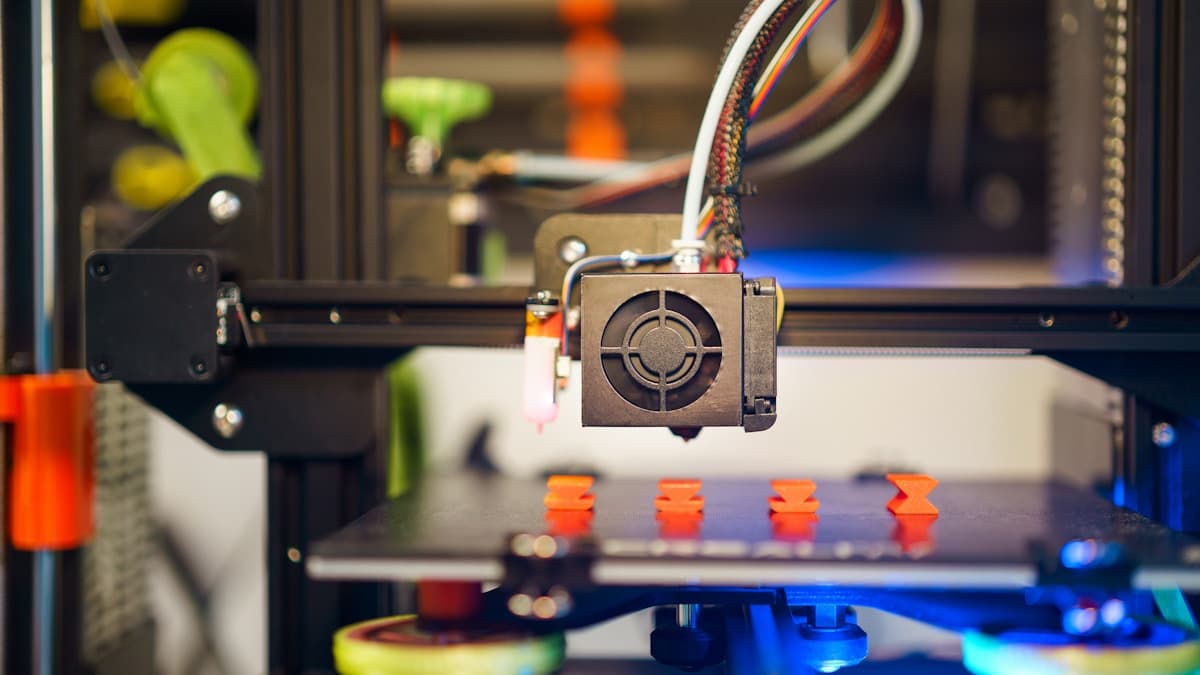
Hero photo by Jakub Żerdzicki via Unsplash.