The direct answer: local 3D printing service providers are your best starting point. Search the 3D Prototyping Hub directory by state or city — many local print shops offer maintenance and repair, particularly for the machines they operate themselves. The directory covers all 50 US states.
If you need a full breakdown of repair options, costs, and the repair-vs.-replace decision, this guide covers it.
Where to Find 3D Printer Repair Near You
1. Local 3D Printing Service Providers
The most overlooked repair resource. Local print shops run the same machines you own — Bambu Lab, Creality, Prusa, Anycubic, Formlabs — and they repair them when they break. Many offer maintenance and repair services to outside customers, especially for brands in their own production environment.
Use the 3D Prototyping Hub directory to find shops in your area. Filter by state. Contact listings directly and ask whether they offer repair or maintenance services for your machine make and model.
Provider coverage by state:
- California 3D Printing Services — largest concentration, multiple shops with in-house repair capability
- Texas 3D Printing Services — strong industrial FDM presence in Houston, Dallas, and Austin markets
- New York 3D Printing Services — high-density NYC metro, multiple full-service bureaus
- Florida 3D Printing Services — growing provider base across Miami, Orlando, and Tampa
- Michigan 3D Printing Services — automotive-adjacent shops with deep FDM expertise
- Illinois 3D Printing Services — Chicago metro has several full-service operations
- Ohio 3D Printing Services — manufacturing corridor, established FDM and SLS providers
- Pennsylvania 3D Printing Services — multiple certified providers with technical staff
The directory covers all 50 states — use the state filter on the providers page for any market not listed above.
2. Manufacturer Authorized Service
For machines under warranty or with active service contracts — Formlabs, Markforged, Stratasys, UltiMaker — contact the manufacturer directly. Most maintain authorized service networks and will arrange depot repair or on-site service for commercial machines.
Consumer-grade printers (Creality, Bambu Lab, Anycubic, Prusa) typically do not have physical authorized service centers. Repair is handled through warranty replacement programs for major failures, with community-supported self-repair as the expected path for out-of-warranty issues.
3. Makerspaces and Fab Labs
Many makerspaces employ staff with deep printer repair experience and will help members troubleshoot and fix machines. Membership fees range from $50–$150/month at most facilities. If you own a printer and use it regularly, makerspace membership pays for itself quickly in access to tooling, expertise, and parts sourcing help.
4. Electronics and CNC Repair Shops
Some independent electronics repair shops have expanded into 3D printer service, particularly for control board and power supply issues. Search for "electronics repair" or "CNC repair" in your area and call to ask whether they service 3D printers.
Common 3D Printer Repairs and What They Cost
FDM Printers
Hotend clog or jam — The most common failure. Caused by heat creep, low-quality filament, or printing too hot for the material. Parts cost $10–$40 for a replacement hotend assembly. Labor at a shop: $30–$60. Total: $40–$100. Many owners DIY this successfully on first attempt.
A significant percentage of hotend failures trace back to filament quality — inconsistent diameter, moisture contamination, and poor material consistency cause feed problems that jam the hotend.
Extruder drive gear wear — Worn or cracked extruder gears cause grinding, underextrusion, and failed prints. Parts: $8–$25. Labor: $20–$40. Total: $30–$65. Straightforward DIY.
Heated bed failure — Cracked glass, delaminated PEI surface, or failed heating element. Replacement surfaces cost $15–$40. A full bed assembly replacement with heating element runs $30–$80.
Stepper motor failure — Less common but more expensive. Motor replacement is $15–$40 in parts; labor to diagnose and replace correctly is $60–$100. Full repair: $75–$140.
Control board replacement — The highest-cost common repair. Boards for popular consumer machines run $30–$100. Labor to flash firmware and configure: $50–$100. Total: $80–$200. At this price point, weigh replacement value carefully.
Resin (SLA/MSLA) Printers
FEP film tear or haze — The consumable that fails most frequently on resin printers. Replacement film sheets cost $5–$15. Labor: $20–$40 if done professionally. DIY is manageable but requires attention to tension during installation. Budget $25–$55.
UV light source degradation — LCD screens on MSLA printers have a service life of approximately 500–2,000 hours depending on use intensity. Replacement LCD screens run $30–$100 depending on model. This repair requires precision alignment and is often worth professional service.
Build platform adhesion failure — Usually a calibration issue, not a hardware failure. Re-leveling and Z-offset adjustment solves most cases and costs nothing. If the platform surface is physically damaged, replacement runs $20–$60.
DIY vs. Professional Repair
Most consumer FDM repair is within reach for anyone comfortable following technical documentation. Prusa, Creality, and Bambu Lab all publish detailed service manuals. YouTube has repair walkthroughs for virtually every common failure on major consumer machines.
Repair yourself when:
- The failure is a known consumable (nozzle, hotend, FEP film, build surface)
- Your machine is out of warranty and has an active repair community
- Parts cost under $30 and instructions are readily available
- The machine is worth less than $400 — professional labor at $60–$100/hour makes the economics poor
Use a professional when:
- The failure is electrical (control board, power supply, wiring harness)
- Your machine is commercial or industrial grade and under a service contract
- You've attempted DIY repair and the failure persists
- Downtime cost matters — a shop can often turn a repair faster than waiting for parts and learning a new procedure
Repair vs. Replace: The Decision Framework
Run this calculation before booking a repair:
- Get a repair estimate (most shops charge $50–$100 for a diagnostic)
- Compare repair cost to current replacement cost for an equivalent machine
- If repair cost exceeds 50% of replacement value, replacement usually wins
- Factor in machine age — a 3-year-old consumer FDM printer is two generations behind current capability
Consumer FDM has dropped substantially in price. Today's $300 machines outperform $600 machines from 2021 on print speed, auto-calibration, and reliability. If you're spending $150 to repair an aging machine with no heated enclosure, no flow calibration, and manual bed leveling — a current-generation replacement is worth pricing out.
Find Local 3D Printing Professionals Now
Search the directory by your state. Local 3D printing service providers are the most accessible source of repair expertise in most markets — they run the machines, they fix them when they break, and they're motivated to help customers in their region.
Submit a quote request or contact a listing directly to ask about repair and maintenance services.
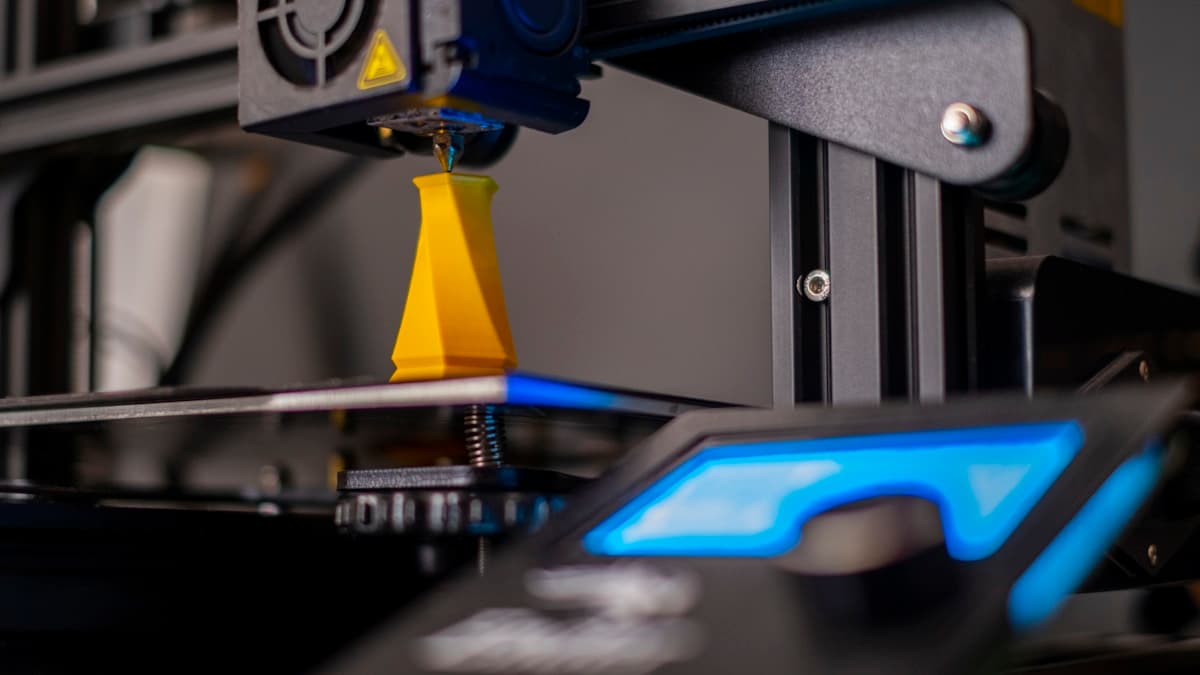
Hero photo by Osman Talha Dikyar via Unsplash.